Shop notes
Bistro counter stools: seats for the regulars and room for the till
The counter is where the regulars sit. They come in at the same hour, take the same stool by the pastry case, and talk to whoever is pulling shots. In a small shop those few seats can be the busiest in the room, and they are the ones a newcomer judges you by.
So the counter stool has to be right at the counter you actually have. That means a seat matched to a 34 to 36 inch top, a count that fits the run without crowding the till, and a back and seat that will still look decent after a year of coats, bags and elbows. This piece stays on that line. The tall window ledge is a different job, and our guide to bistro bar stools covers it.

Open diagram at full size (new tab) ↗
Read the diagram in text
Side view of a 36-inch cafe counter with a stool seat at 25 inches and the 11-inch space between seat and countertop marked, with three short cards on measuring the top, asking for the seat figure and spacing the stools.
- COUNTER NOTES
- 36 in.
- 25 in.
- 11: inches
- Counter height
- Tape the counter: Floor to the top, 34 to 36 inches.
- Ask the seat figure: Our wood counter stools list overall height.
- Keep the till clear: 24 to 30 inches per stool, none at the till.
- A 36-inch counter and a 25-inch seat leave the 11 inches a regular needs for knees and a bag.
The counter sets the seat
Counter height runs about 34 to 36 inches from the floor to the top. The stool that suits it puts the seat roughly 24 to 26 inches up, so the guest has 10 inches or so under the counter edge for knees and a shopping bag on the lap.
Small differences add up at this height. A 36-inch counter with a 25-inch seat leaves 11 inches, which is easy. A 34-inch counter with a 26-inch seat leaves 8, and a tall regular will feel the edge on his thighs every morning. The same 34-inch counter with a 24-inch seat gives back the full 10.
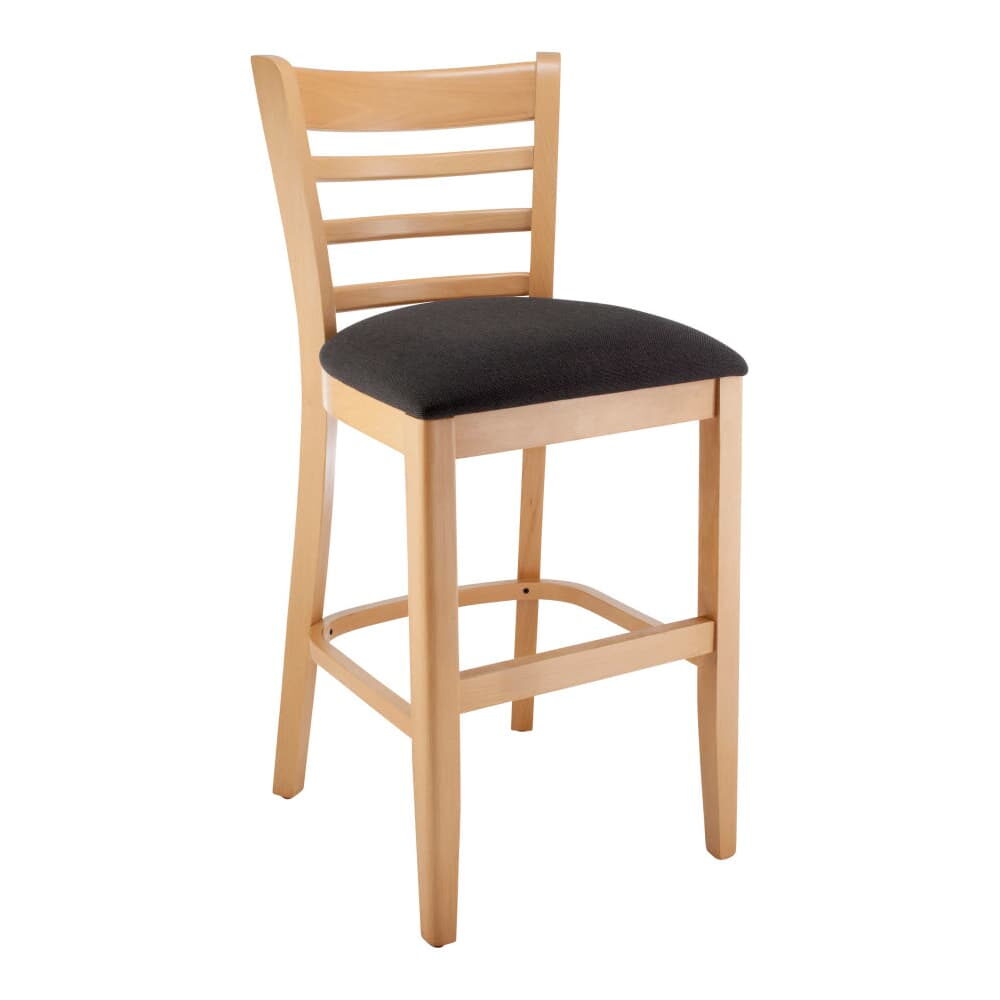
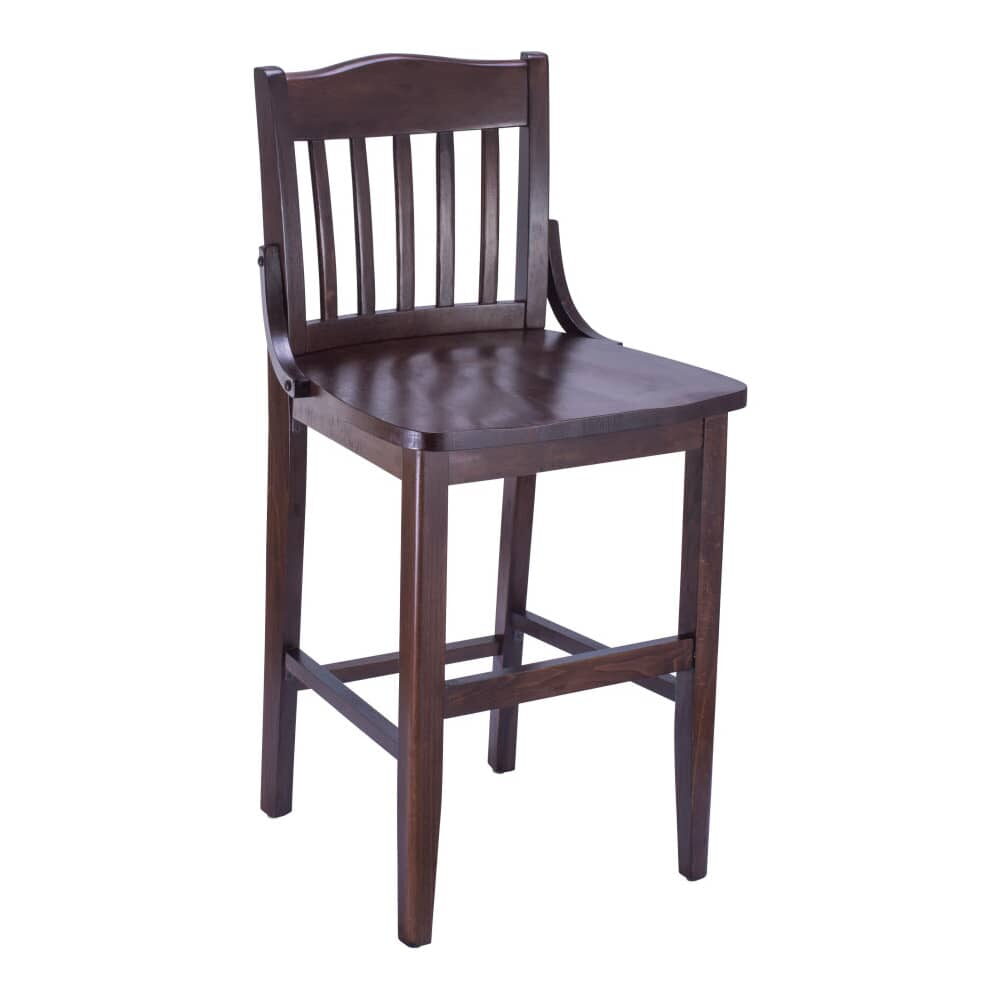
Our wood counter stools list an overall height rather than a seat height. The ladder-back wood counter stool measures 37 inches from floor to backrest top, and the schoolhouse wood counter stool 37 1/2. Neither figure is the seat. Before you order a row, ask us for the seat height of the model you picked and hold it against a tape at your own counter.
How many stools fit the run
Count the stools by the length of the counter, never by the number you hoped for. Allow 24 to 30 inches per stool, center to center. Narrow stools with plain backs can live at the tight end of that; anything wide, or anything people will turn on, wants the loose end.
Then leave room for the person paying. The till end of a counter is a working spot: someone is always standing there with a card out or a tray in hand. Hold back a clear slot of about 30 inches at that end and do not put a stool in it.
Say your counter run is 14 feet, which is 168 inches. Take off 30 for the till end and you have 138. At 24-inch centers that gives five stools, using 120 inches and leaving 18 spare. At 30-inch centers it gives four, using the same 120. Now check width. The ladder-back counter stool is 17 inches wide, so at 24 inches you keep 7 inches between seats. A curved-back model at 18 1/2 inches wide keeps only 5 1/2, and for that one four stools at 30-inch centers is the kinder count.
Backs, seats and what wears
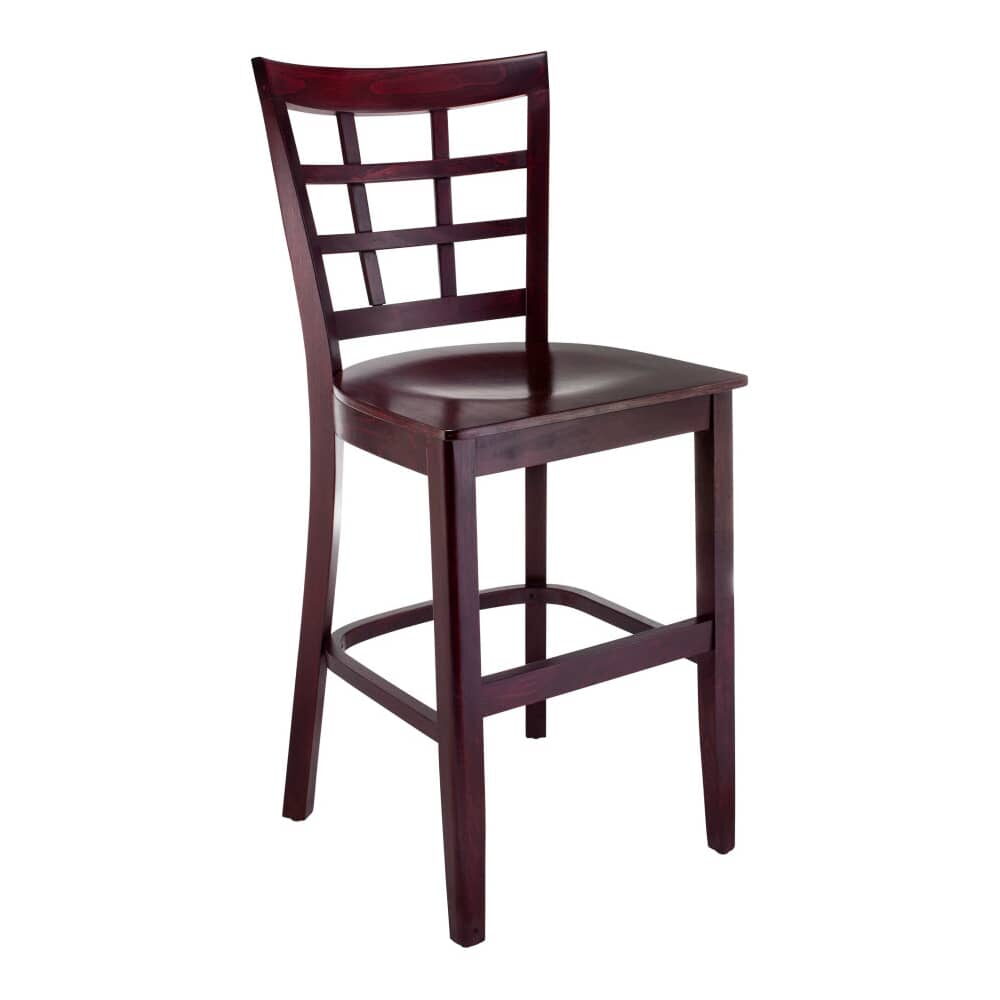
Every counter stool in our counter stools range is wood framed with a back, and the backs are the main choice: ladder-back, vertical slat, schoolhouse, window back and two curved-back shapes. A back gives a regular somewhere to lean through a second coffee and a conversation. It also takes a little room behind the stool, so check the walkway between the counter and the tables before you settle on a style.
The seat is the part that wears. Each of these stools lets you sit on solid wood, or on vinyl or fabric over padding, with wood finishes from natural to black and a few colors besides. Wood scrapes clean and shows its years as a soft shine where people sit. Vinyl wipes down between customers, which suits a counter where pastry crumbs and drips are part of the day. Fabric is kind and stains easily, so think twice before putting it next to the milk station.
The window back wood counter stool is a good one to hold up against your room. It measures 17 inches wide, 21 deep and 37 high, weighs 20 pounds, and lists a capacity of 500 pounds. Every stool in the family shares that weight and that capacity. At 20 pounds, lifting five onto the counter at close is a quick job.
Warranty on wood stools
Wood stools do not carry the long cover our metal seating does. Selected wood side stools carry 3 years of cover for faults in workmanship and materials, and other wood stools, along with any with arms, carry 1 year. When a stool's period is plain, you will see it on its product page; the rest is spelled out under warranty. If the counter is the hardest-working seat in the shop, it is worth knowing which period your stool carries before you order a dozen.
The mistake at the counter
The slip is buying one set of stools for every high surface in the shop. A cafe often has a 36-inch service counter and a 42-inch window ledge, and the owner orders twelve stools of one height for both. Half of them end up wrong. At the ledge a 25-inch seat puts the guest's chin near the cup; at the counter a 30-inch seat jams knees under the edge.
Measure each surface on the same day and buy for each one. The bar stools department holds both heights. The wood bar stools page gathers the wood frames, and the ladder-back bar stools page shows the same back in a taller stool if you want the window and the counter to match in style while differing in height.
Fitting the counter for opening day
Lay the counter out on paper first. A plan in shop plans holds the run, the till slot, each stool on its mark and the finish and seat beside it, and you can copy it when the next shop needs the same counter. For the low two-tops beyond the stools, our piece on matching a bistro table and chairs counts how many seats each top size takes.
Finally, settle the seat color in daylight. Ask for a free swatch through samples and leave it on the counter by the till for a week of trade, where it will see coffee, crumbs and sleeves. If it still looks right on Friday, write the finish and seat choice into the plan, and keep it for the day you replace the first stool.