Shop notes
Two at a 24, four at a 36: matching a bistro table and chairs
A bistro table and its chairs get bought as a pair and blamed as a pair. When the room feels cramped by the second week, nobody says the top was too small. They say the chairs are wrong, and they order new ones, and the new ones don't fit either.
The fix is the order you choose them in. Top first. The top decides how many people sit, how wide each chair can be and whether arms will work at all, and only then do you go looking at frames and seats. This piece walks through that, size by size, on tables and chairs we list.

Open diagram at full size (new tab) ↗
Read the diagram in text
Three cards give the seat count for a 24-inch top, a 36-inch square and a 30-inch top, beside a panel matching seat heights to table heights.
- PAIRING NOTES
- 24-inch top: Two guests, one chair facing the other.
- 2 seats
- 30-inch top: Two guests, with room for lunch plates.
- 2 seats
- 36-inch square: One chair to each side, four guests.
- 4 seats
- Match the heights
- 30-inch table, 18-inch seat
- 42-inch table, 30 1/4 seat
- Leave 10 to 12 inches
- Pick the top first, then the chairs it can hold.
- Seats per top size from the party figures, and the seat height that suits a 30-inch and a 42-inch table.
What each top can really hold
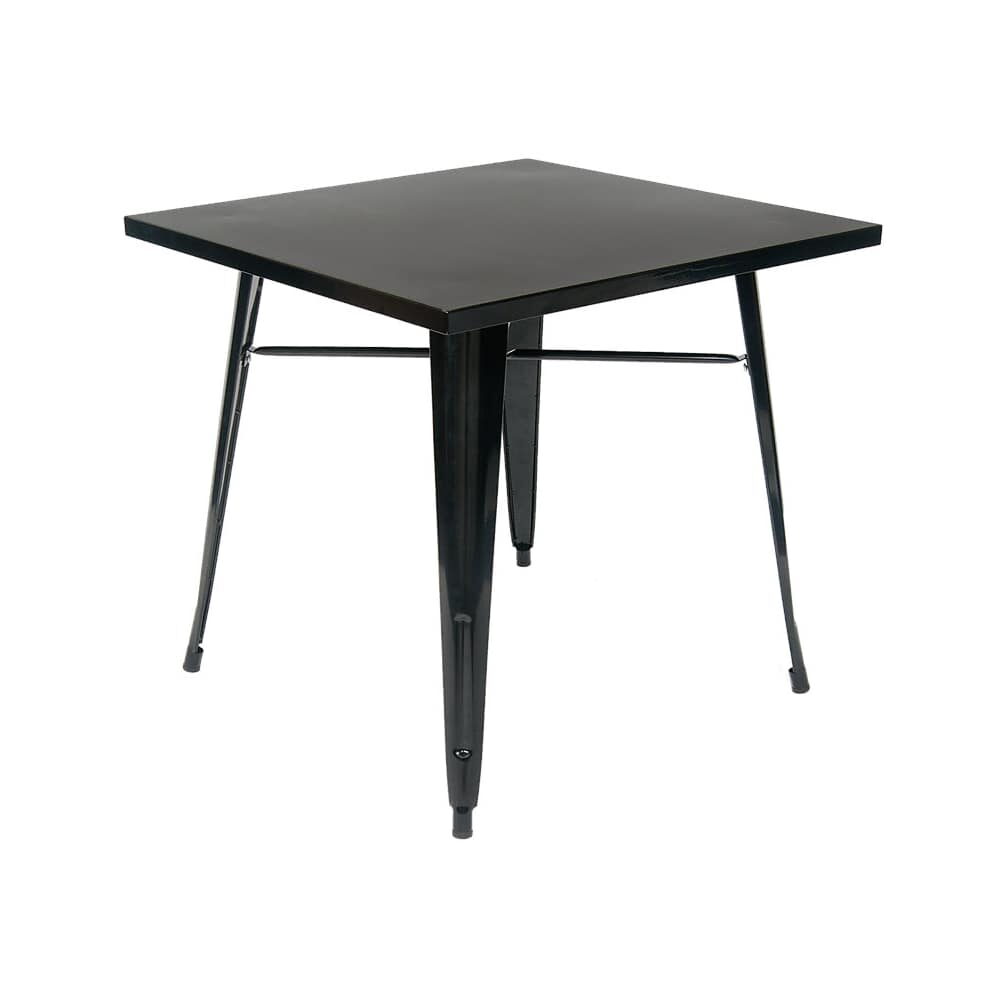
Take one table in several sizes. Our black metal table has a steel top and base at 30-inch table height, listed for indoor and patio use, and comes as a 24-inch round, a 24 by 24 square, a 30-inch round, a 32 by 32 square or a 36 by 36 square. Same base, same finish, five very different tables at the counter.
The planning figures are plain. A 24 by 24 top is the least you give two guests. A 30-inch square still seats two, but now there's room for plates as well as cups. Four people fit a 30-inch square only at a squeeze, and a 36-inch square is where four sit in comfort. A 36-inch round takes four in close quarters.
So the 24 and the 30 are two-tops, whatever their shape. The 32 and the 36 are where four-tops start. Our bistro tables guide covers tops and bases in more depth; here the question is what goes around them.
Chair width against the edge of the top
Here is the mistake we see most. An owner wraps a tape around a 24-inch round, reads about 75 inches, divides by 24, the inches of edge one guest needs, and orders three chairs. On paper it works. At the table, the third guest has a knee against the base and an elbow in the next plate.
Edge length overstates what a small top holds, because chairs are wider at the back than the table is at its rim. Count seats from the party sizes, never from the tape around the edge.
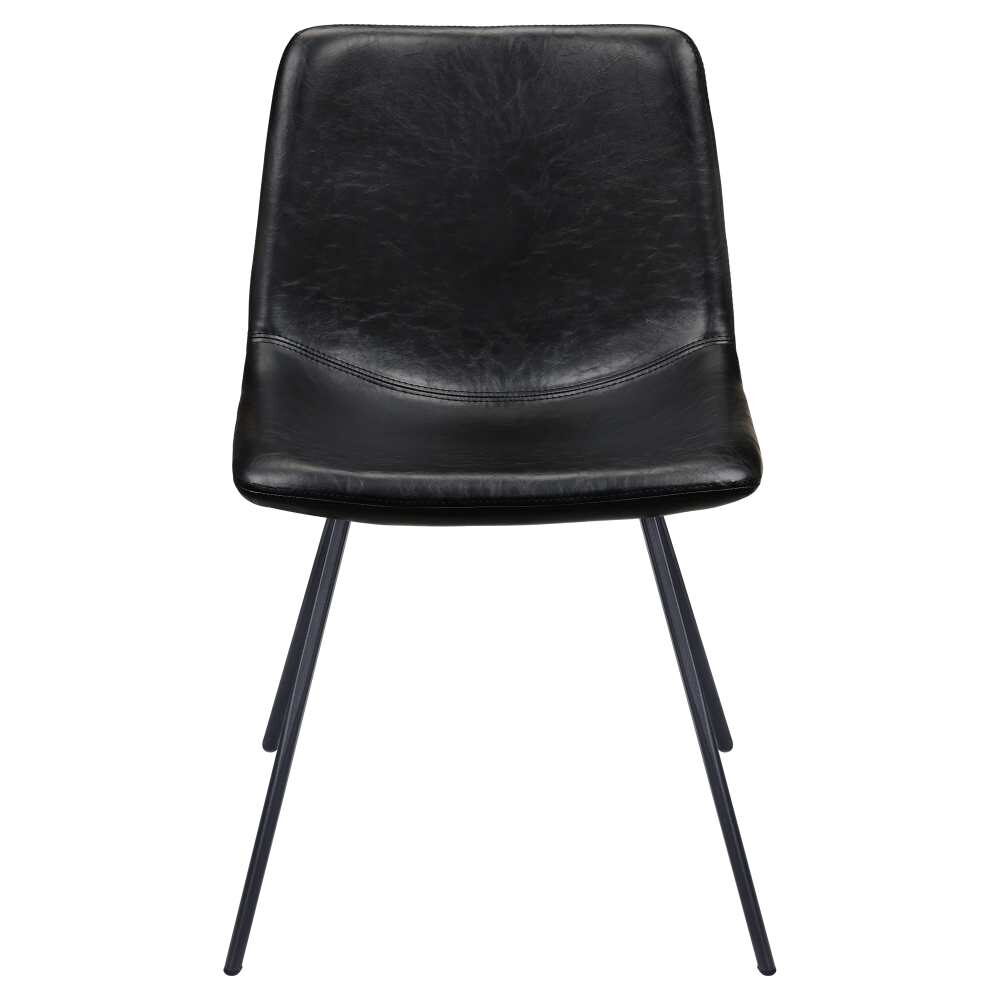
On a square, think in sides. Our metal dining chair with a bucket seat is 18 3/4 inches wide and 21 1/4 deep. At a 36 by 36 top, one chair per side leaves 17 1/4 inches of clear edge beside it. Try two on one side and they need 37 1/2 inches. That's more than the side has.
The rule we give owners: one chair to a side on a square, and two chairs at anything smaller than 36 inches, round or square.
Arms or armless at a small round
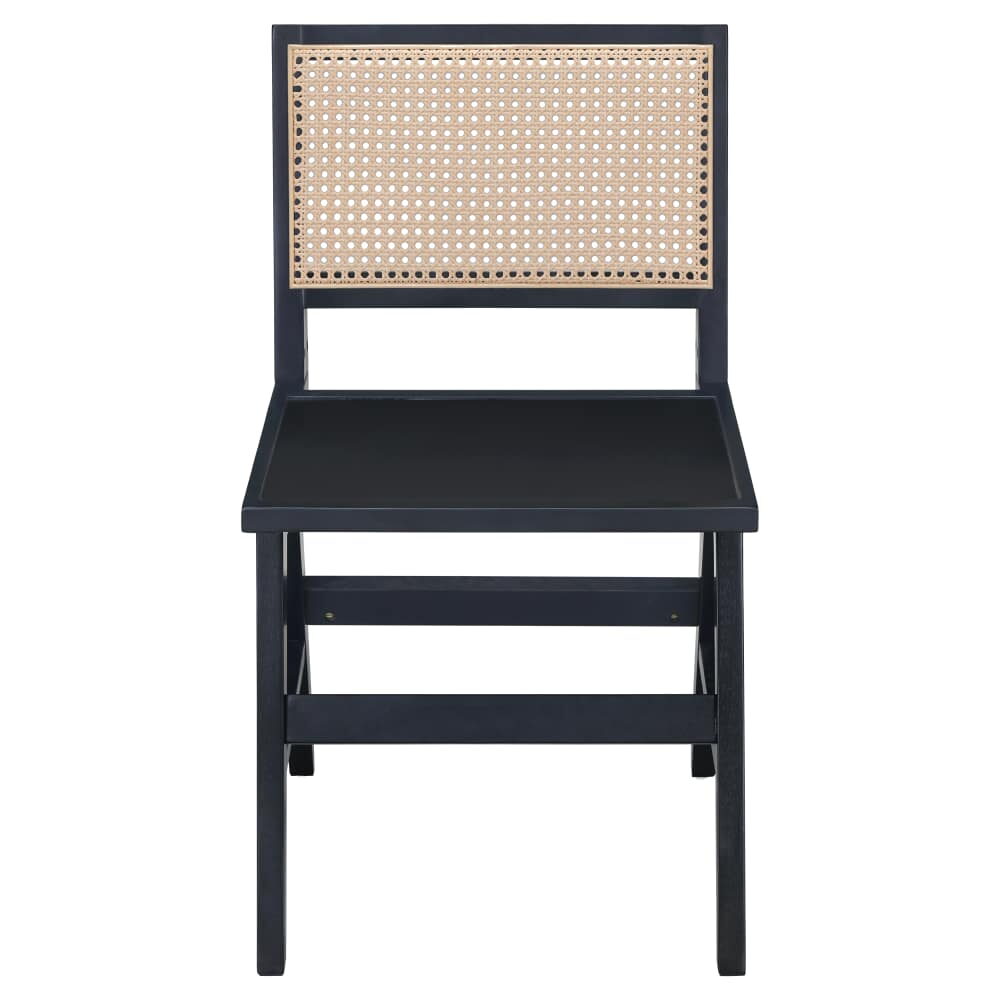
Arms change the sum. The Gaia cane family shows it well because the side chair and the armchair share a frame. The cane side chair is 17 5/8 inches wide. At 20 3/8, the Gaia Cane armchair runs nearly 3 inches wider, and a touch deeper at 21 1/4.
At a 24-inch two-top, those extra inches cost little. Two guests face each other, the arms sit off to the sides, and nobody is reaching past a neighbor. At a four-top they add up: four armchairs around a 36-inch square leave 15 5/8 inches of edge on each side, against 17 1/4 with the bucket-seat chair above.
Our view is simple. Arms suit the two-tops where people stay for lunch, and armless chairs suit the four-tops and anywhere staff squeeze past with a tray. The arm chairs and the wider run of cafe chairs are worth reading side by side with that in mind. For the frames, seats and finishes that wear, see our notes on bistro chairs.
Heights that meet in the middle
A good pairing leaves 10 to 12 inches from the seat up to the tabletop. Less, and thighs meet the rim; more, and the cup feels a long way up. For an ordinary bistro table, think 29 or 30 inches for the top and a seat somewhere from 17 to 19.
Check it with real records. The bucket-seat chair above has an 18-inch seat. Set it at the 30-inch metal table and the gap is 12 inches, right at the roomy end. The Gaia armchair also sits at 18, so it pairs the same way.
Tall tables follow the same arithmetic, just higher. A bar-height top sits somewhere near 40 to 42 inches up, and the stool seat under it near 29 to 31. Our 24-inch round bar-height table has a solid wood top in dark walnut on a cast iron base and stands at 42 inches. A metal bar stool with a padded back has a 30 1/4-inch seat, which leaves 11 3/4 inches. Building your own tall two-top on one of the 41-inch bar-height table bases? Add the top's thickness to the base, take away the seat height of the stool you like, and see whether the answer lands between 10 and 12.
A 14-seat front room, counted out
Say the front room takes three four-tops in the middle and one two-top by the window. Use the 36 by 36 metal table for the four-tops and the 24-inch round of the same table at the glass.
- Three four-tops seat 12, and the two-top seats 2, so 14 chairs.
- Add 4 tables and the order is 18 pieces, well past our 8-piece minimum.
- That's three lines: the 36 by 36 table, the 24-inch round and the chair, as long as every chair carries the same seat and finish.
Then check the floor. Each two-top needs its 24-inch top plus 18 to 24 inches behind each chair for pulling out, so allow 60 to 72 inches front to back. Keep a 36-inch aisle where staff carry plates, and mark both on the floor with tape before you believe the count. Our notes on seating a bistro floor add those depths up along a whole row.
One table and its chairs by the till for a day
Before you order fourteen, set one top and its chairs out where your trade passes them. Sit at it with a plate and a cup. Have the tallest person on your shift sit across from you and watch where knees and elbows go.
Then draw the room in a shop plan with each table size on its own line and the chair count beside it, and ask for a free seat swatch through samples so the finish you pick in daylight is the one that arrives. If you want the chairs and table chosen for you in one product, our piece on the bistro table set shows what a matched set fixes and what it leaves to you.