Shop notes
Bistro bar stools for the window bar: height, spacing and backs
How many stools fit the window? It is the first thing most owners ask, and it is the second thing to settle. The first is the height of the ledge they will sit at, because a stool bought for one height is no use at another, and a shop with a front window bar and a back counter often has both.
This guide stays at the tall end: the window bar, the bar-height ledge along a side wall, the high shelf where a regular stands his espresso and reads the paper. It covers the seat height that suits a ledge of 40 to 42 inches, how far apart to set the stools, and when a stool needs a back. For the lower counter line, read our guide to bistro counter stools.

Open diagram at full size (new tab) ↗
Read the diagram in text
Drawing of three tall cafe stools side by side, seats level: one bare seat with no back, one with a cushioned back, one with arms as well. Under each, a line on where it suits a window bar.
- WINDOW BAR NOTES
- Backless: Tucks under the ledge.
- Padded back: Give it 30-inch centers.
- Back and arms: For a side ledge, not the door.
- Backless stools tuck under a busy window; backs keep the regulars at a side ledge for a second cup.
Start with a tape at the ledge
Tape the ledge from floor to top surface, not to the underside, and write the number down. Bar-height ledges come in at about 40 to 42 inches. The stool for them has a seat of roughly 29 to 31 inches, which leaves room for thighs under the ledge without the guest reaching up for the cup.
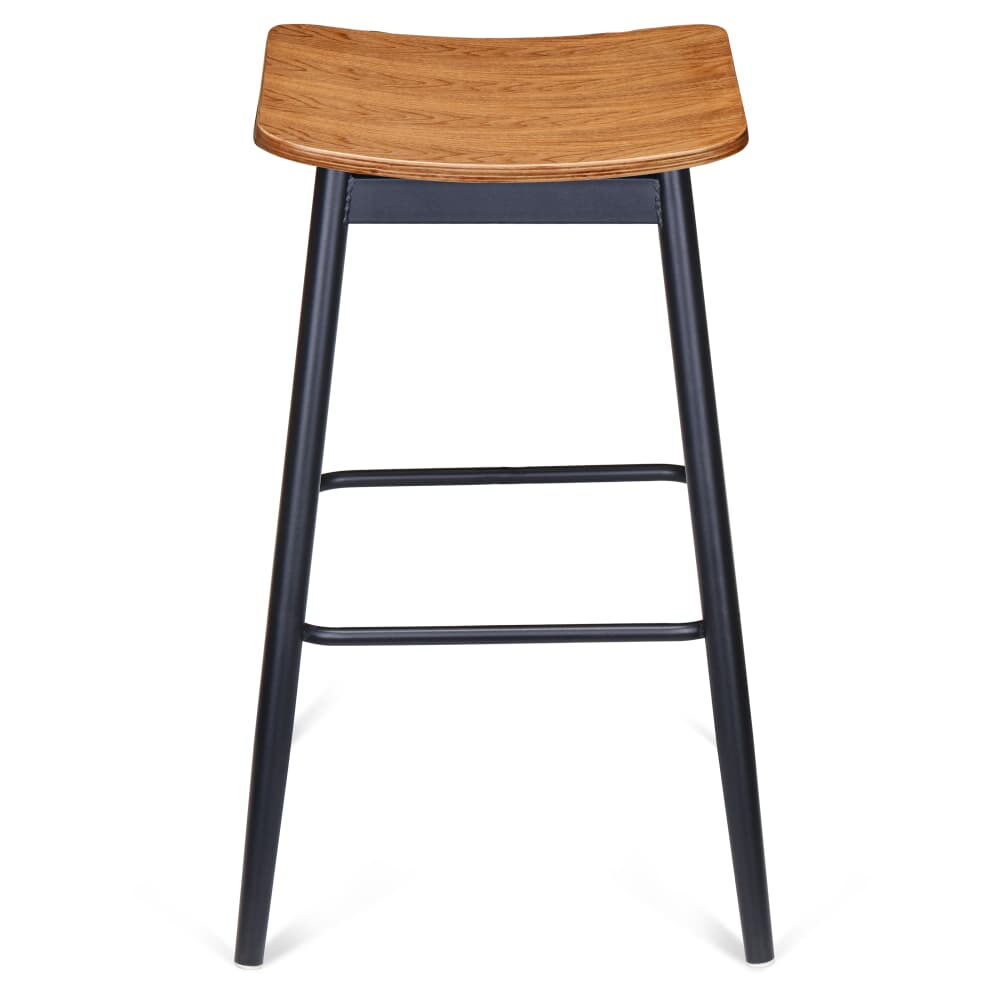
Check the gap with the stool you want. A 42-inch ledge and a 30-inch seat leave 12 inches. A 40-inch ledge and the same seat leave 10. Both sit right. Now take the Basel backless bar stool, a black metal frame with a wood seat, which stands 28 1/2 inches tall. With no back, that is the seat. At a 40-inch ledge it leaves 11 1/2 inches and feels natural. At 42 it leaves 13 1/2, and a short guest will notice the stretch.
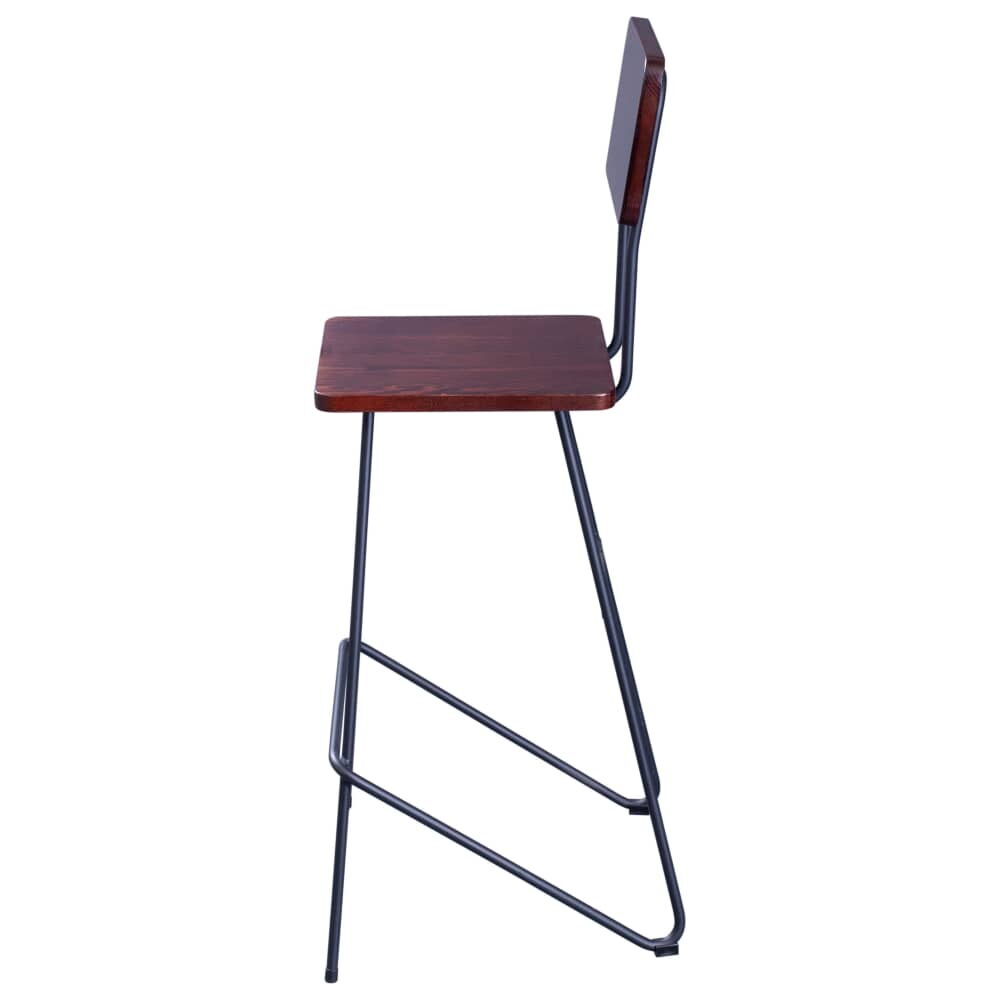
That is the habit worth keeping. Hold every listed height against your own ledge before you order. Some backed stools give the seat too: the Mantis industrial-style metal bar stool sits at 29 inches, which leaves 13 under a 42-inch ledge and 11 under a 40. If a backed stool lists only its overall height, ask us for the seat figure.
Spacing along the window
Give each stool a slot of 24 to 30 inches along the ledge, measured on the centers. The tighter number suits narrow backless stools and a quick coffee. The wider one suits stools with backs, which take more room and get turned as people sit.
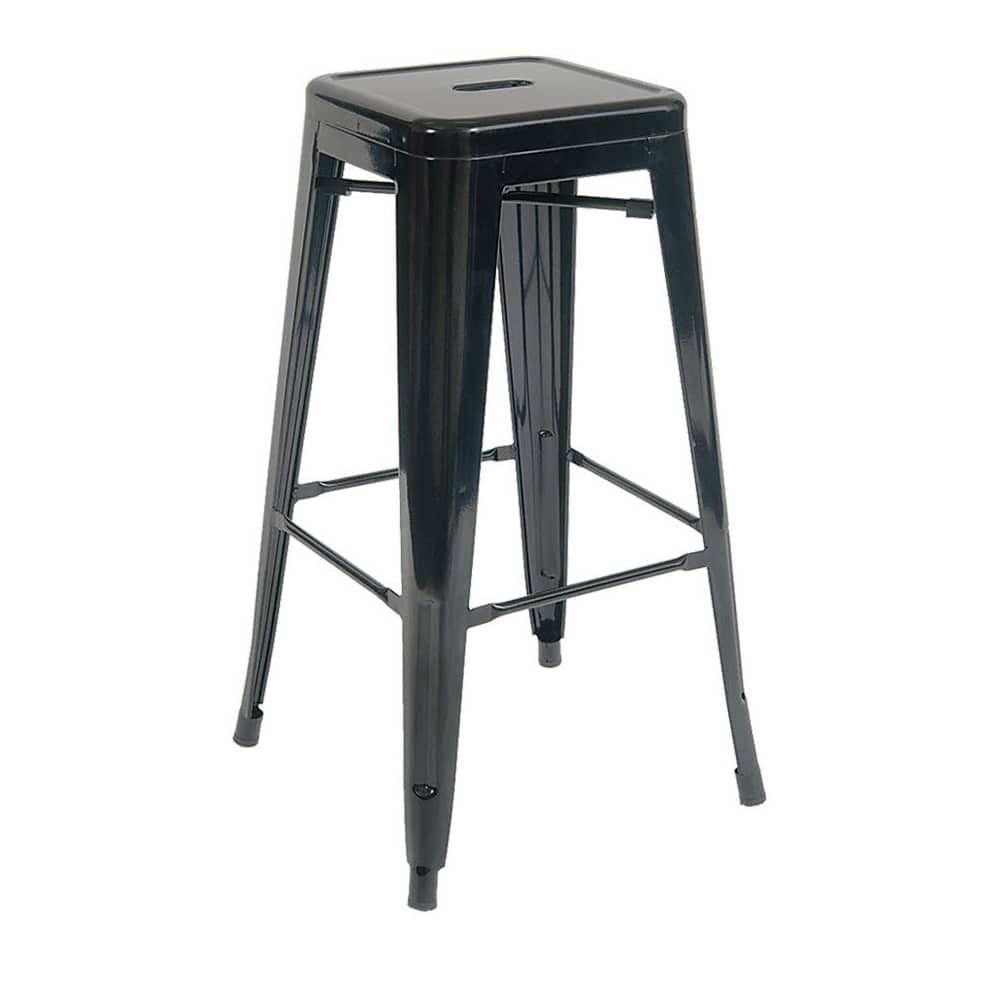
Say your front window gives you a ledge 10 feet long, which is 120 inches. At 24 inches a stool, that is five seats. At 30, it is four. Five sounds better on paper, so check the stool width first. The bistro-style backless metal bar stool in black measures 17 inches across, so at 24-inch centers you get 7 inches of air between seats. A bucket stool with a padded back is wider: the black metal one we list at a 29-inch seat is 18 3/4 inches wide, and at 24-inch centers that leaves barely 5 1/4 inches, elbow to elbow with a stranger. Give that stool 30 inches and settle for four.
Leave the ends clear as well. A stool jammed against the door frame or the end wall cannot be pulled out, so the last seat on each side should have a few inches to spare.
Backless or backed at the window
A backless stool is the window bar's natural partner. It tucks under the ledge when nobody sits on it, so the walkway behind stays open for the line. It is light: the bistro-style metal one weighs 10 pounds, which matters when the last sweep means lifting every stool. And people do not linger long on it, which suits a shop that turns its window seats through the morning.
A back changes the stay. Regulars who read, work or wait for a friend want something to lean on, and a backed stool keeps them comfortable for the second cup. The trade is room and weight. Backed stools sit wider and stand proud of the ledge, and they cannot be pushed fully under it.
Our view, for what a shopkeeper's view is worth: backless at the front window, where the turnover is, and backed stools at a side ledge where people settle. The backless bar stools page gathers the first kind. The metal bar stools page holds both, from bare steel seats to padded backs.
Footrests, swivels and the frame
A stool at 30 inches leaves feet hanging unless there is somewhere to put them. Look for a rung or a ring on the frame, and on some wood models the footrest is a listed choice. The ladder-back wood bar stool lists its foot rest in gold, black or silver, and it weighs 30 pounds, so it has some heft under a guest climbing on. If your ledge has no foot rail of its own, look for the ring before anything else.
Swivel seats help guests turn toward the room or a friend without dragging the stool. They come with a warranty point worth knowing. A fixed metal seat is covered for 7 years against defects in materials and workmanship; put a swivel under it and the cover drops to 1 year. Wood stools sit in between or below, depending on the model: selected wood side stools have 3 years, and those with arms carry 1. Our warranty page has the full list. For a window bar that takes a beating from the first batch to closing, a fixed metal seat is the plain choice.
For the look, the Tolix-style bar stools page shows the stamped metal stool most people picture in a bistro, and the wider bar stools department covers wood, upholstered and swivel styles.
The ledge that is not bar height
Here is the mistake we hear about after the freight has landed. An owner orders stools for "the bar" and the window ledge turns out to be 36 inches, a counter height. A 30-inch seat at a 36-inch ledge leaves 6 inches: knees hit the underside and the guest perches with the cup at belly level.
The fix is a tape and two minutes. Measure every ledge and counter in the shop on the same day, list them by height, and buy stools in two groups if you have two heights. A counter-height ledge is a different stool altogether: its seats sit 24 to 26 inches up.
Setting out the window for the second shop
Draw the ledge before you order. In shop plans you can enter the ledge length, place the stools at the spacing you chose, and keep the stool and finish with the plan. When the next shop opens, copy that plan and change only the ledge length, so the window looks the same in both and the regulars feel at home.
If the window also takes a high table or two, our guide to the bar-height bistro table covers tops and bases at the same 40 to 42 inch line. Count the stools for those tables with the same 24 to 30 inch rule, and order every stool for one height from the same family, so a replacement next year matches the rest.