Shop notes
The bar height bistro table at the window: stool first, then the top
How tall should the table by the window be? Put a tall two-top there and a quick coffee becomes a perch: the guest sits up at the glass, watches the street, finishes the cup and goes. It's one of the most useful tables a small shop can own, as long as the stool and the table agree with each other.
Bar height means a tabletop at about 40 to 42 inches. The stool for it has a seat of roughly 29 to 31 inches. Get those two right and the rest is choosing a top, a base and a frame you can wipe. Get them wrong and you have a beautiful table nobody can sit at. So the order of work is simple, and we'll follow it: the height, the tables and bases we list, the stools, and where a tall table belongs in a cafe.

Open diagram at full size (new tab) ↗
Read the diagram in text
Side drawing of a 42-inch bar-height top over a 30-inch stool seat with 12 inches labeled between them.
- WINDOW NOTES
- 40 to 42 in.
- 29 to 31 in.
- 10 to 12: inches
- Bar height
- Measure the table: Floor to the top, with the top's thickness.
- Then the stool: Subtract the listed seat height.
- Check the base: Feet reach two thirds of the top's width.
- Take a 30-inch seat from a 42-inch top and 12 inches remain, the top end of the comfortable gap.
Buy the stool for the table
Leave 10 to 12 inches from the stool seat up to the tabletop. That's the gap that lets knees slide under and elbows rest on the top.
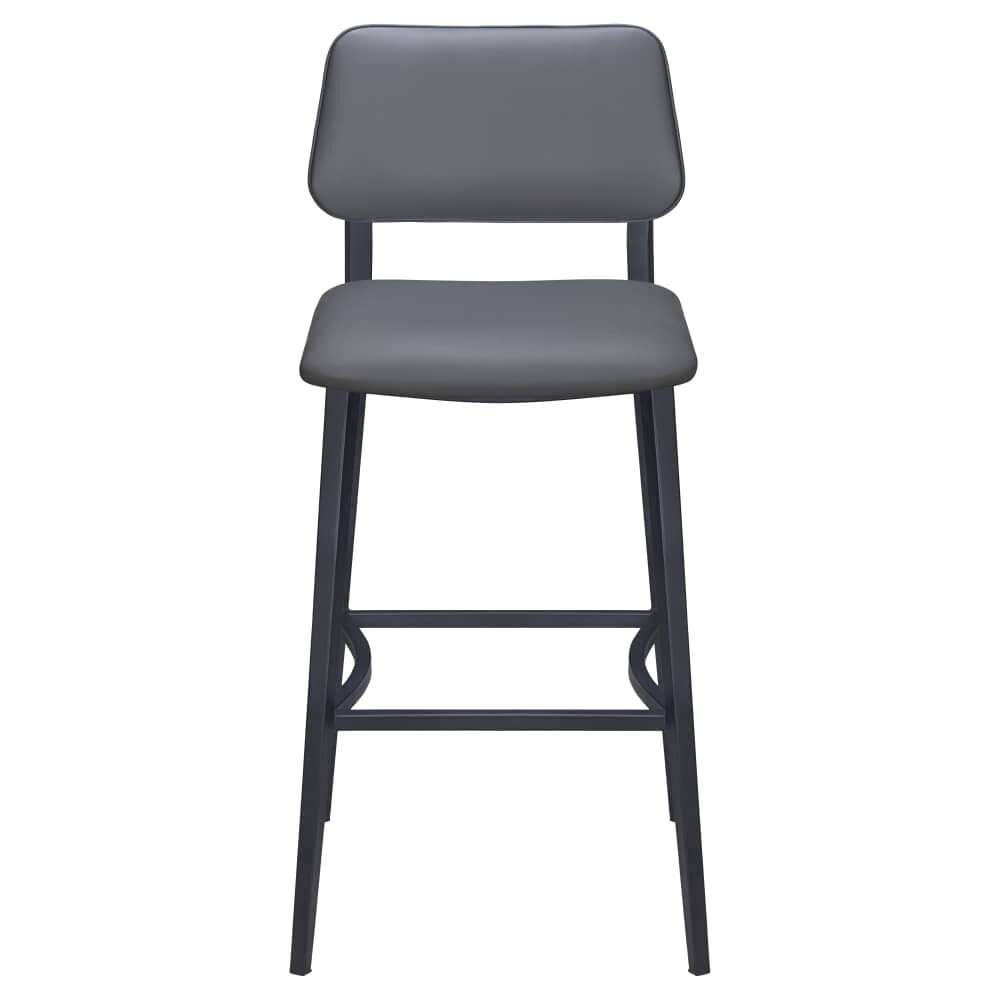
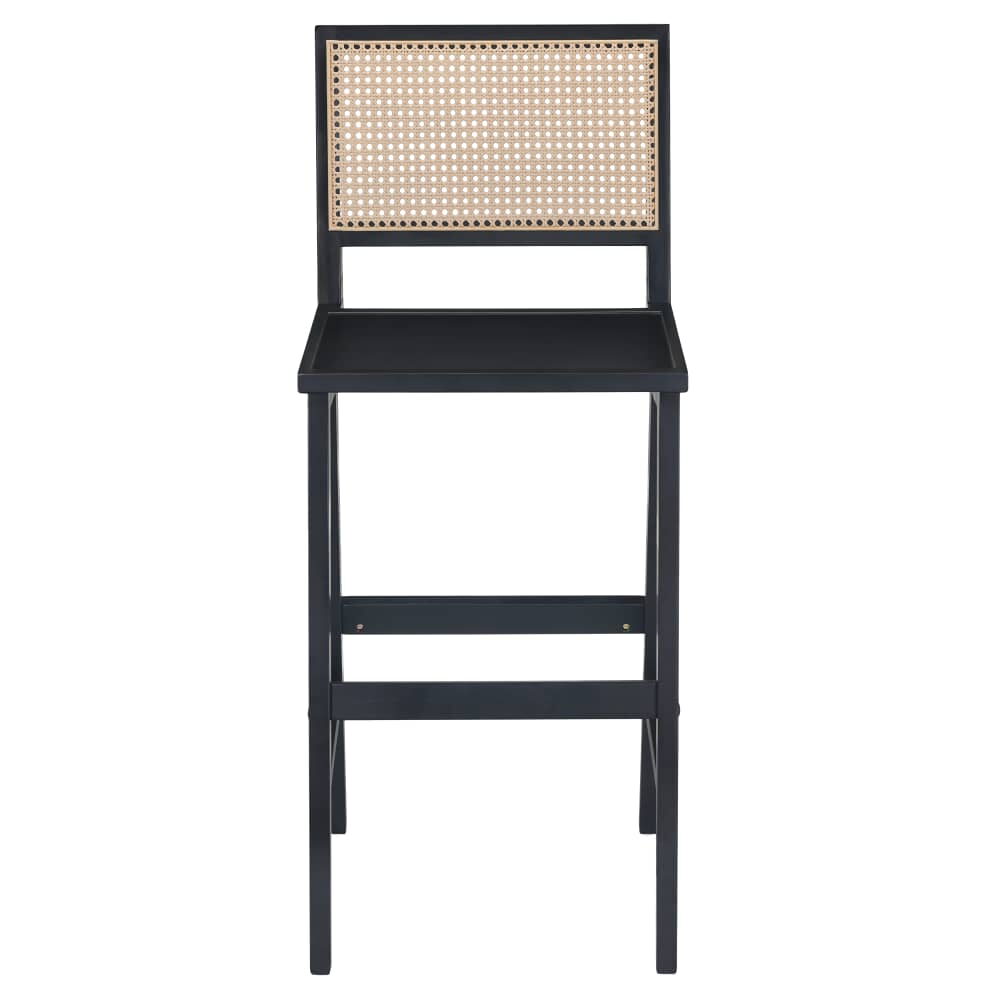
Do the subtraction with real numbers. The black metal stool with a padded back has a 30 1/4-inch seat. Under a 42-inch top it leaves 11 3/4 inches, comfortably inside. The black wood stool with a cane back sits at 29 3/4 inches, which leaves 12 1/4 under the same top: a quarter inch past the range. Close enough to try; not close enough to order twenty without one guest sitting on it first.
Here's the slip to avoid. An owner picks the stools first because they look right, then buys a 40-inch table. Put a 31-inch seat under 40 inches and the gap shrinks to 9. Knees hit the apron and the stool ends up pulled out into the room. Measure the table, then choose the stool.
Tables we list at bar height
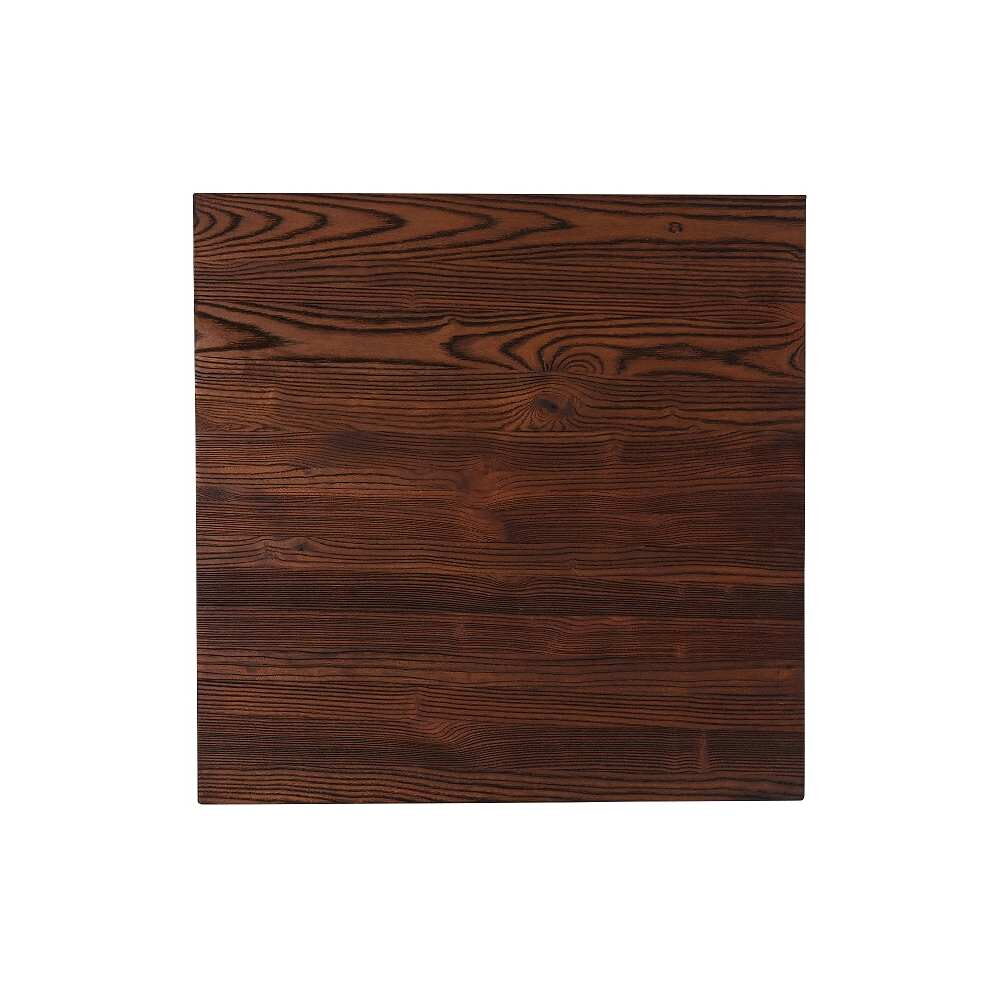
Two ready-made tall tables suit a cafe window. Each arrives with its base, so there is no spread to work out and no second line on the order for the base. The round metal dining table pairs a 24-inch solid wood top in dark walnut with a cast iron base at 42 inches, and weighs 32 pounds. A 24-inch round is small, so treat it as a two-top for drinks and a pastry.
A folding metal table also comes at bar height: a steel top, 30 inches round or 30 by 30 square, on a cast iron base at 42 inches, 26 pounds, in black or red, and listed for indoor and patio use. A 30-inch top gives two people room for plates as well as cups. Both, and the rest of the range, are under bar-height tables.
Wood tops come with 6 months of cover, which leaves out the way solid wood moves; tops of other materials on indoor tables carry 1 year. If the window gets strong sun or the steam from the coffee machine drifts that way, weigh that before choosing wood.
Building one from a top and a base
You can also put your own top on a tall base. The bar-height round metal table base is cast iron, 41 inches tall, and comes with a 17, 22 or 30 inch spread.
The spread rule matters more at bar height, because a guest leaning on a tall top pushes on it from higher up, and the base has to resist more of that push. Keep the base spread at two thirds of the top's diameter at the least:
- A 24-inch round top: two thirds is 16 inches, so the 17-inch spread works.
- A 30-inch round top: two thirds is 20, so step up to the 22-inch spread.
Add the top's thickness to the base height. A 41-inch base under a 1 1/4-inch laminate top finishes at 42 1/4 inches; with the padded-back stool at 30 1/4, that's a 12-inch gap, right on the edge of the range. The other tall bases, round, square and X-prong, are under bar-height table bases.
The stools, the frames and the warranty
Metal or wood, back or no back: the choice is about the stay and the clean-up.
The padded-back stool has a metal frame and a vinyl seat, takes up 18 1/2 by 20 1/2 inches of floor, and weighs 20 pounds. When a metal stool does not turn on its post, our warranty runs 7 years against defects in materials and workmanship; swivel metal stools carry 1 year. The cane-back stool has a wood frame and a wood seat, 17 5/8 inches wide, 16 pounds. Both are listed at a capacity of 500 pounds.
A wood seat wipes and scrapes clean; vinyl wipes with a damp cloth. Order a free vinyl swatch from samples and leave it by the window for a few days. The range runs through all of bar stools, with the steel frames gathered under metal bar stools.
Where a tall table belongs, and where it does not
Tall tables suit the window, the space by the door where people wait for a takeaway order, and the edge of a room where a guest on a stool would otherwise stare at a wall. They suit short stays.
They do not suit every guest. Section 902.3 of the 2010 ADA Standards keeps an accessible dining top no higher than 34 inches and no lower than 28, and a 42-inch top is well above that. Section 226.1 then asks that one dining seat in twenty, 5 percent, sits at an accessible surface. Work it through: a shop with 30 seats needs at least 1.5, so 2 seats at dining-height tables with clear knee room, whatever the window holds. Your designer and the local building office have the final say, so go through the current edition with them.
Sit on it before the window gets one
Borrow a stool, stack books on a table until the top reads 42 inches on your tape, and sit there with a cup for ten minutes. Knees pressed against the underside mean the seat is high for that table. Elbows dangling in the air mean it sits low. Try a second stool before you settle.
Then put the tall tables and their stools into a shop plan next to the rest of the floor, with the heights in the notes. For the dining-height tables on the rest of the floor, our notes on a bistro table and chairs pair each top size with the seats it holds. For the top material, cafe tabletops compares the options, and bistro tables covers sizes for the dining-height tables that hold your accessible seats.