Shop notes
Choosing a wood bistro table for the wear, not the glow
Wood looks its best on the day it arrives. The real question is how it looks in its third winter, after thousands of cups, a few dropped forks and every wipe at close. A wood bistro table can age into the most honest piece in the shop or into the one you apologize for, and the difference is mostly settled before you order.
This piece is about that choice: solid wood, wood veneer or a wood-grain laminate, how to tell them apart on a product page, and what each asks of the person holding the cloth. It is about the wear, not the glow.

Open diagram at full size (new tab) ↗
Read the diagram in text
Three cards compare wood tops by the material line on the product page: Solid Wood, a butcher block 1 1/2 inches thick that moves with the seasons. Veneer, a real wood face over a core; and Laminate, a printed wood grain that wipes like any laminate. A side panel lists three delivery checks.
- WOOD TOP NOTES
- Solid wood: Wood through; moves with the seasons
- Solid Wood
- Wood veneer: A real wood face over a core
- Veneer
- Wood-grain laminate: Printed grain for the daily wipe
- Laminate
- On delivery
- Unpack every top
- Photograph damage
- Report in 3 days
- Read the material line.
- The color name can say walnut on all three. The material line on the page tells you what you are buying.
Three kinds of wood top
Start with the material line on the product page. It says one of three things, and they are not the same.
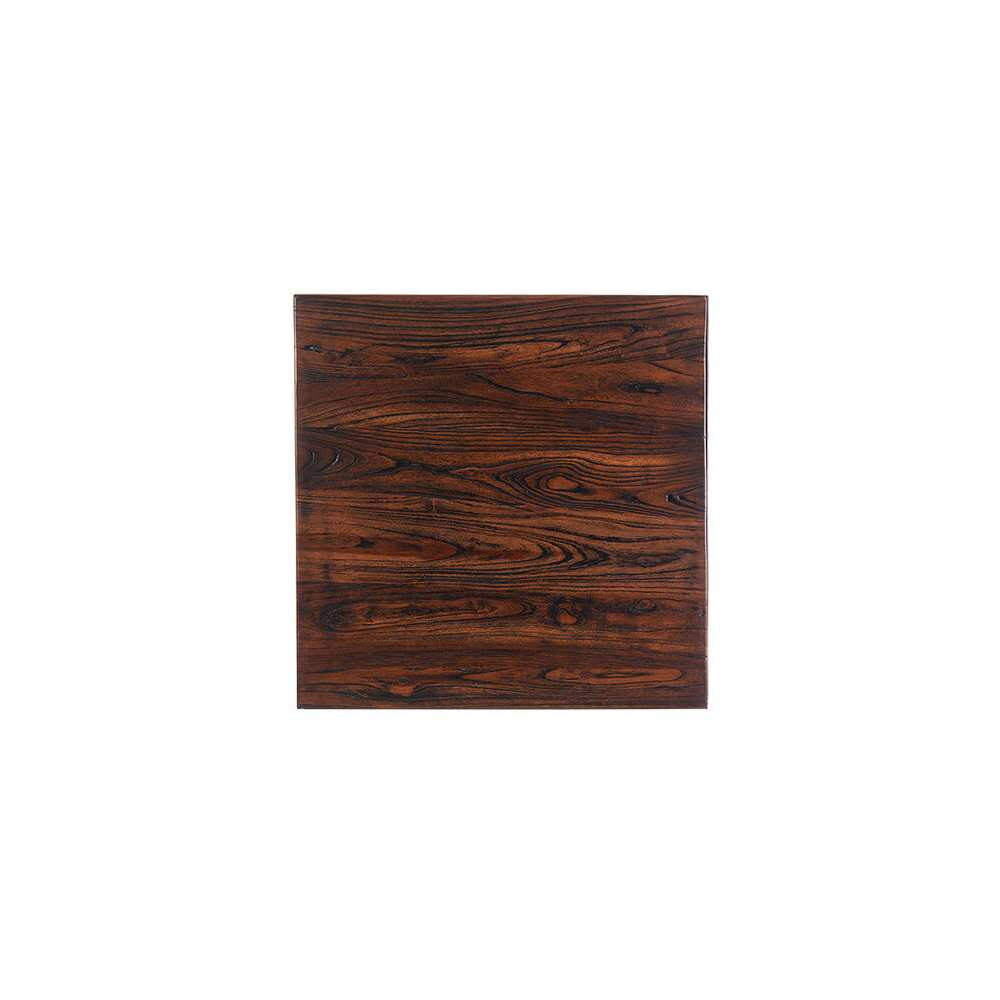
Solid Wood means the top is wood all the way through. Our solid wood butcher block tabletop stands 1 1/2 inches deep at the edge, in seven finishes that run from natural and cherry through the walnuts and mahoganies to black. The Industrial Series elm tabletop in dark walnut is solid wood too, 1 1/8 inches thick, in square and rectangular sizes up to 30 by 72.
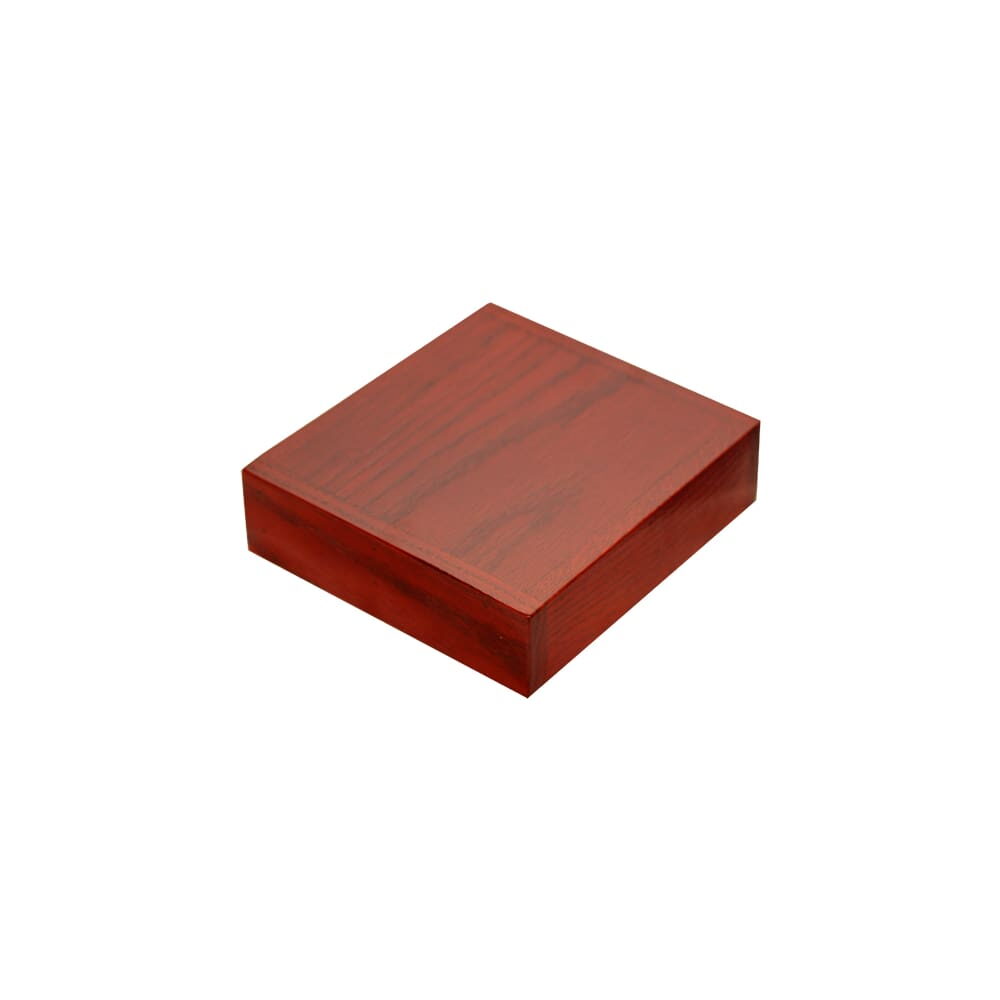
Veneer means a thin face of real wood over a core. The wood veneer top we carry is 1 1/2 inches thick, comes in wood tones and in painted colors from white to red, and lets you choose an eased or a bullnose edge.
Laminate means a printed and sealed surface, and some laminates are printed with a wood grain. The laminate top with a PVC edge lists wood grains such as Colombian walnut, wild cherry and a planked oak alongside its stone looks and plain colors.
Here is the trap. Color names cross over. Our resin tabletop comes in a walnut finish, the elm top is dark walnut, and the laminate has a walnut grain. Three tops, one word, three different materials. Read the material line, not the color name; it is the one rule in this piece worth taping inside the office door.
How solid wood wears
Solid wood is alive in a small way. It takes on moisture in a humid summer and gives it up when the heat runs in winter, and the top moves a little as it does. That movement is natural, and the warranty treats it that way: natural movement of solid wood is excluded. Plan for it instead of fighting it. Keep solid tops away from the oven door, the radiator and the cold draft at the entrance.
The surface takes marks. A hot mug with no saucer, a wet glass left through the lunch rush, a knife dragged across the grain. On a butcher block those marks become part of the top's character, and a shop that likes that look will like the top more each year. A shop that wants every table to look new on Monday will not.
The upside is depth. Solid wood is wood all through, so wear at the surface shows more wood beneath it rather than a different layer. That is the reason owners pick it for the tables by the window, where people sit longest and look closest.
Veneer and laminate in the same room
A veneer top gives you real wood at the face with a steadier core underneath. It looks like wood because it is wood, and it moves less than a solid slab. The face is thin, though, so a deep gouge reaches past it.
Wood-grain laminate is the workhorse. It takes the wipe after every guest, and the grain is printed, so there is nothing to soak up a spill. It will never look quite like the butcher block beside it, and that is fine in a deli where the lunch line moves past the case and tables turn over fast.
Plenty of shops run both. Solid wood by the window and the counter, where the regulars settle in, laminate in the middle of the floor where the trays land. Keep the color family close and the room still reads as one. If you are matching tones, order chips through free samples and lay them side by side on the counter under your own light.
Warranty and arrival, worked through
The warranty periods tell you how each top is regarded. On a complete table, a solid wood top carries 6 months; an indoor table whose top is not solid wood carries 1 year. Say you take delivery of ten solid wood butcher block tables on a cast iron base in the first week of March. The 6 months run to the first week of September. Ten laminate tables delivered the same week would run to the following March.
Covered or not, the first three days matter most. You have three days from receipt to put any defect or shortage to us in writing, so unpack every top as it comes off the pallet, look along the edge, check the surface under a bright light and photograph anything wrong.
Normal wear is not a defect, and neither is damage from the wrong cleaning agents. Wipe wood with a damp cloth and a mild soap, dry it straight after and keep the bleach spray for the back of house.
Size and base, briefly
Wood tops come in the same sizes as everything else. The butcher block goes from a two-top square of 24 inches to a round of 60, plus drop-leaf squares that open to rounds: 30 by 30 to 42 inches, 36 by 36 to 51. The table version comes on a cast iron base at 30 inches tall, with the base size chosen to suit the top.
Weight is worth a thought for the close. The elm top weighs 16 pounds on its own. The industrial black bar-height table with a dark walnut wood top weighs 33 pounds complete, with a top 1 inch thick on a steel base, in rounds and squares from 24 to 32 inches. Our wood table tops and butcher block tops list every size, and the tables page shows the complete versions.
What to do on delivery day
Before the first wood top goes out on the floor, set a coaster tray on each table and a dry cloth beside the wet one at the station. Tell staff which tops are solid wood and which are laminate, because the cloth and the habit are different.
For the wider choice of top materials, our notes on cafe tabletops go through laminate, resin and stone as well. The bistro tables hub covers sizes and heights, and if you are weighing a metal frame under a wood top, the piece on the metal bistro table covers the base. Then walk the room in the afternoon light and look along each top at a low angle; that is where a scratch shows first, and where you will see the wood settle in.