Shop notes
Buying a metal bistro table for inside and the sidewalk
A metal table is a tool you wipe after every guest. It takes a cup set down hard, a tray dragged across it and a chair knocked into its foot at the rush, and at close it gets wiped once more and maybe carried in from the sidewalk. Buy it the way you would buy a sheet pan: for what it is made of and what it can stand, not for the picture.
Two parts can be metal. Some of our tables are metal all through, top and base together. More often the top is laminate, wood or resin and only the base is metal: cast iron, steel, chrome or aluminum. Both count as metal bistro tables in the trade, and both come down to the same short list of questions. What is the metal, where may it stand, and what does its finish want from your cleaning cloth?

Open diagram at full size (new tab) ↗
Read the diagram in text
A hub diagram: the top card says to read the usage line first. Below it, three cards describe a steel folding table listed for indoor and patio use, a cast iron round base listed for indoor use only, and an aluminum base listed for indoor and patio use. A note bar gives the two-thirds base rule.
- METAL TABLE NOTES
- Read the usage line: Indoor, or Indoor, Patio: that word decides the sidewalk.
- Steel folding table: Cast iron base, 30 pounds. Indoor and patio.
- Cast iron round base: 17, 22 or 30 inches. Indoor only.
- Aluminum base: 22 by 22 inches, 20 pounds. Indoor and patio.
- Under a round top, the base spreads at least two thirds of the top: 20 inches for a 30-inch round.
- Indoor or Indoor, Patio on the product page decides whether a metal table may go out front.
Read the usage line first
Each product page has a line saying where the piece may be used, and on a metal table it matters more than the price. Some read Indoor. Others read Indoor, Patio. That one word decides whether the table may go out on the sidewalk in front of the shop.
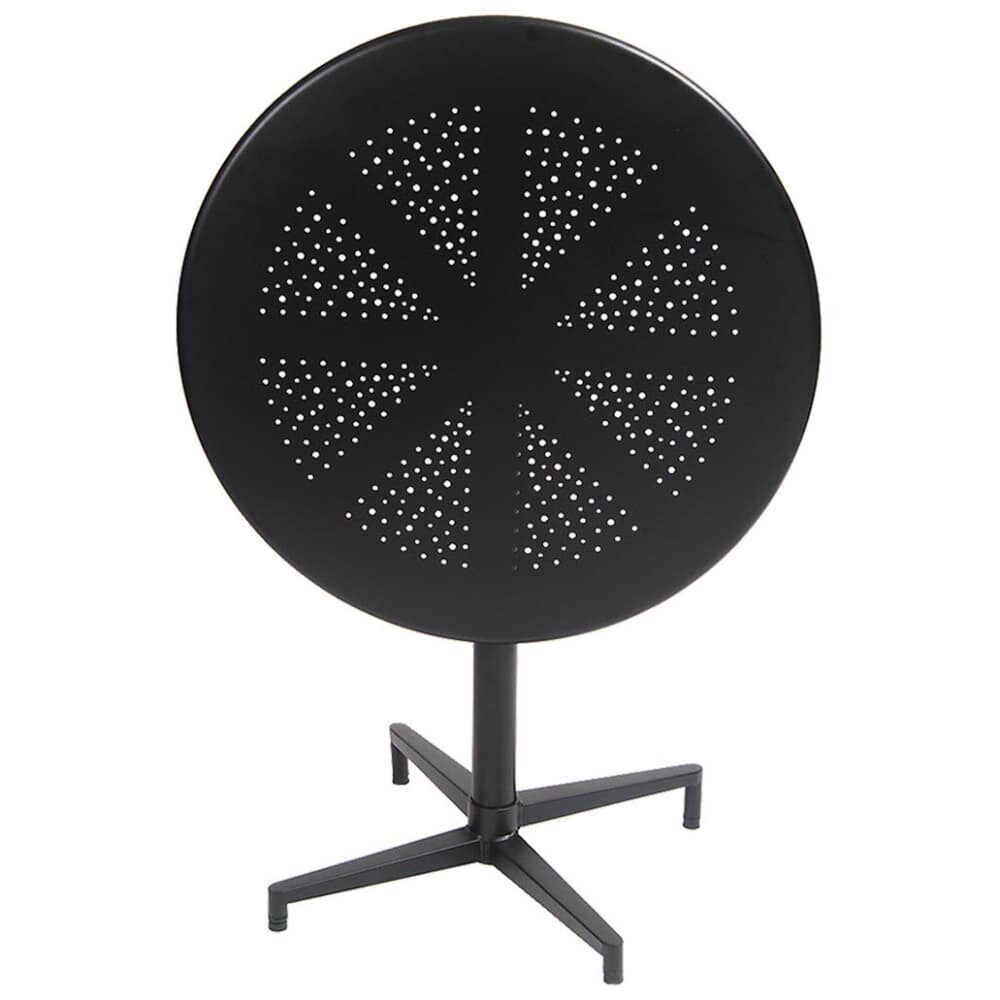
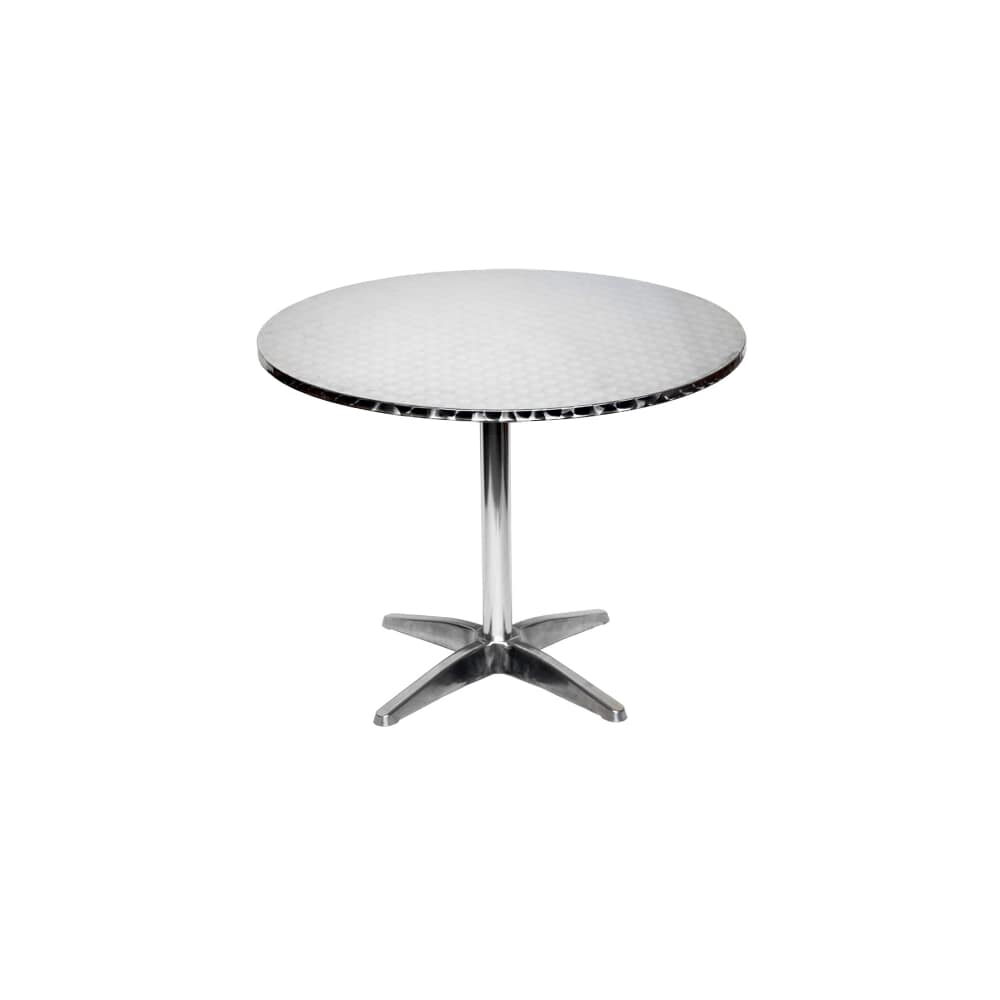
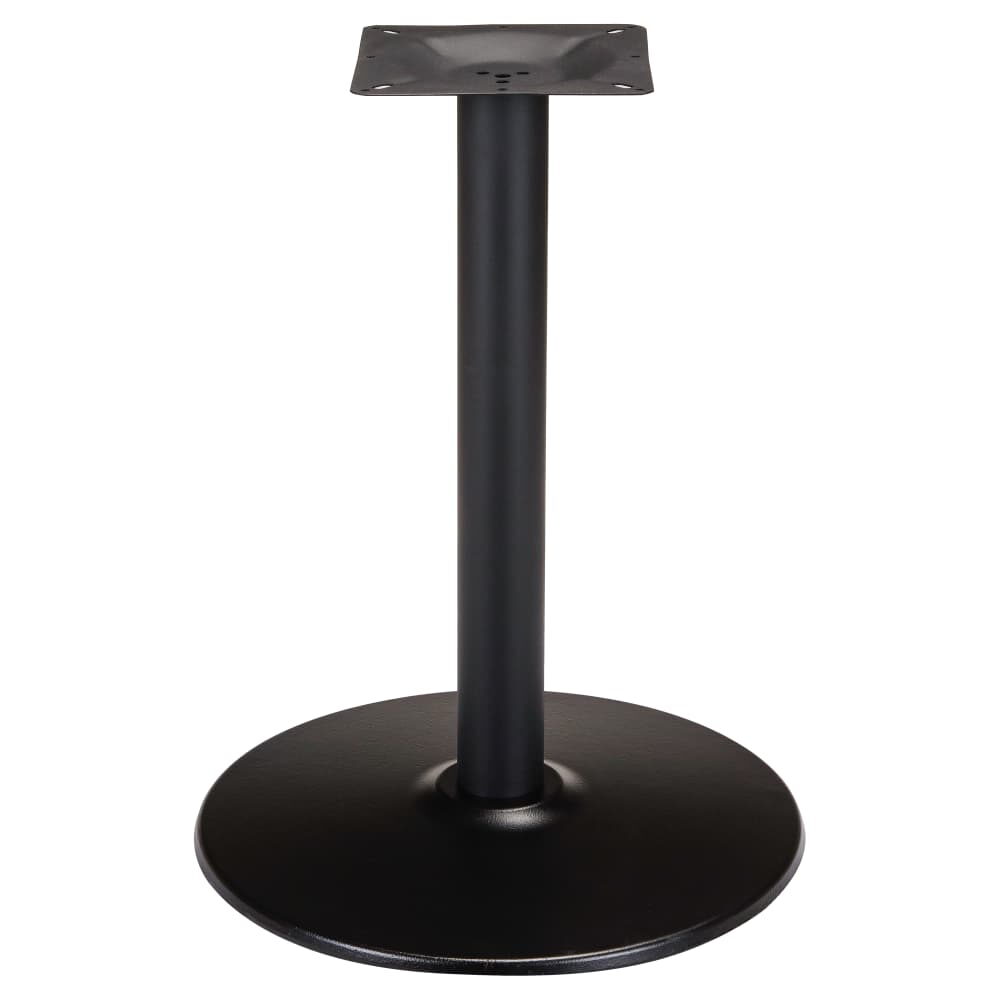
Here is how it plays out across a few pieces we carry. The metal folding table with a cast iron base has a steel top, and its page names both the dining room and the patio. So is the stainless steel table with a steel base. The standard-height round cast iron base that sits under so many cafe tops says Indoor and nothing more. The chrome round base in the same three sizes reads the same.
That gives the rule we repeat to every owner who plans a sidewalk row: read the usage line before the price. Outside is for patio-listed pieces only. An indoor table left out in the weather falls outside the warranty, and so does outdoor furniture nobody looks after. A patio table still needs looking after: hose it off now and then, let the rain run away from its feet, and cover it or bring it in for the winter.
Steel tops, and what they ask for
A metal top is the easiest surface in the shop to understand. There is no grain for a spill to soak into, and a wet cloth leaves it as it found it.
The folding table above takes a top 30 inches across, round or square, in black or red, at 30 inches tall, and weighs 30 pounds. Its bar-height sister stands 42 inches tall and weighs 26. The stainless steel table runs smaller, in 24, 28 or 32-inch squares and rounds, silver, also at dining height.
Those sizes tell you where each one fits. A 24-inch stainless round is a two-top for a coffee and a pastry. A 30-inch folding square gives a pair room for full plates. A 32-inch square runs a little past the 30 by 30 we count as a compact four-top.
Care is plain. Warm water with a mild detergent, a soft cloth, then a dry one. Skip the scouring pad and the harsh chemical spray from the back room. The warranty does not cover damage done by the wrong cleaning agents.
The foot and the floor
Most of the wear on a metal table happens at the bottom. The foot meets a wet floor every time someone mops, and the edge of the base takes every kick from a chair leg.
Look at the glides before anything else. The round cast iron base comes with adjustable glides as standard and self-leveling glides as an option, which is worth the thought on an old tile floor that dips at the grout lines. A table that sits flat does not need a folded napkin under one foot, and a folded napkin is the first thing staff reach for.
Then size the base to the top. A round top wants a base whose reach is no less than two thirds of its width. Say you pair a 30-inch round laminate top with a metal base. Two thirds of 30 is 20, so the 22-inch size of the cast iron base or of the chrome base is your fit, and the 17-inch one is too small. On a sidewalk, where the cast iron base is not listed for use, look at a standard-height aluminum base instead. Its page clears it for the patio too. It weighs 20 pounds and comes in a 22 by 22 inch size or as a two-prong double base for a longer top.
The full range sits under cast iron table bases, the chrome or aluminum bases have a page of their own, and the other metals are on the table bases page.
A mistake at the sidewalk
Say an owner buys the cast iron base for the dining room, likes it, and orders six more for the two-tops out front. Its page says Indoor. It goes outside anyway, takes a season of rain, and when the finish gives up there is nothing to claim, because indoor furniture used outdoors is excluded.
Avoiding it costs nothing. Before you add a base or a table to the basket for the sidewalk, check that the usage line names Patio. If you are unsure where to start, our outdoor furniture section is the place, and each page there still states its usage.
Weight is the other half of the sidewalk job. Six folding tables at 30 pounds each is 180 pounds carried in and out every day. Ask who on your staff does that at the last sweep, and whether the bar-height version at 26 pounds, or a lighter base, would make their night shorter.
Matching the metal to the room
A black cast iron foot under a wood top reads as the classic cafe table. Silver chrome or stainless looks brighter and cooler, and suits a shop with a steel counter and white tile. Our industrial furniture collection pulls together metal frames with wood and laminate tops if you want to see them side by side, and the tables page shows every complete table we list.
For the top that goes on the base, read our notes on cafe tabletops. The bistro tables hub covers sizes and heights, and the piece on the rectangular bistro table shows how two-tops on metal bases join for four.
The last check before you order
Make two columns on a sheet: tables that stay inside and tables that go out. Every piece in the second column must say Patio on its usage line. Then write the top size beside each base and check the two-thirds figure.
If the finish color matters, as it does when you are matching a base already on your floor, ask for a metal finish swatch through our free samples page before you order. Hold the swatch against the old base under the window light, where the guests will see both.