Shop notes
The rectangular bistro table that pushes together for four
Ten in the morning, and a family of four walks in wanting to sit together. Your floor is all two-tops. Someone on staff slides two tables together, the family sits, and forty minutes later the tables part again for the pair of regulars who come in at noon. That small shuffle is the whole case for the rectangular bistro table.
A round top is a fixed party size. A square can join another square, but the result is long and narrow. A rectangle of the right size joins its neighbor along the long edge and makes a proper four-top, then goes back to being a two-top without anyone noticing. In a cafe where the parties change through the day, that is worth more than any finish.

Open diagram at full size (new tab) ↗
Read the diagram in text
Three numbered cards: a 24 by 30 inch two-top for a pair, two of them joined on the 30-inch edge to make 30 by 48 inches for four, and a 16-foot wall bench run that takes eight tables and 16 seats. A note bar says to buy joinable tables on one order line.
- SHIFT NOTES
- 1
- One for a pair: Two guests, 24 inches of edge each, at the standard two-top.
- 2
- Two for four: Join two on the 30-inch edges: 48 by 30, the four-top size.
- 3
- Eight on a bench: A 16-foot wall takes eight tables, 24-inch edge to the bench: 16 seats.
- Buy every table that will join on one order line, so the tops meet flush.
- Join two standard two-tops on their 30-inch edges and you have a 30 by 48 table for four.
The two sizes that fit together
The figures we plan with put the standard two-top at 24 by 30 inches, and a comfortable table for four at 30 by 48. Put two 24 by 30 tops side by side, with the 30-inch edges meeting, and the result is a table 48 inches long and 30 deep. That is the four-top, made from two pieces you already own.
Seat it and the numbers keep working. Two guests sit on each 48-inch side, and each gets 24 inches of edge, which is the figure we allow per guest. The joint runs down the middle of the table between the plates.
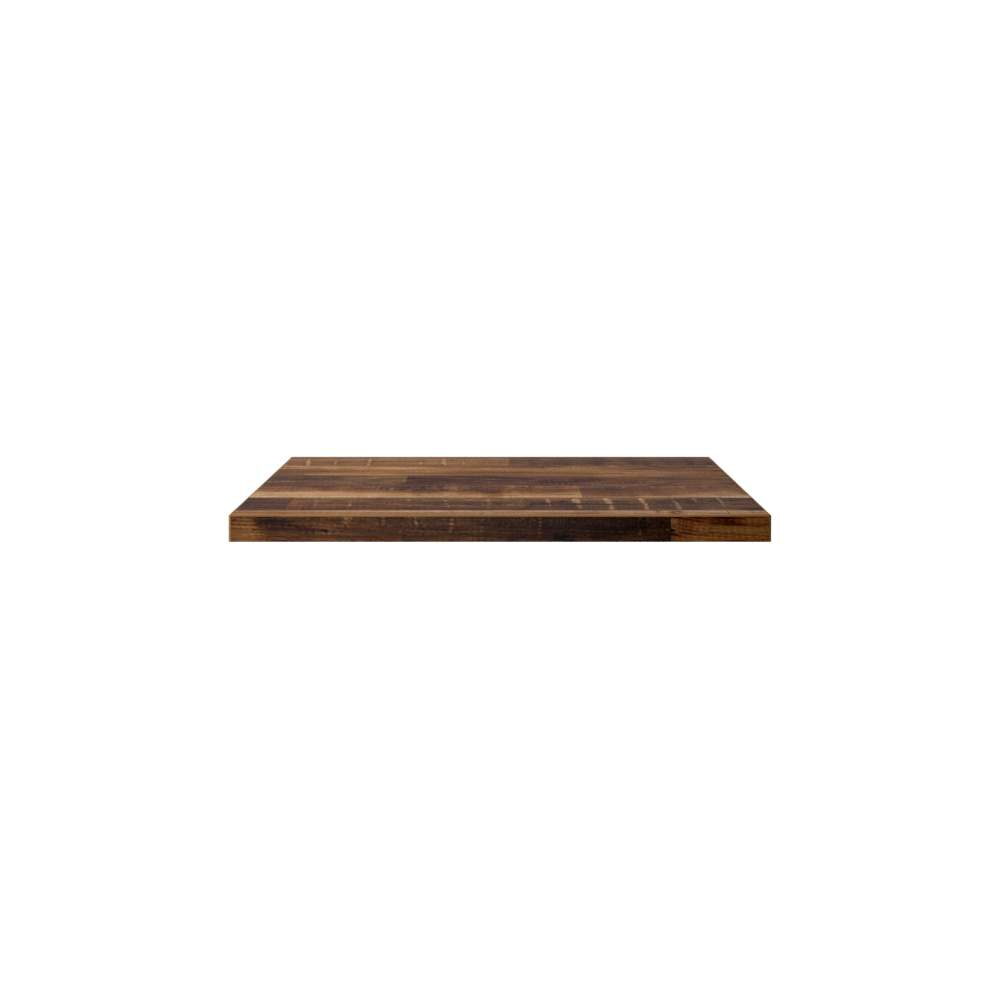
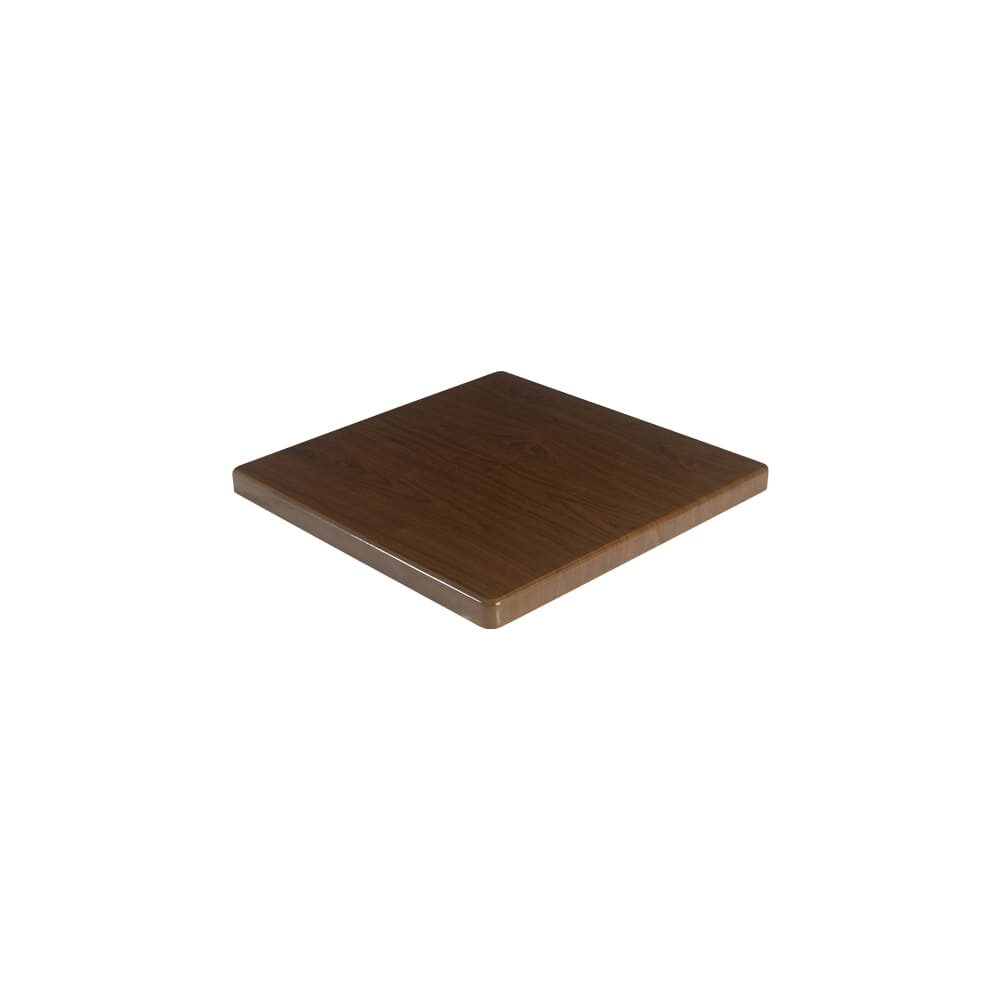
So the rule is short: buy 24 by 30 for the floor and you get 30 by 48 whenever you need it. Our laminate, resin and butcher block table tops each list both sizes. A laminate top with a PVC edge, for one, comes in 24 by 30 and in 30 by 48, along with 24 by 42 and 30 by 60 for longer runs. It has the laminate face in a marble look, a wood grain or a plain color.
A run along a wall bench
Rectangles shine against a bench. Picture a 16-foot wall, which is 192 inches, with a bench running its length and a line of two-tops in front of it. One guest sits on the bench, the other on a chair across the table.
Turn each 24 by 30 top so its 24-inch edge faces the bench. Each table then takes 24 inches of the wall, and 192 divided by 24 is 8. Eight tables, eight guests on the bench, eight on chairs, 16 seats. Everyone has exactly the 24 inches we allow.
Turn the same tops the other way, 30-inch edge to the bench, and 192 divided by 30 is 6.4. Six tables fit, 12 seats, and each guest has 30 inches of elbow room. Fewer seats, more comfort. Neither layout is wrong; one suits a quick bakery morning, the other a slow deli lunch.
Here is the part that makes the bench run work through a shift. At eight tables edge to edge, two parties of four can each take two tables, and the rest stay as pairs. Nothing has to be carried across the room. Our benches and lounge seating page shows what we carry for the wall side, and the hub on bistro tables covers the chair side.
The mistake that shows at the seam
Owners push two tables together and find a step in the middle. One top is a little thicker than the other, or one base is a little shorter. The guests feel it every time a cup crosses the joint.
It comes from buying in pieces over time. The PVC-edged laminate measures 1 1/4 inches from face to underside; a resin tabletop measures 2. Put one of each on the same base height and the seam has a 3/4-inch step.
The fix is to buy every joinable two-top as one order line. A line in our basket is one configuration: one top material, one size, one edge, one base. Order 12 identical tables on one line and all 12 meet flush. When you add more later, ask for a fresh swatch first and confirm the color before you reorder, because laminate and finish color lists change over time.
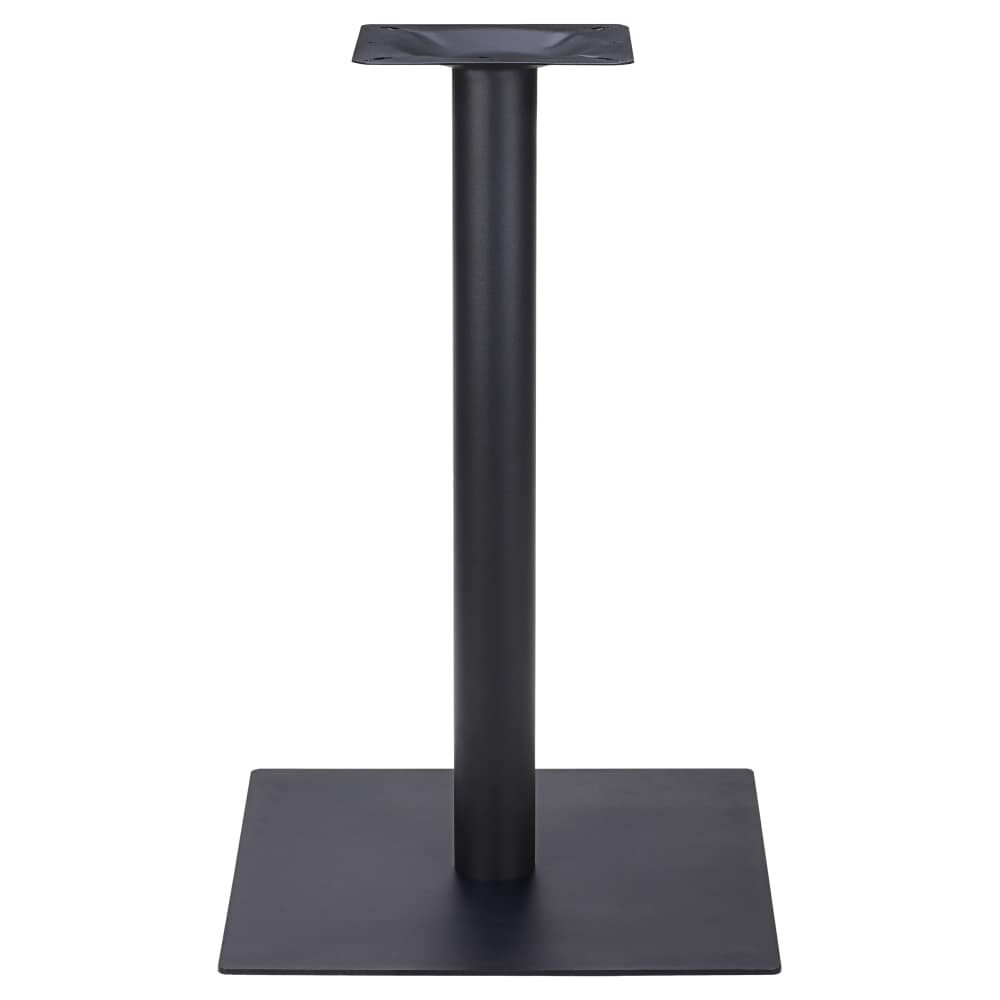
The bases matter too. Under a 24 by 30 top a single base sits in the middle, and when two tables join, the two bases stand side by side under the seam. A cast iron square base at 28 inches tall comes in 20 by 20 and 24 by 24 sizes and an 18 by 36 inch size for longer tops. Choose the size that keeps the feet clear of the guests' shoes on the bench side. You will find the other shapes under table bases.
When to buy a long table outright
Not every four-top needs to be two pieces. If one corner always seats four, a single table saves the joint altogether. The metal dining table with a dark walnut top is a fixed 28 by 48 inches, 30 inches tall, on a steel frame, and weighs 77 pounds. That weight is a reason it stays where you put it, and a reason to plan who moves it at the last sweep.
Longer runs are a different job. A 30 by 72 top gives each long side room for three guests at 24 inches apiece, and on some of our configured tables a long top can take two bases rather than one. The tables section lets you see those configurations with the base included.
Plan the shuffle before the shift
Draw your floor twice: once with every table apart, as it stands at noon, and once with the pairs pushed together for the busiest family hour. If the second drawing blocks the 36-inch service aisle, move the joinable tables to where the aisle can take it. Two shop plans hold both versions side by side, and the downloaded sheet goes on the wall by the till.
Then mark which tables are meant to join, and keep those on one order line. Read our notes on cafe tabletops to choose the material, and if a few corners of the room would suit a curve, the piece on the round bistro table gives the sizes. Put a strip of tape on the floor where each pushed-together pair should land, so the staff at ten in the morning do not have to guess.