Shop notes
Round bistro table sizes, seats and the base underneath
A round top has no corners. In a narrow shop with a line that bends past the bakery case, that one fact does a lot of work: hips, bags and trays slide off a curve where they would catch on a square edge. It is the reason the round bistro table has sat in cafe windows for as long as there have been cafe windows.
The shape is easy. The size and the base are where owners go wrong, so this piece is about those two things only. Which diameter seats how many, and what has to stand under it so a full cup and a leaning elbow at the rim cannot tip it?

Open diagram at full size (new tab) ↗
Read the diagram in text
Three stacked cards pair round top sizes with seats and base spreads: 24 and 30 inches for two on 17 and 22-inch bases, 36 inches for four on a base of 24 inches or more, and 42 inches for four on a 28-inch base. A side panel repeats the two-thirds base rule.
- ROUND TOP NOTES
- 24 and 30 inches: A pair. Bases of 17 and 22 inches cover them.
- 36 inches: Four in close quarters. The base must reach 24 inches.
- 42 inches: Four with room for a shared plate. Base of 28 inches.
- Base rule
- Base: 2/3 of top
- Round up a size
- Check open leaves
- Never round down.
- Take two thirds of the top's diameter, then step up to the next base size listed.
Diameter and the seat count
We plan rounds from a simple figure: each guest needs about 24 inches along the rim, and in a tight room you can squeeze that to 18. The edge of a round is its diameter times 3.14, so the arithmetic is quick.
- 36 inches across gives about 113 inches of edge. Four guests get 28 inches each, which is why we call it a four-top for close quarters.
- 42 inches gives about 132 inches, or 33 each for four. Comfortable, with room for a shared plate in the middle.
- 48 inches gives about 151 inches. Six guests get 25 each, five get 30. That is the size for a family of five on a Saturday morning.
Below 36 inches the round becomes a two-top. We treat a 24-inch round the way we treat a 24-inch square, as the smallest top a pair can use, with one difference worth knowing. The round has less surface: 452 square inches against 576 for the square, about a fifth less. Two cups and two plates still fit, but the plates sit closer to the rim. A 30-inch round gives the same pair 707 square inches, more than the 24-inch square, and that is the size we steer most bakeries toward when the order comes on a plate.
At the other end, a 60-inch round seats eight. Few cafes need one, but a shop that hosts a weekly knitting group or a staff breakfast might.
The base that keeps it standing
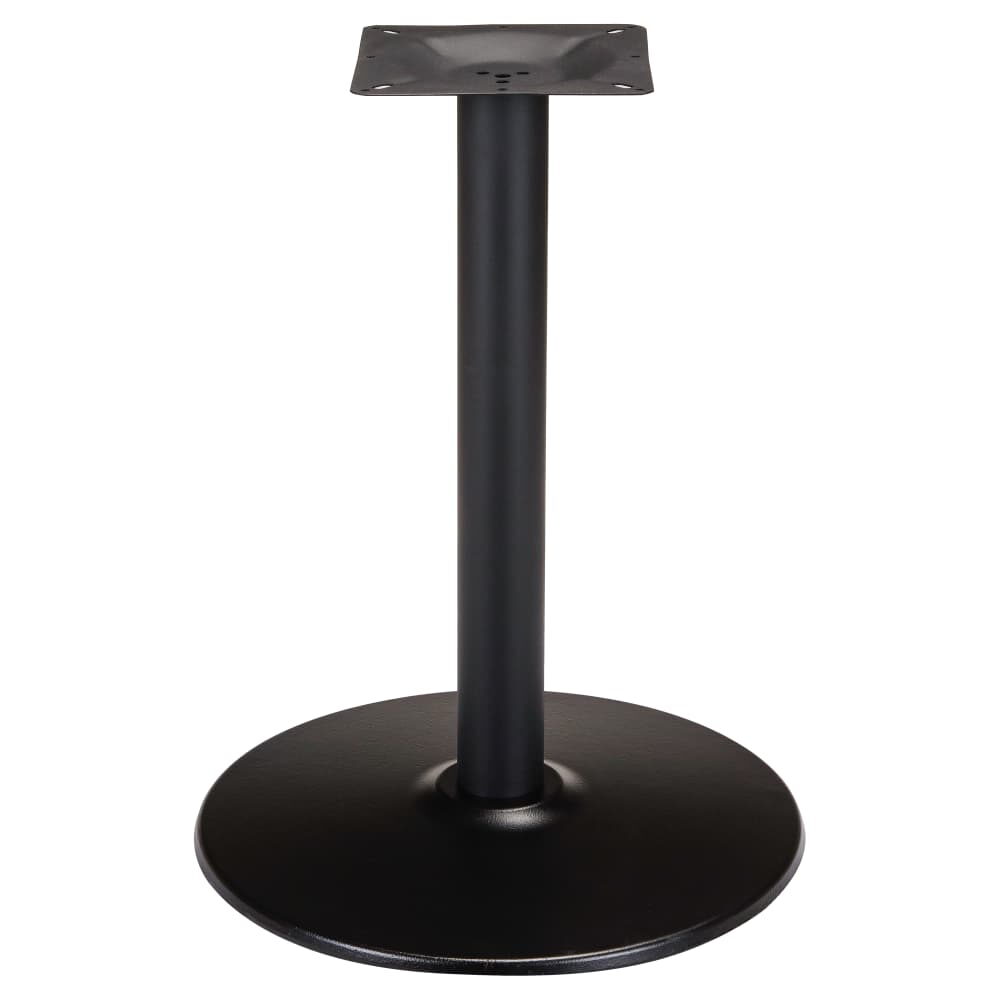
Here is the rule to carry away: the base under a round top wants feet that reach two thirds of the way across, measured tip to tip, or more. Work it out, then round up to the next base size on the page, never down.
For a 24-inch top, two thirds is 16 inches. Our round cast iron base at standard height comes in 17, 22 and 30-inch sizes, so the 17-inch one is the right call. A 30-inch top needs 20 inches, and the 22-inch base covers it. A 36-inch top needs 24, which skips past the 22 and lands on the 30.
A 42-inch top needs 28 inches. There the cast iron round base with a 28-inch spread meets the figure exactly, and you can order that base 28 inches tall for dining or 41 inches tall for a perch at the window. At 48 inches the rule asks for 32, which is past every round base in that list, so we turn to a four-prong base such as the 33 by 33 inch cross base with a wood-look finish.
The mistake to watch for is the 36-inch round on a 22-inch base. It looks fine on delivery day. Then a regular leans on the rim to stand up and the far side lifts. Two inches short on the base is the whole problem, and no glide makes up for it.
Browse every size we list under round table bases, and if your floor is uneven, look at the glide options on each page. The round base above offers adjustable glides as standard and self-leveling glides as an option.
What a round costs you on the floor
Rounds save corners and spend floor. Say you plan a 42-inch round with four chairs that are 20 inches deep, and you want 18 inches behind each chair so a guest can push back. Across the table that is 18 plus 20 plus 42 plus 20 plus 18, or 118 inches. Call it a circle almost ten feet wide for one four-top. Add your 36-inch service aisle on the side where staff walk, and that one table claims a strip about thirteen feet long.
That is not a reason to avoid rounds. It is a reason to put them where the room is already round in use: the corner by the door, the bay window, the open patch in front of the case where people turn. Lay a few out in a shop plan and see which corners take one before you choose the count.
Tops worth putting on a round base
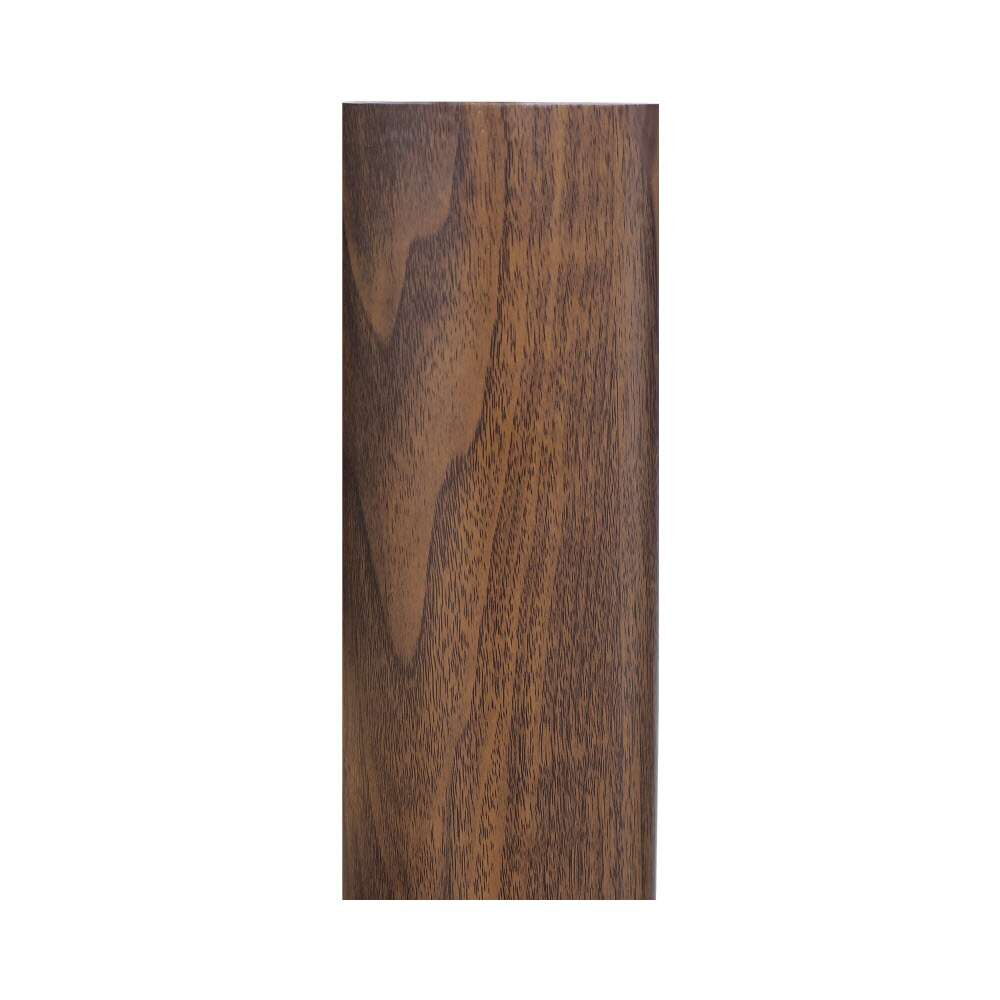
Most of the table tops we carry come in round sizes. A resin tabletop is listed in 24, 30, 36, 42 and 48-inch diameters, 2 inches thick, in dark mahogany or walnut. Butcher block comes round as well, and it has one trick worth knowing: its 30 by 30 inch square opens to a 42-inch round, and the 36 by 36 opens to 51. A square two-top by the counter in the morning becomes a round four-top for the late lunch group. Check the base against the open size, not the folded one.
For how each material takes a hot plate and a wet cloth, read our notes on cafe tabletops. The broader hub on bistro tables covers heights and the rest of the range, and if your rounds are going in a tight window, the piece on the small bistro table runs the count for two-tops.
Before you sign the order
Write the top size and the base size on the same line of your list, side by side, and check the two-thirds figure against each pair. It takes a minute and it is the one check that keeps a table steady for years.
Then decide where each round goes. The tables section shows complete tables if you would rather not pair a top and base yourself. Once the numbers work, cut a cardboard circle the size of the top, lay it on an old table by the door for a morning, and watch how the line moves around it.