Shop notes
A small bistro table that still holds the whole order
How small can a cafe table go before it stops working? Smaller than most owners think, and not as small as the cheapest top in the catalog suggests. The answer sits between a cup, a plate and two pairs of elbows, and you can work it out with a tape measure before you spend a dollar.
A small bistro table earns its keep in the busy hour. At ten past eight the regulars come in pairs, take a coffee and a roll, and stay twenty minutes. They do not need a dinner table. They need a top that holds two cups and two plates without a saucer hanging off the edge, and a floor that still lets your staff carry a tray past them. Get the size right and the window holds an extra pair. Get it wrong and you have either a cramped room or an empty seat you paid for.

Open diagram at full size (new tab) ↗
Read the diagram in text
Three cards compare two-top sizes: 24 by 24 inches as the minimum, 24 by 30 inches as standard and 30 by 30 inches as generous. A side panel lists the window run figures: 18 inches behind each chair, a 36-inch aisle and a base spread of two thirds of the top.
- TWO-TOP SIZES
- 24 by 24 inches: Seats two: cups and side plates fill it
- Minimum
- 24 by 30 inches: Seats two with a little room in the middle
- Standard
- 30 by 30 inches: Seats two with room for full plates
- Generous
- Window run
- Chair gap: 18 in
- Aisle: 36 in
- Base: 2/3 of top
- Count the row first, then size the top.
- The 24-inch square is the floor, 24 by 30 the everyday pick, and 30 by 30 leaves room for the plates.
The sizes that seat two
Start with the planning figures we work from. A 24-inch square top seats two, and that is the floor of the range, not a comfortable middle. A 30-inch square seats the same two people with room for their plates. Between them sits the 24 by 30 rectangle, which most rooms treat as the standard two-top.
Put another way: 24 by 24 is the minimum for a pair, 24 by 30 is the everyday choice, and 30 by 30 is generous.
What changes across those six inches is the middle of the table. On a 24-inch square, two cups and two side plates fill the top edge to edge. Add a phone and a sugar caddy and something goes on the floor. On a 30-inch square there is a strip of open laminate down the center where a pastry board or a shared plate can sit. Each guest gets the same width of edge either way; the difference is the shared space between them.
So the question is less "how small" than "what does the order look like?" A bakery that serves a croissant on a napkin can run 24-inch tops all morning. A deli that sends out sandwiches on oval plates with a side cup of soup wants 30 inches, or at least the 24 by 30.
Count the window before you choose a top
Take a 30-foot window wall, which is 360 inches of floor. You want a row of two-tops along the glass, each table with one edge to the window and a chair at each end, so the pair sits side on to the street. The chair here is a metal cafe chair 20 inches deep. Behind every chair you hold 18 inches so a guest can push back and stand, which is the tight end of the 18 to 24 inch range.
With 24-inch tops, one table and its two chairs take 20 plus 24 plus 20, or 64 inches. Four tables take 256 inches. The run also needs five strips of 18 inches, one at each end and one between each pair of tables, which is 90 inches. Total: 346 inches, inside your 360 with 14 to spare. That is four tables and eight seats.
Swap in 30-inch tops and each table with its chairs takes 70 inches. Four of them take 280, plus the same 90 inches of gaps, for 370. That is ten inches too long, so the row drops to three tables and six seats.
Six inches off each top bought two seats at the window. The same row also eats less depth: a 24-inch table plus a 36-inch service aisle takes 60 inches out from the glass, against 66 for the 30-inch one.
Here is the rule of thumb we give owners: count the row first, then choose the largest top that still lets the count work. If 30-inch tops fit the same number of tables, take them; your guests will thank you every time a second plate arrives. You can lay the run out in a shop plan and try both sizes side by side before you order.
Where small tops go wrong
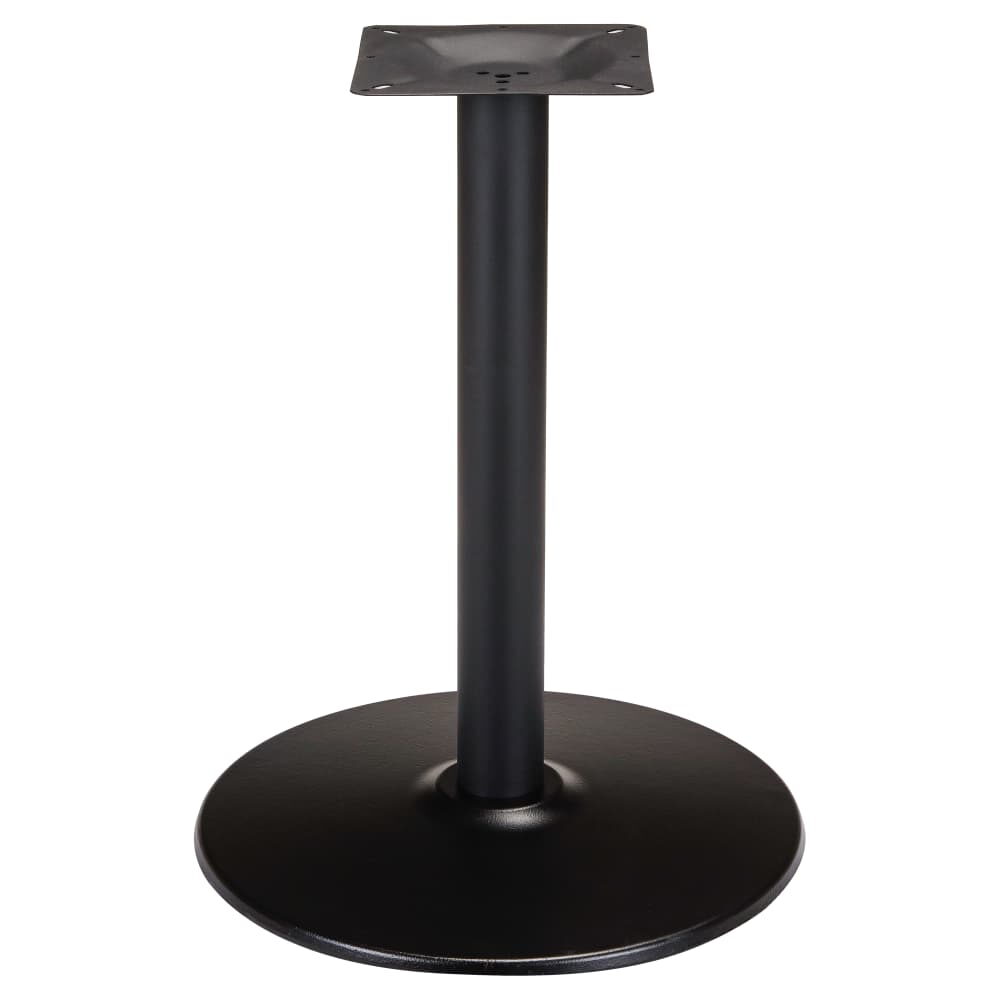
The mistake we see most is buying the small top and keeping the big base. Under a round top, the feet of the base want a reach, tip to tip, of two thirds of that top's span or better. For a 24-inch round that means 16 inches, so a standard-height round cast iron base in its 17-inch size is the right fit, and its 22-inch size suits a 30-inch round, which needs 20. Going the other way also hurts. Put a 22-inch base under a 24-inch top and the feet of the base sit almost at the edge, right where the guests' shoes want to go.
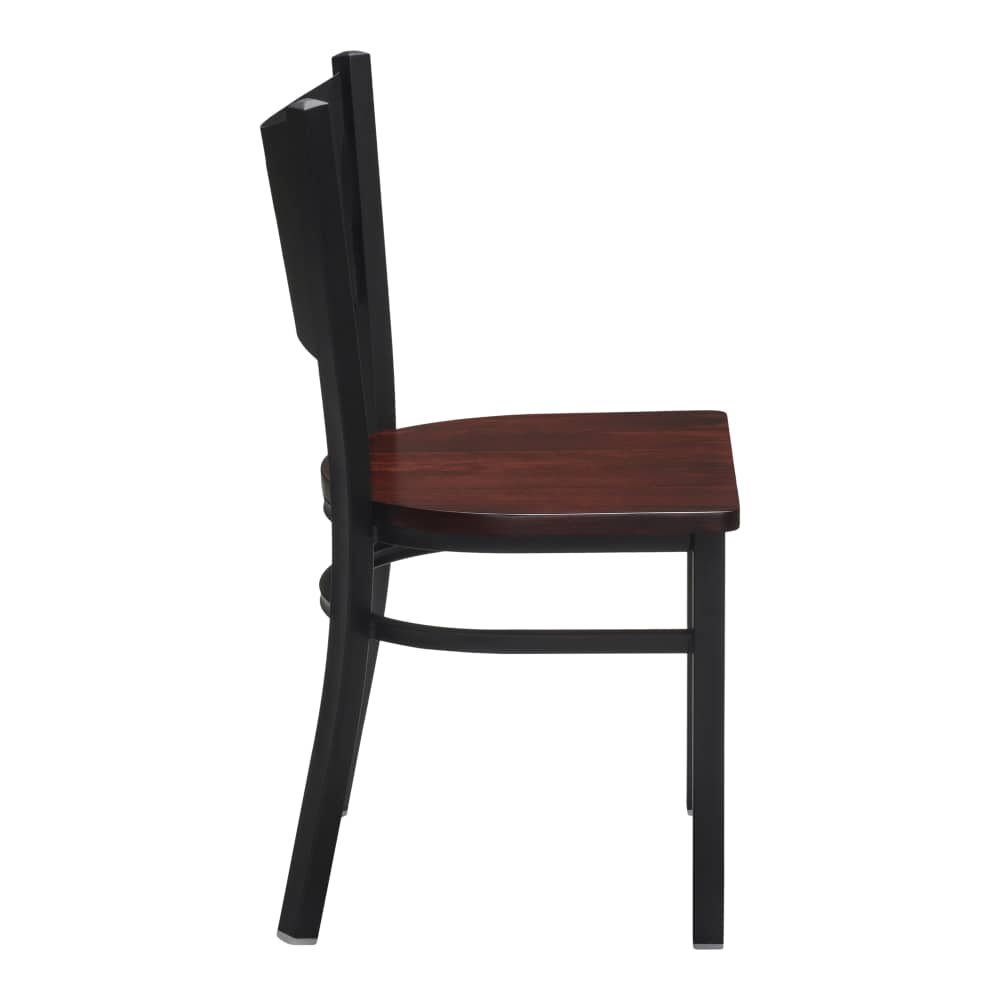
Next comes the chair. A small top with a wide armchair turns a two-top into a puzzle; the chairs collide with each other before they reach the table. Choose a narrow side chair for small tables. The metal cafe-back chair from the window count measures 17 by 20 inches, width by depth, and sits well at a 24-inch top. Our metal chairs list the width and depth on every page, so you can check the fit against the top before you buy.
Last, owners forget the aisle. A row of small tables invites you to push one more in. Do not take it out of the 36-inch aisle. That aisle is where the tray goes, where the stroller goes and where your staff walk at the last sweep.
Choosing the top itself
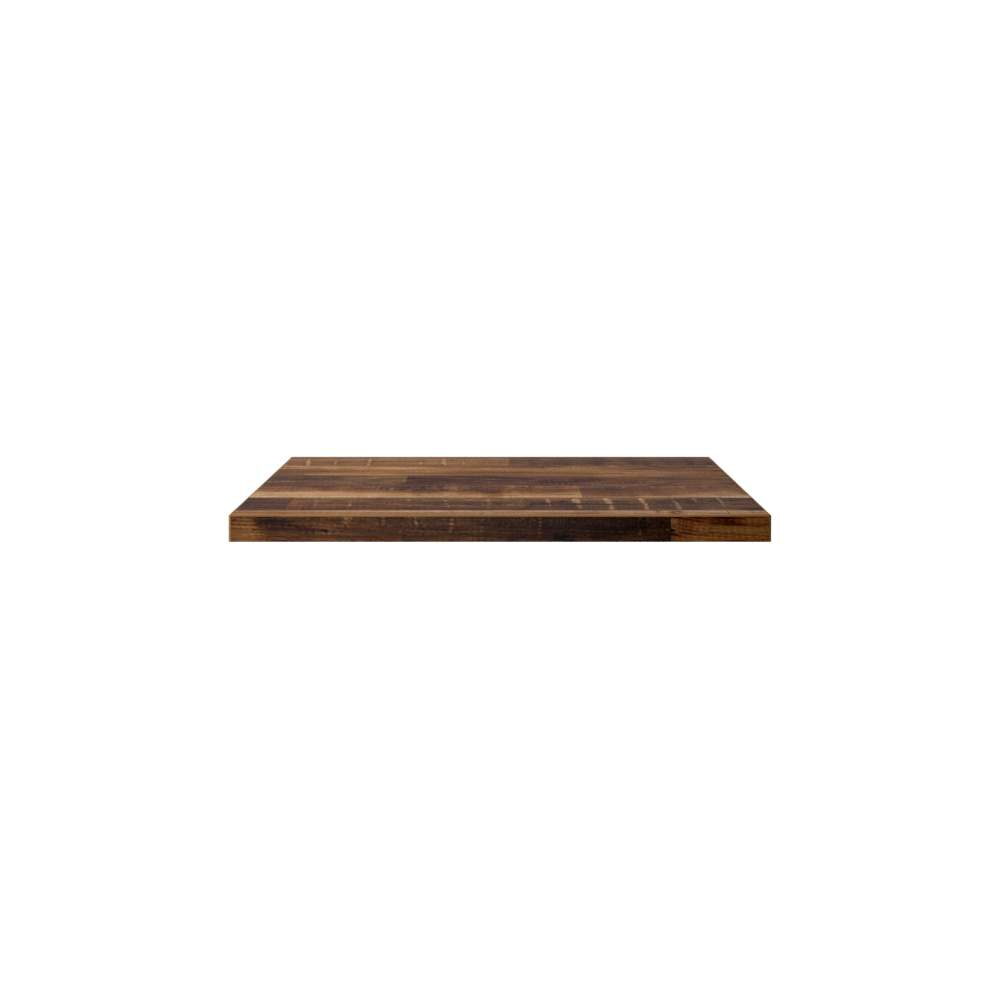
Small tops take the same wear as large ones, only more of it per square inch, because every cup lands in the same few spots. For the morning crowd we lean toward laminate. A laminate tabletop with a PVC edge comes in 24 by 24, 24 by 30 and 30 by 30, among a long list of sizes, and in a 24-inch round as well. Its thickness is 1 1/4 inches, which gives a small top a solid feel under the hand.
Browse the full range of table tops if you want wood, resin or stone instead, and read our notes on cafe tabletops for how each material handles a hot plate and a wet cloth. If you are weighing laminate colors, order a few chips through free samples and set a coffee cup on each one at the counter.
Not every two-top has to sit at dining height. A tall table by the window seats two on stools and changes the count again; our piece on the bar height bistro table works through that case.
Before the tape measure goes back in the drawer
Walk the room at the busy hour with the tape in your hand. Measure the window wall, the depth to the line and the distance from the till to the door. Write the numbers on the back of a receipt if that is what is near.
Then decide the count, and only then the top. Size the base from the top using the two-thirds rule, choose a chair narrow enough for the table, and keep the aisle whole. Our round table bases and the wider tables range cover both halves of the job, and the hub on bistro tables links the rest of our notes. When the plan works on paper, tape the outline of each top and chair onto the floor by the window and walk a tray through the row before you order.