Shop notes
A modern bistro table that stands as firm as it looks
A modern bistro table is mostly a question of what you leave off. No turned column, no scrolled foot, no wood grain fighting for attention. A plain top in one color, a base with a clean shape under it, and the room looks newer the moment the tables go down.
The trap is that clean often means slim, and slim can mean a small foot. A table at a cafe counter gets leaned on by a regular reading the paper, bumped by a pushchair, and loaded with a tray of four coffees and a cake stand. None of that cares what style the base is. So this guide is about choosing a modern look that still stands firm at a busy two-top, starting with the rule that does not move.

Open diagram at full size (new tab) ↗
Read the diagram in text
Three level cards pair round tops of 24, 30 and 36 inches with the smallest foot each needs, 16, 20 and 24 inches, and a base size that clears it. A side panel gives the height sum of a 28-inch base and a laminate or resin top.
- BASE NOTES
- 24-inch round: Needs a 16-inch foot. A 17 clears it.
- 16 MIN
- 30-inch round: Needs a 20-inch foot. A 22 clears it.
- 20 MIN
- 36-inch round: Needs a 24-inch foot. A 28 clears it.
- 24 MIN
- Height sum
- 28-inch base
- Laminate top: 29 1/4
- Resin top: 29 1/8
- Dining tables plan to 29 to 30 inches.
- Measure the foot across: two thirds of the top or more, whatever shape the base takes.
The base rule that does not change with the style
We size every round base the same way: measure the foot across, and it must come to two thirds or more of the top above it. A modern base is held to that the same as an old cast iron one.
Run the sums before you fall for a shape. A 24-inch round top needs a foot of at least 16 inches. A 30-inch round needs 20. A 36-inch round needs 24. Anything under the figure and the table will tip toward whoever leans on it, however good it looks in the catalog.
That rule is written for a round base under a round top. For square tops and four-prong bases, hold the listed foot size up against the top you want and ask us if the two are close; our bistro table bases guide goes further into foot shapes.
Statement bases, and what each one really measures
Our statement bases are where the modern shapes live. Four of them cover most cafe floors.
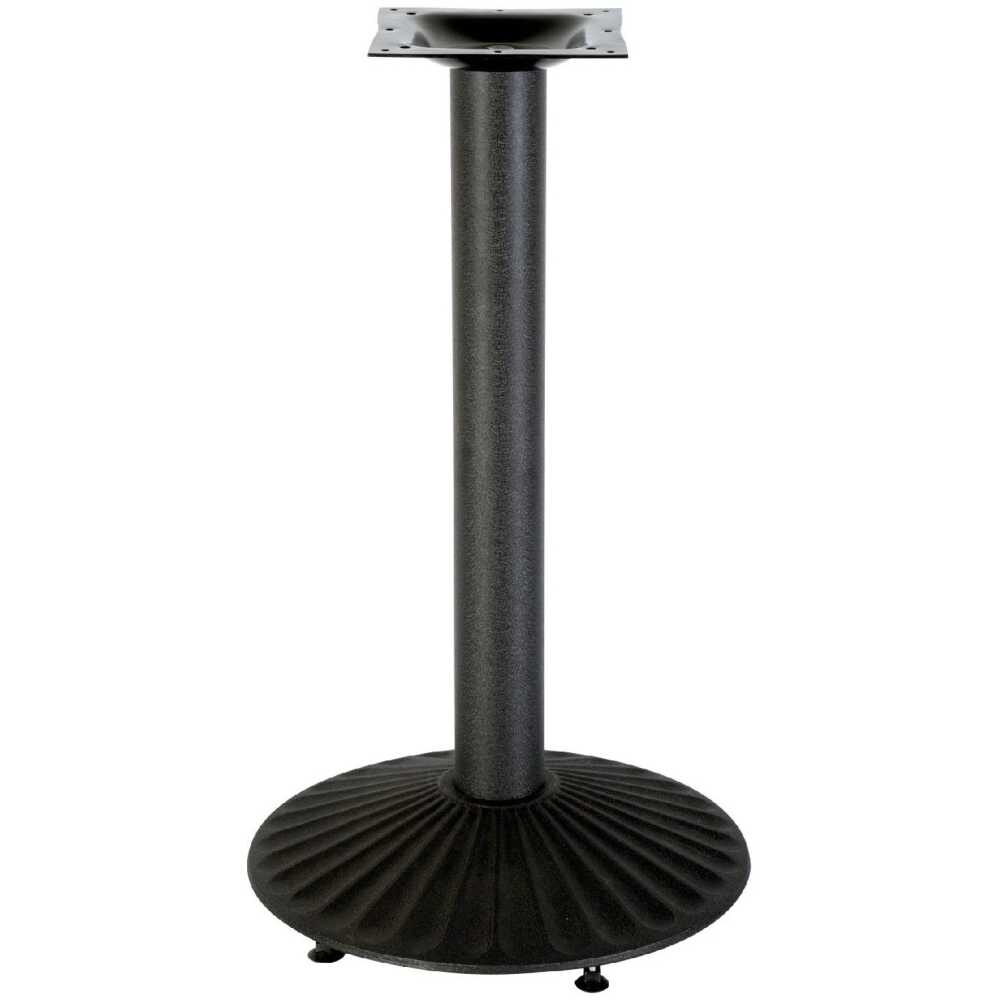
The modern round cast iron base is the simplest: a black round foot, 28 inches high, in 17, 22 or 28-inch diameters, from $97. Pair the 22-inch foot with a 30-inch round top and you clear the two-thirds figure by 2 inches. Pair the 17 with the same top and you fall 3 short. That is the whole decision in one line.
Want the base itself to be the feature? The arch steel base is a black steel X-prong shape, 28 inches high, sold as a 20-inch or 24-inch square spread or as a two-prong double base for longer tops, from $110. There is a bar-height version at 41 inches if the same look has to run along the window.
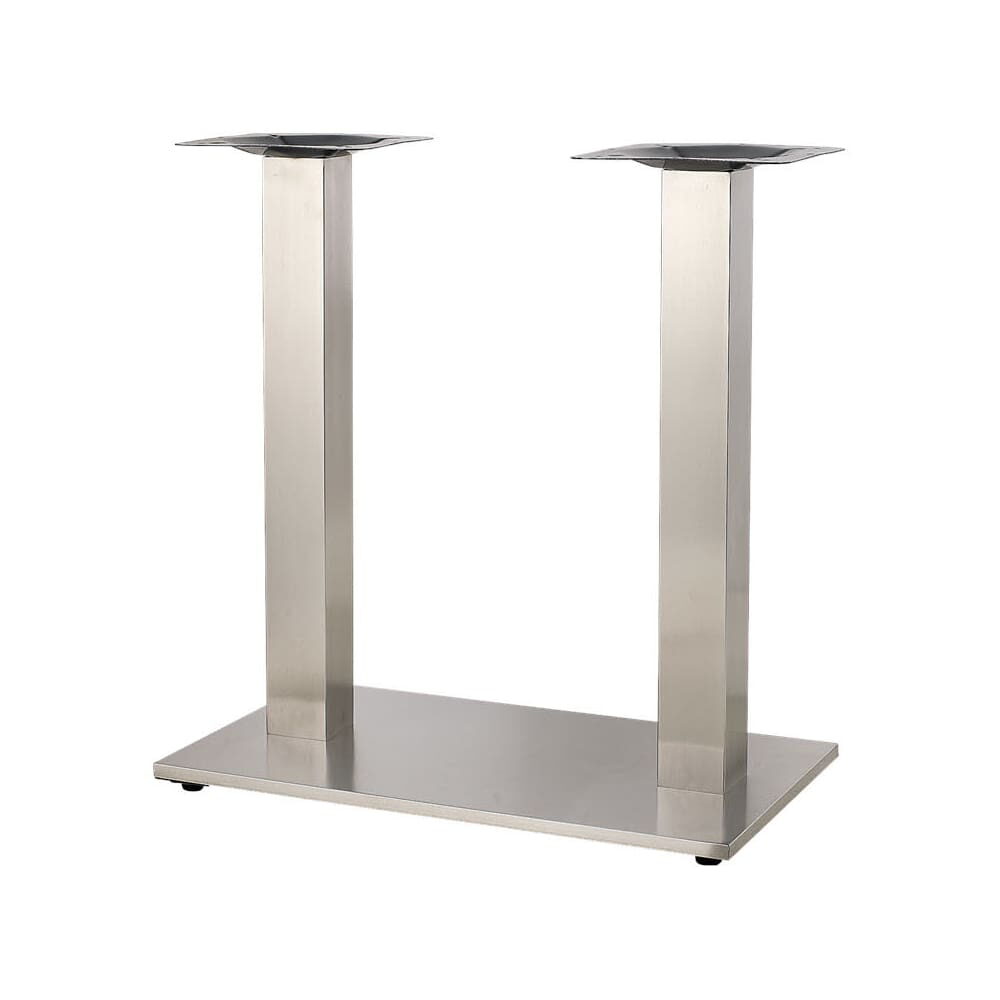
For a silver floor, the square stainless steel base is 28 inches high, in 20 by 20, 22 by 22 or 16 by 28 inches, and listed for indoor and patio use, from $126. If the shop has a pavement table or two, this is the one that can go out the door with the rest of the set. A gold stainless version is listed too, for a room with brass taps behind the counter.
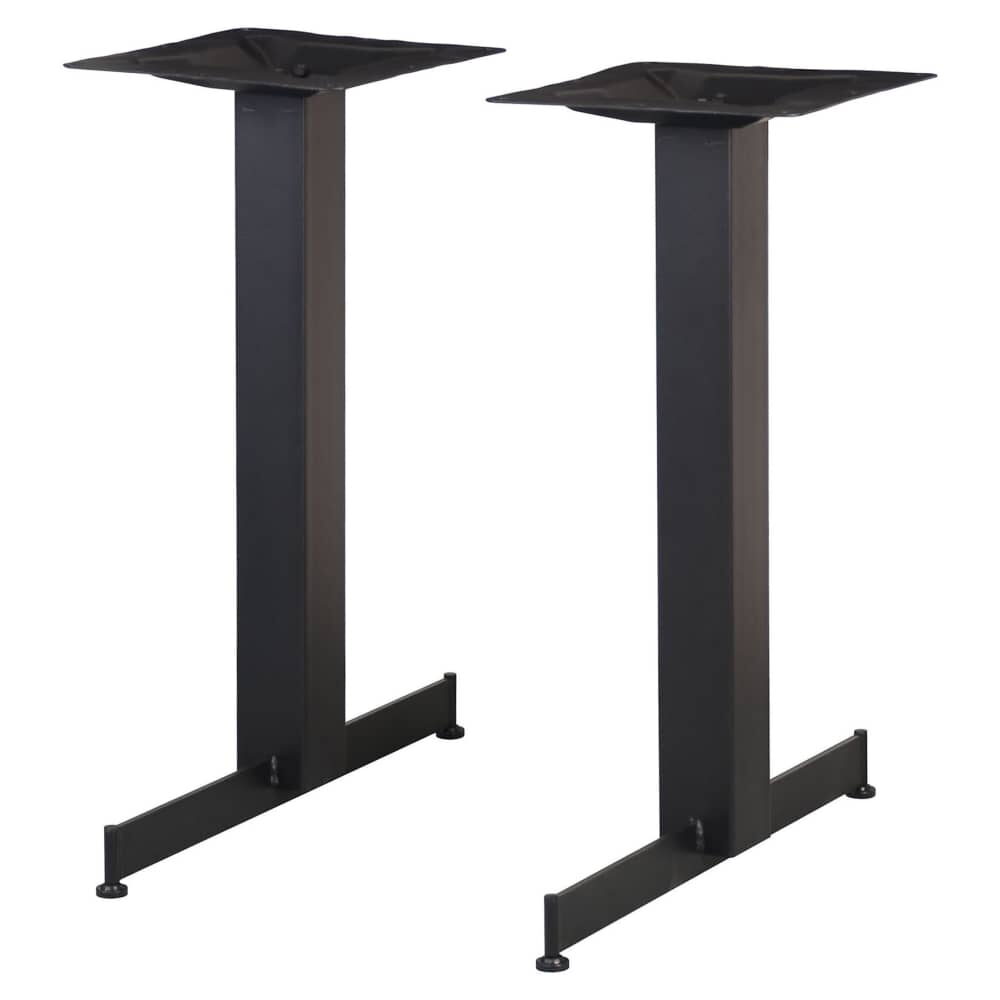
Then there is the cantilever base: black steel, 21 or 27 inches long, with the choice of a pin leg at 28 1/2 inches or at 40, or none, from $107. It suits a top that runs along a wall, where you want the foot well back from the knees.
All table bases carry 1 year against defects in materials and workmanship.
Plain tops that suit a modern base
A modern base looks its best under a top with no pattern or a quiet one. The everyday choice is laminate. Our laminate tops come in solid colors such as black, grey, designer white, cement and slate grey, and in stone looks for a marble effect without the stone.
For the cleanest edge, the aluminum edge laminate top wraps a 1 1/4-inch laminate top in an aluminum edge, from $166. A plain T-mold edge in black is the cheaper road, from $95.
Resin is the other modern surface. The resin tops we list include concrete grey and terrazzo finishes, 1 1/8 inches thick, from $97. Both suit a room with a polished floor and a lot of steel. Laminate and resin tables used indoors get a 1-year warranty, matching the base under them. Our notes on cafe tabletops compare the materials side by side.
Getting the height right with a separate base
A modern table is often a top and a base bought as two lines, so check the height sum yourself. Set a 1 1/4-inch laminate top on a 28-inch base and you get 29 1/4 inches. Under a 1 1/8-inch resin top it gives 29 1/8. Both sit inside the 29 to 30 inches we plan dining tables to, and inside the 28 to 34-inch range the 2010 ADA Standards give for dining surfaces in section 902.3. Read the current edition and the code where your shop stands; the figure is general guidance, and your designer or architect has the last word.
A seat of about 17 to 19 inches suits that height, which leaves 10 to 12 inches for knees. Check the seat height on the chair's product page; where it is not given, ask us.
Where a modern table goes wrong
Here is the slip. An owner sees a slim round foot in a photo and orders it for every table, small and large, because the shop should match. The 24-inch tops by the window are fine. The 36-inch rounds in the middle of the floor rock the first week, because a 17 or 22-inch foot is short of the 24 inches those tops need.
The fix is not to give up the look. Keep the same base family and order the larger foot for the larger tops: the round cast iron base comes in 28 inches, which clears 24 with 4 to spare. The tables still match. Only the foot under the big ones is wider, and nobody standing in the line will notice.
A 20-seat floor, worked through
Say the floor takes six 24-inch rounds for two along the window and two 36-inch rounds for four in the middle. That is 12 seats plus 8, so 20 guests at 8 tables.
Under the six small tops, the 17-inch foot clears 16 by an inch. Under the two big tops, the 28-inch foot clears 24 by 4. One base family, two sizes, two lines on the order, and every table passes. Add 20 chairs and the order is 28 pieces, well past our 8-piece minimum.
Lay the floor out before the bases ship
Put the tables into a shop plan with each top size and base size as its own line, then print the project sheet and carry it round the floor. Tape a circle on the floor for each top, and a smaller one inside it for the foot. If any foot circle is less than two thirds of its top, change it on the plan before you send the order.
Then sit at one taped circle with a coffee and a plate and imagine the lunch line behind you. If the edge of the top meets the line, move the table, not the base. When the floor works, the guides to bistro tables and the best cafe table cover the rest of the checks, and the full range sits under tables.