Shop notes
The best cafe table is the one that passes five checks
Owners ask us for the best cafe table as if there were one, sitting on a shelf in the back, waiting for the right shop. There isn't. There is the table that fits your floor, your crowd and your cleaning routine, and the way to find it is to hold every candidate up against the same five checks.
No medals here, and no winner named. What you get instead is the list we run through ourselves when a shop owner sends us a sketch of the room: seats and size, the top, the base, the height, and the weight. A table that passes all five goes on the floor. One that fails a single check is a table you will be fighting for years.

Open diagram at full size (new tab) ↗
Read the diagram in text
Three stacked cards cover seating size, top and base, and height and weight, beside a panel listing the five checks in order.
- TABLE CHECKS
- Seats per top: About 24 inches of edge for each customer, 18 at the tightest.
- Top and base: A top that wipes clean on a foot two thirds its width.
- Height and weight: 29 to 30 inches for dining; know who lifts it at close.
- The five checks
- Size per seat
- Top material
- Base spread
- Finished height
- Listed weight
- Fill every box from the product page.
- Run each table you are considering through seats, top, base, height and weight before it goes on the floor.
How many people it really seats
Start with the people, not the table. Give each customer about 24 inches of table edge, and never less than 18 even at your tightest. Then match the top to the party.
Two people can manage at 24 by 24, a 24 by 30 top is the usual choice for a pair, and 30 by 30 lets them spread the newspaper out. For four, a 30-inch square is snug, 36 by 36 is easy, and a 30 by 48 rectangle lines them up two and two. A 36-inch round holds four in a tight room, while 42 to 48 inches covers four to six.
Do the arithmetic on a round before you trust it. A 42-inch round has a circumference of about 132 inches; at 24 inches a person, that's five and a half places, so five is honest and six is a squeeze.
What the top is made of
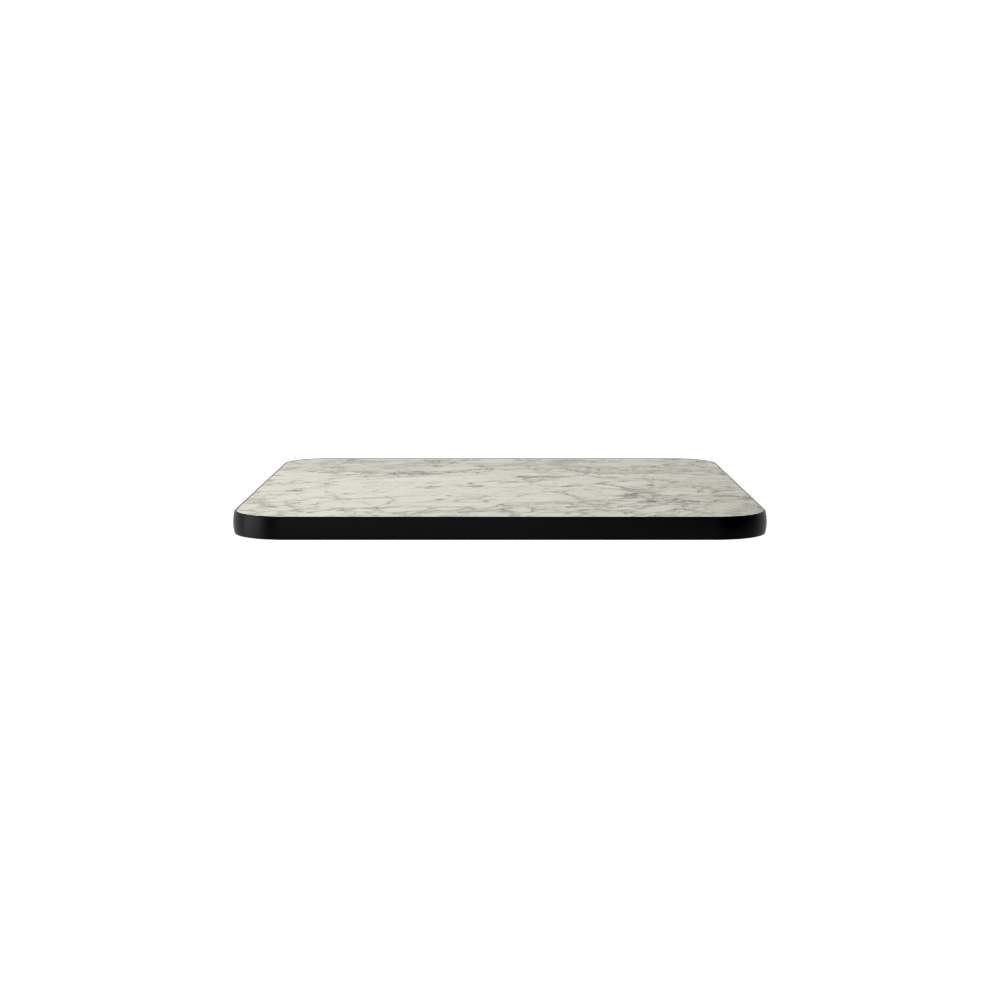
The top takes the cups, the trays, the wiping cloth and the elbow of a customer reading the paper. In a working shop, laminate earns its keep: the laminate tops with a T-mold edge are 1 1/4 inches thick and come in rounds, squares and rectangles from 24 inches up. Solid wood looks warmer and asks for more care, and the table tops page puts the materials side by side.
Cover differs by top as well. A table used indoors with a top that isn't solid wood is covered for a year against faults in materials and work. A solid wood top gets six months, and wood that shifts with the seasons falls outside the cover entirely. That isn't a reason to skip wood, only a reason to choose it knowingly.
The base underneath
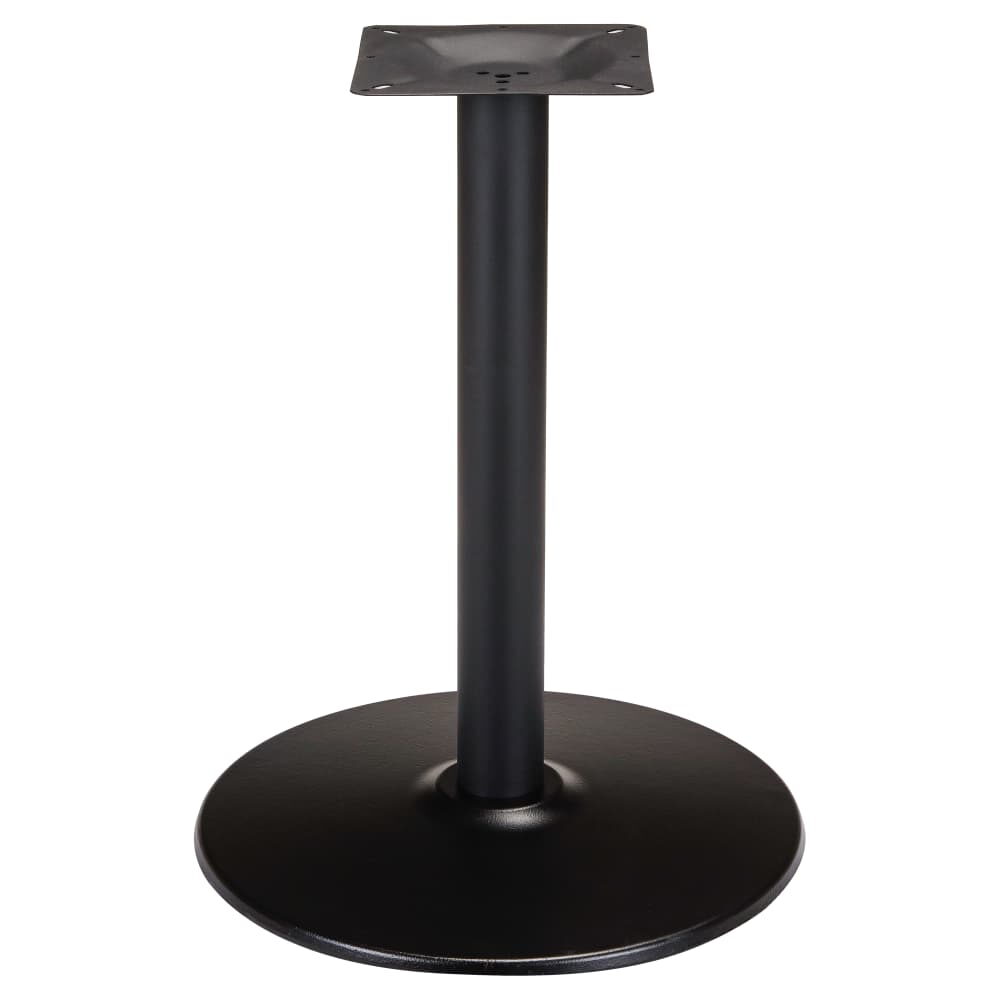
A table that rocks fails, however good the top. For a round top, the base should reach across at least two thirds of its width: 16 inches under a 24-inch round, 20 under a 30, 24 under a 36. The standard-height round cast iron base is made with 17, 22 or 30-inch feet, which covers those three tops in order.
Look at the glides too. A self-leveling glide on an old tile floor saves you from the folded sugar packet under one foot. The table bases page lists every foot shape and height we carry.
A height that works for everyone
Dining height runs 29 to 30 inches to the top surface. Counters sit at 34 to 36 and bars at 40 to 42, each with stools to match. Measure your existing chairs before you choose: a seat of 17 to 19 inches wants 10 to 12 inches of room beneath the tabletop.
Then think about the customer who arrives in a wheelchair. Under the 2010 ADA Standards, an accessible dining surface has its top at 28 inches at the lowest and 34 at the highest. Beneath it, the knee space has to be 27 inches tall or more, 30 across and 19 from front to back. At least one seat in twenty must be at a surface like that. In a 40-seat shop, that is two seats. Our 28-inch round base under a laminate top of 1 1/4 inches stands 29 1/4 inches tall, well within those limits. Codes change and towns add their own rules, so have your designer or inspector read the current text for your shop, and place the accessible seats before the rest.
The weight in your hands
This is the check owners skip. Every table gets lifted, turned or pushed aside at some point in the day, and the weight decides who can do it alone.
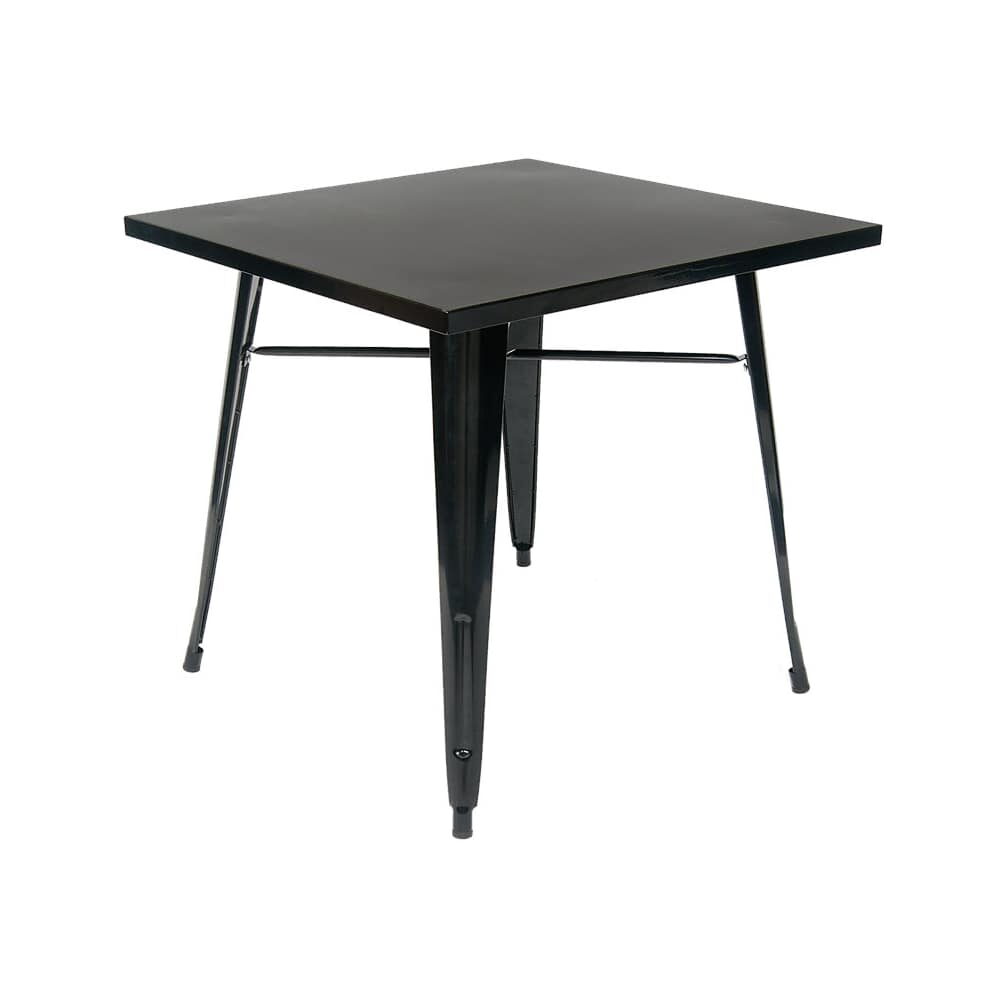
The black metal table is listed at 36 pounds with a steel top, and it is rated for indoor and patio use. The industrial table with a metal base and wood top is listed at 33 pounds. At the light end, a resin coffee table is listed at 11 pounds. The bar-height version of that metal table is 30 pounds. Heavy stays put; light moves easily.
Think about the shop front as well. Of those three, the metal table and the resin one are listed for patio use, and the wood-top table is indoor only. If one model has to work inside and on the sidewalk, that narrows the field before you have even looked at a finish. Decide which your room needs before you fall for a finish.
Where owners get it wrong
The common mistake is checking one thing well and ignoring the rest. An owner measures the room to the inch, orders 36-inch rounds for four everywhere, and then finds the base spreads 22 inches, the tables tip when someone leans, and the room needs two more accessible seats than planned.
Run all five checks on every model, on paper, before you order. The tables page is the place to start, and our notes on bistro tables and cafe tabletops go deeper on the first two checks.
Five lines on the order sheet
Write the five checks across the top of a sheet and every table you are considering down the side. Size per seat, top material, base spread, finished height, listed weight. Fill each box from the product page, not from memory.
Then put the tables that pass every box, and only those, into a shop plan with their quantities. If you would rather buy the table and chairs together, read about the bistro table set first, and keep the sheet handy for the day you reorder.