Shop notes
Deli tables for the lunch line: two-tops that pair and tops that wipe
At ten to twelve the deli case is full and the room is empty. By quarter past, there's a line from the slicer to the door, every tray is out. Now the tables have to work like a second counter: take a tray, take a wipe, take the next customer, and stay out of the way of the line while they do it.
Deli tables are judged on that quarter of an hour. Looks count for something, but a deli table earns its place by being the right size for a tray, easy to clean in one pass, and easy to push together when four office workers walk in at once. Here is how we would plan them, from the line backward.

Open diagram at full size (new tab) ↗
Read the diagram in text
Three numbered cards: keep 54 to 60 inches from the case to the first table, choose 24 by 30 two-tops that pair, and pick laminate tops.
- DELI NOTES
- 1
- Clear the line: 36-inch aisle plus 18 to 24 behind a chair. 54 to 60 inches from the case.
- 2
- Two-tops that pair: Two 24 by 30 tops make a 30 by 48. Squares pair; rounds don't.
- 3
- Tops that wipe: Laminate, 1 1/4 inches thick. Choose the edge a tray will bump.
- Twenty two-tops seat 40 as pairs or push together into ten fours when the office crowd arrives.
- Tape the strip in front of the case, then fill the room with two-tops that push together into fours.
Keep the line out of the seating
Draw the line first. The customers queuing at the case need their own lane, and that lane is not the aisle between your tables. A service aisle wants about 36 inches clear. A chair pulled out from a table needs 18 to 24 inches of floor at its back.
So from the front of the deli case to the nearest table edge, allow the aisle plus the chair: 36 and 18 is 54 inches at the tightest, 36 and 24 is 60 inches if you can spare it. Mark that strip on the floor with tape before anything else goes down. If a table ends up inside the strip, move the table, never the line.
Two-tops that make a four
Here's the rule of thumb we would put on the wall of any deli: buy squares and rectangles, because they pair, and rounds don't. A lunch crowd arrives in ones, twos and fours, and the room has to change shape with it.
A 24 by 30 top is the standard two-top, a little roomier than the 24 by 24 minimum, and that extra depth is where the tray goes. Butt two of them together along their 24-inch sides and you have a 30 by 48 rectangle, which is one of the standard sizes for four. Pull them apart again when the next pair walks in.
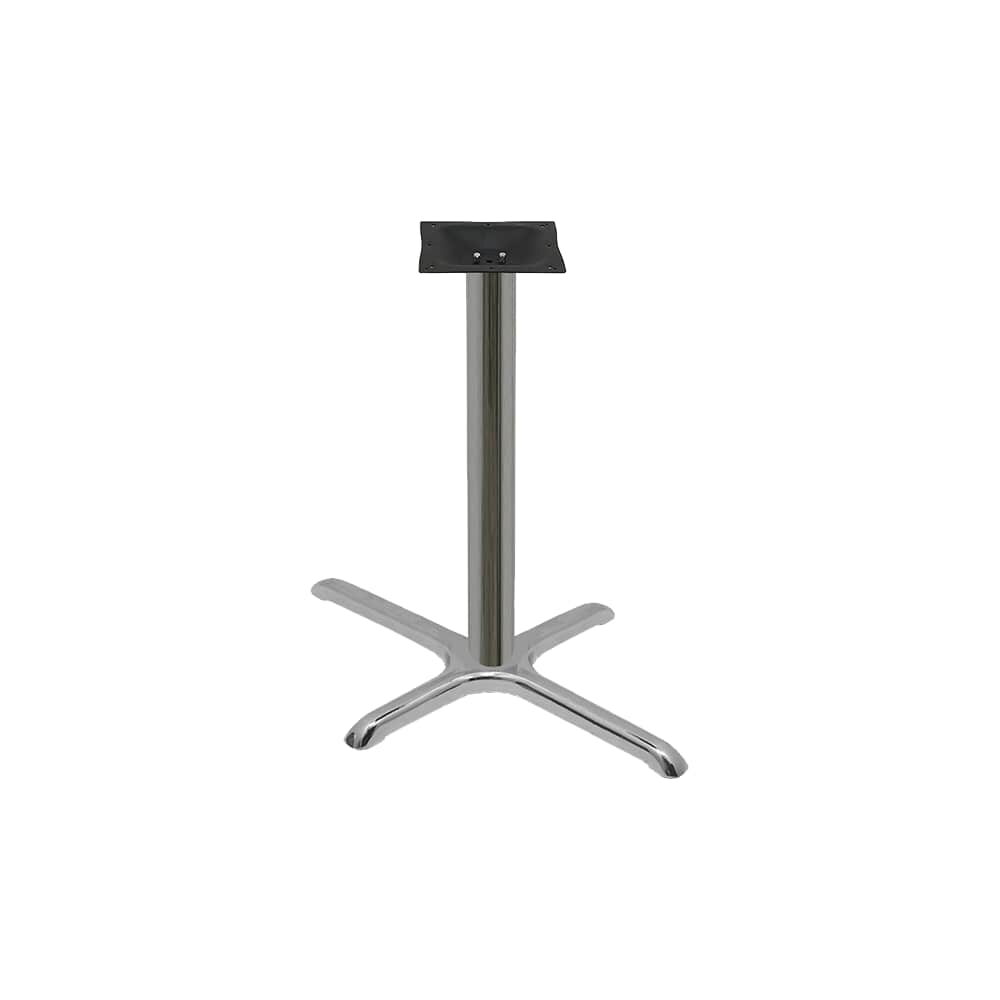
Bases matter for this. Our standard-height X-prong chrome base is sold in three spreads, the smallest a 22-inch square and the largest a 30-inch square, with a 22 by 30 in between. Under a 24 by 30 top, the 22 by 22 still covers two thirds of both sides, 16 and 20 inches, and sits 4 inches in from each short end, so two tables butt together with 8 inches between their bases. The X-prong table bases page has the other finishes.
Tops that wipe in one pass
A deli table gets mustard, pickle juice, coffee rings and the edge of a wet tray, sometimes all in one sitting. The top has to come clean with a cloth and a spray between customers. That points to laminate table tops first.
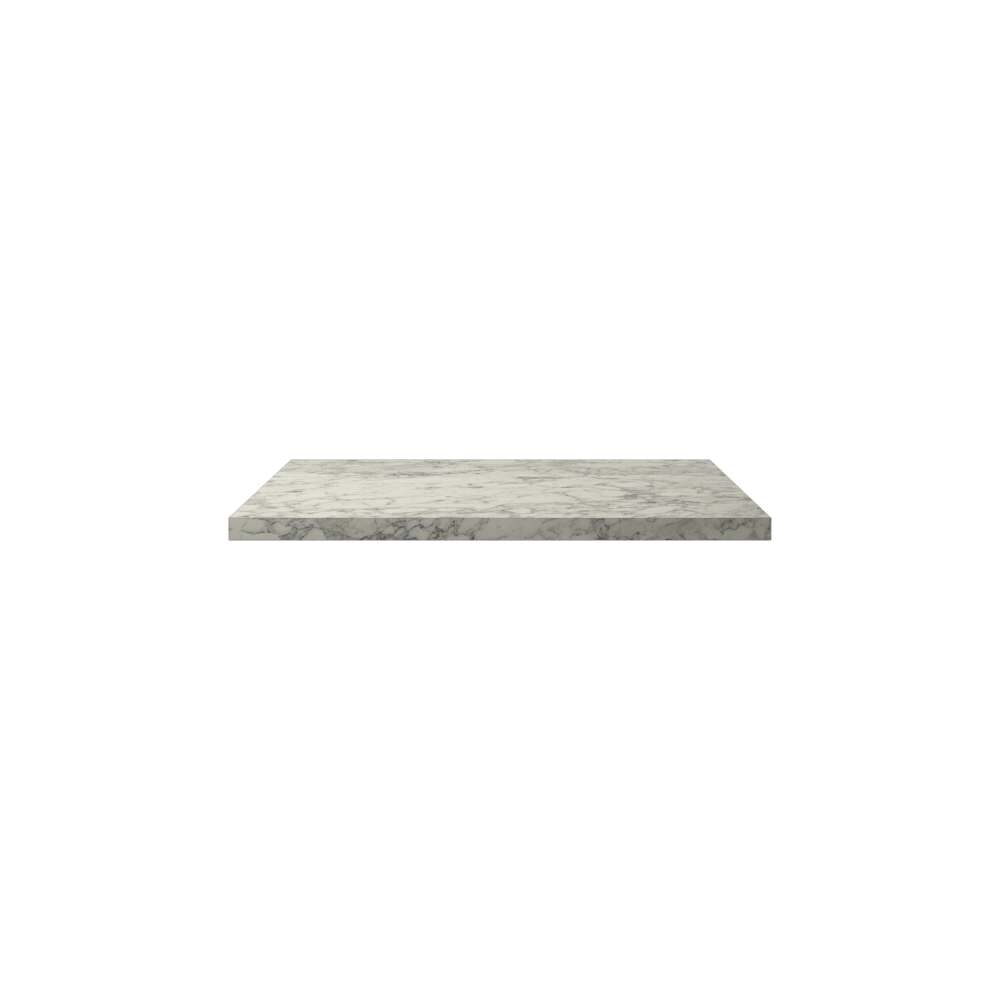
The laminate top with a self edge is 1 1/4 inches thick and starts at a 24-inch square, running up through the 24 by 30 two-top to long rectangles, so the two-tops and the occasional six-top can all share one surface. The laminate family also lists PVC, T-mold and aluminum edges, and the edge is the part a tray bumps into all day, so choose it with that in mind. Top material samples are free and travel by UPS Ground, so put two edges side by side on your counter and run a tray edge along each.
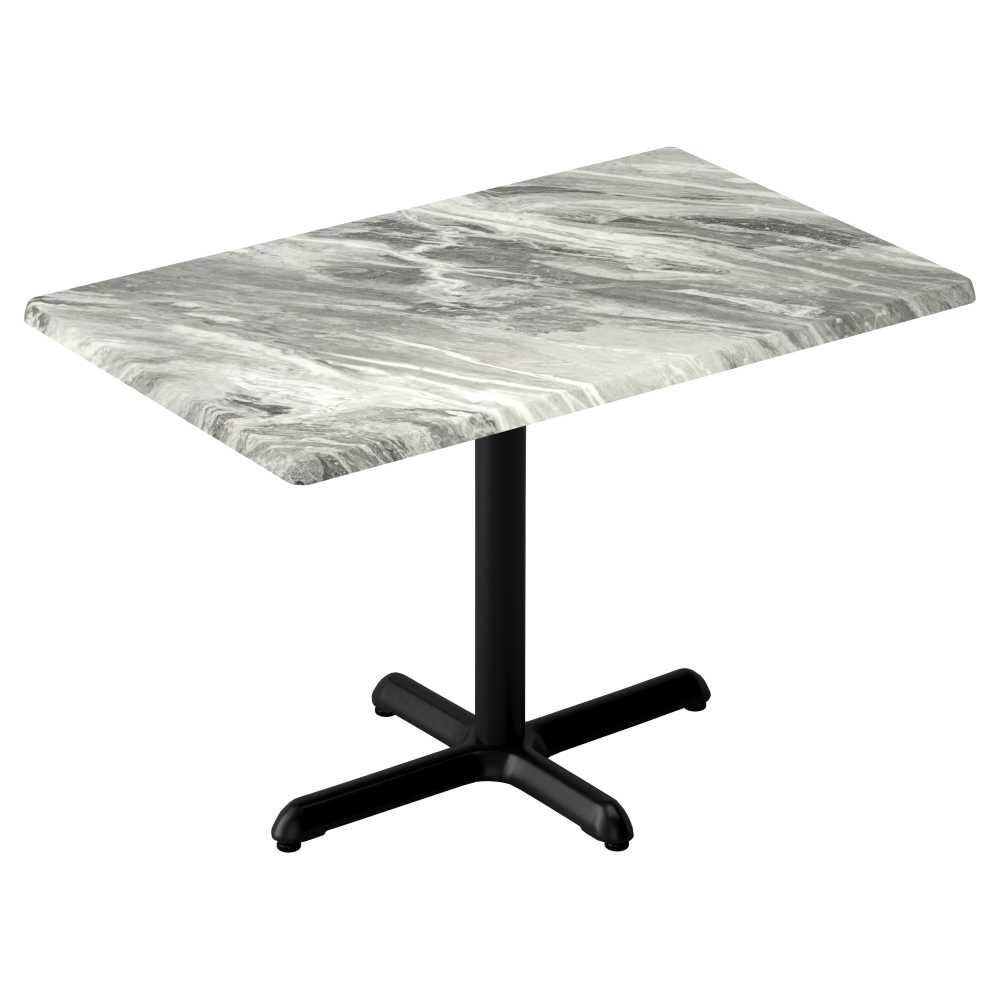
For a table or two outside the door, a Werzalit-top table on a cast iron base can stand inside or out on the patio, in Atlantis Stone or Light Marble, with tops from a 24-inch round to 32 by 55.
A 40-seat lunch room, worked through
Say 480 square feet of floor sits past the line. A counter-service room at the sketch stage runs 11 to 14 square feet to a seat; at 12 a head, 480 gives 40 seats. Local occupancy limits outrank that figure, and whoever draws your plans checks them against the building and fire codes before you buy a single chair.
Forty seats as twenty two-tops of 24 by 30 gives you the most freedom. At five past twelve all twenty might stand apart for pairs; by half past, they can be pushed into ten fours of 30 by 48. That is 20 tops, 20 bases and 40 chairs, and if every top, base and chair is ordered in one configuration, it is three lines on the order.
Chairs are the other half of the job. Our metal ladder-back chair takes up 17 inches of width and 20 of depth, stands 32 tall and weighs 18 pounds, with a listed capacity of 500 pounds and a choice of wood, vinyl or fabric seats. At close the chairs go up on the tables for the mop, and 18 pounds is a lift anyone on the shift can manage. For a deli, choose the vinyl or the wood; both take the same cloth as the table. The metal chairs page has the rest of the frames.
The mistake that blocks the case
The usual one is a big fixed table. A long communal top looks generous in the drawing, but it can't split, it can't move out of the way when the line runs long, and a party of two ends up taking the middle of a table meant for eight. Two-tops that pair do the same work and fold back into the room when the rush is over.
Then there's the table nearest the case. Owners squeeze one more two-top into the strip in front of the cold display and spend every lunch apologizing to customers who have to lean over someone's soup to point at the pastrami.
From tape to order
Lay the tape strip, then lay the tables in a shop plan: the line, the aisle, twenty two-tops and the pairs they make. The planning page has the seat figures in one place, our notes on bakery tables cover a morning room with a case of its own, and the guide to bistro chairs goes through frames and seats.
Download the sheet and walk the room with it at eleven thirty, before the line forms. If a chair backs into the tape, slide that table four inches toward the wall and mark the new spot with a dot of paint on the floor.