Shop notes
Bakery tables beside the case: sizes, tops and a clear line
The first batch is out of the oven before the door opens, and by eight there's a line at the bakery case. Somewhere between the case and the window you've put a few tables. They have to hold a coffee, a croissant and a paper bag, and they must never get in the way of the people still waiting to order.
That's the whole brief for bakery tables. A bakery is a shop first and a place to sit second, so the tables are sized for a pastry, set clear of the line, and topped with something that takes crumbs and a quick wipe all day long. This piece stays on the tables themselves; the chairs and the case have their own stories.

Open diagram at full size (new tab) ↗
Read the diagram in text
Three level cards for the queue aisle, the chair zones and the 24-inch tabletop, beside a panel adding them to 136 inches of a 144-inch strip.
- BAKERY NOTES
- Queue aisle: Keep about 36 inches clear for the line.
- 36 in.
- Chair zones: Two 20-inch chairs, 18 inches behind each.
- 76 in.
- Two-top: A 24-inch top for a coffee and a pastry.
- 24 in.
- 12 feet deep
- Strip: 144 inches
- Used: 136 inches
- Spare: 8 inches
- A 30-inch top uses 142 inches and leaves only 2.
- Queue aisle, chair room and a 24-inch two-top add up to 136 of the 144 inches.
Keep the line out of the seating
Start with the queue, not the tables. People waiting at a bakery case stand in a line that grows and shrinks all morning, and the tables nearest it are the ones most likely to be bumped.
Give the line its own aisle of about 36 inches, the usual width for a service route. Then give every chair beside it 18 to 24 inches behind it, so a seated customer can push back without stepping into someone holding a tray. Draw both on the floor before you count a single table. Chalk works on most shop floors; masking tape works on all of them, and it survives a morning of feet long enough to show you where people really stand.
The easy mistake is setting a four-top right against the case because it looked roomy when the shop was empty. At eight o'clock the line wraps around it and the chairs end up in the aisle. Put the two-tops nearest the case and move the fours to the wall or the back.
A seating strip, worked through
Say the floor between the front of your bakery case and the opposite wall is 12 feet deep, which is 144 inches. You want one row of two-tops with a chair on each side, facing across the room.
Add it up from the case outward:
- Queue aisle: 36 inches.
- Space behind the first chair: 18 inches.
- Chair, using a 20-inch-deep metal chair: 20 inches.
- Tabletop at 24 inches deep: 24 inches.
- The second chair: 20 inches, then 18 inches behind it to the wall.
That's 36 + 18 + 20 + 24 + 20 + 18 = 136 inches, leaving 8 inches to spare. Swap the 24-inch top for a 30-inch one and the sum becomes 142, with 2 inches left. It fits on paper and pinches at the rush. In a bakery, the smaller top usually wins.
Two-tops that turn into fours
Size the small tables for a coffee and a pastry. Two people need a top of at least 24 by 24 inches; 24 by 30 is the standard two-top.
The 24 by 30 has a second trick. Push two together along their long sides and you get a top 48 inches long and 30 wide, and that 30 by 48 shape seats four in comfort. A family at ten o'clock, two regulars at noon: the same pair of tables serves both, as long as both sit on matching bases at the same height.
For rounds, a 36-inch top seats four when space is tight. Keep those for the back corner where nobody queues. The tables range has the full spread of shapes, and bistro tables works through base spread and height for each top size.
Tops that take crumbs
A bakery table gets flour, sugar, butter and coffee, often within a minute. Pick a top that a damp cloth clears in one pass.
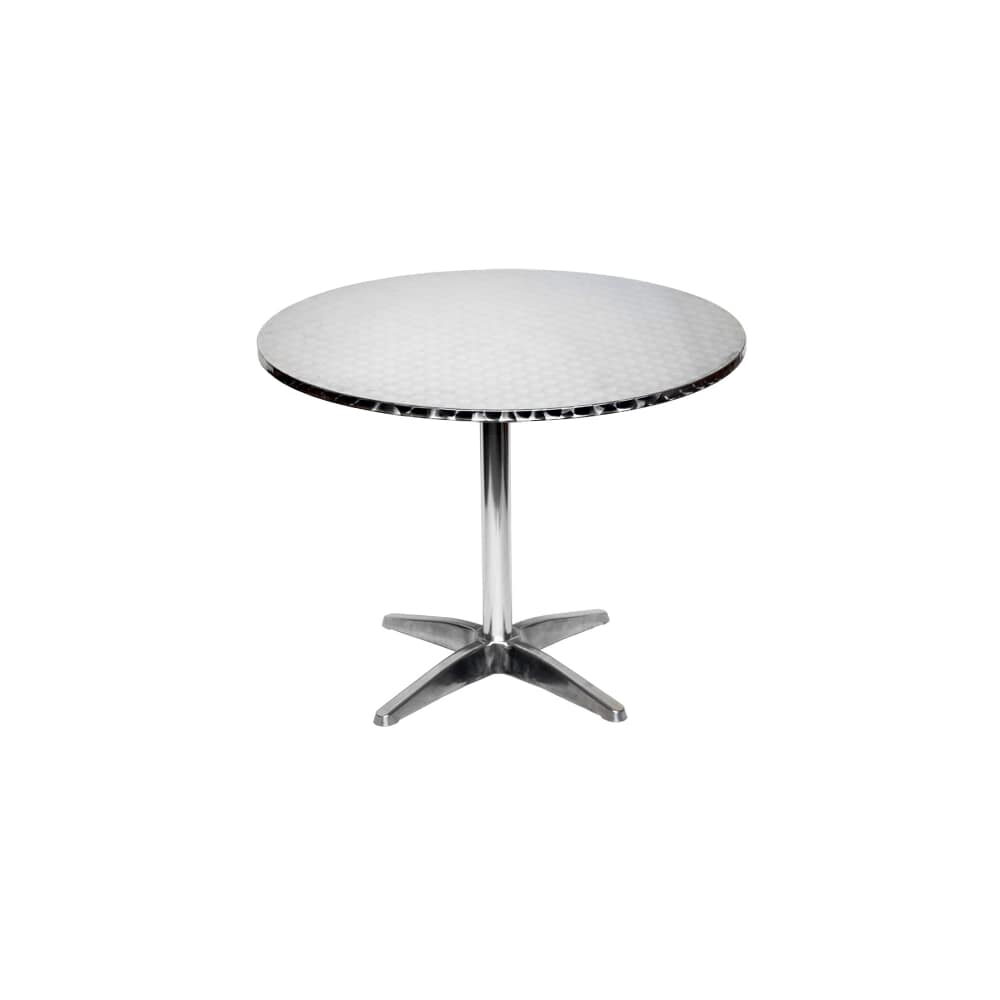
The steel dining table is one plain answer: a stainless steel top on a steel base at a table height of 30 inches, in a 28-inch round or a 28 by 28 square, listed for indoor and patio use. Laminate is the other everyday choice, with edges in PVC, aluminum or wood; the laminate tops page lists them.
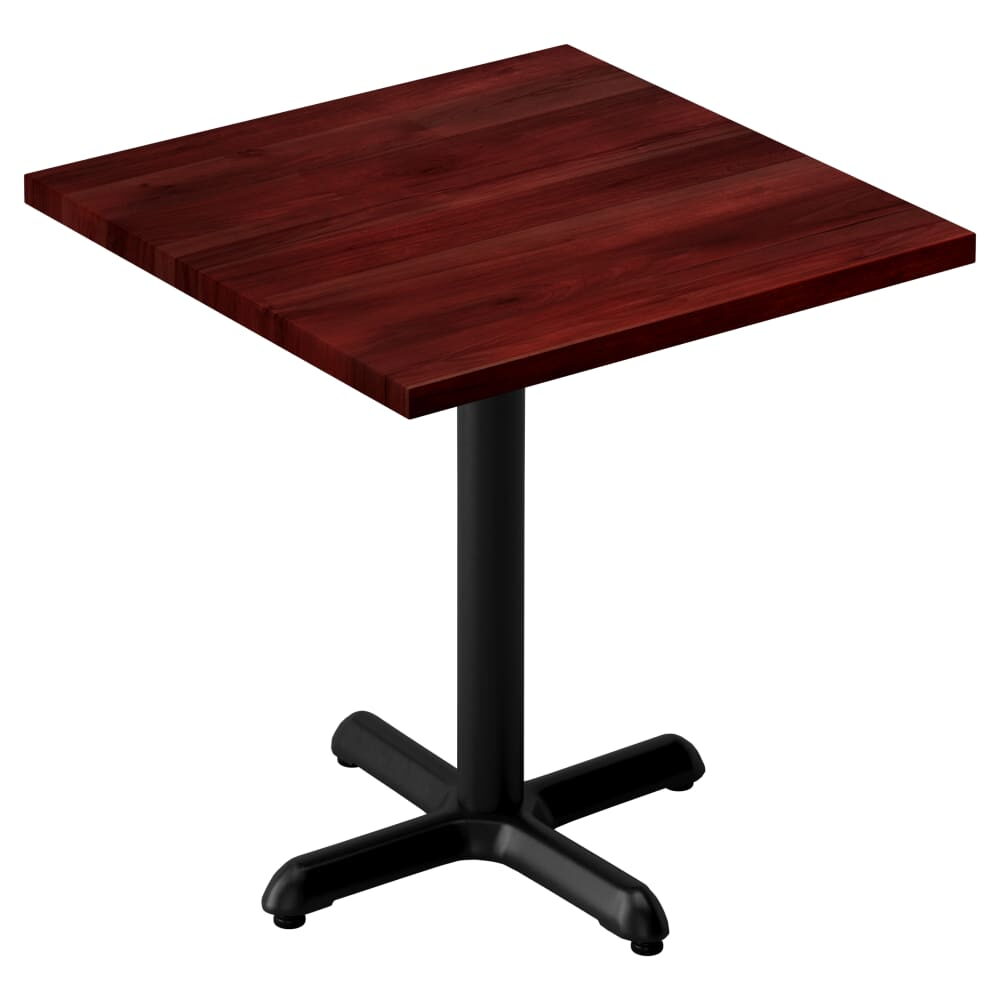
Wood suits a bakery's look. For that, look at our solid wood butcher block table: butcher block over cast iron, 30 inches to the top. Know two things before you buy it: wood tops are covered for 6 months, and the natural movement of the wood is excluded from that warranty. Wipe it, dry it, and keep it away from the steam of the ovens.
Whatever the top, check the care notes against the cleaner you use. The warranty does not cover damage from the wrong cleaning agents.
Bases for a floor that gets mopped
A bakery floor is swept and mopped every night, and in between it collects crumbs. A base with prongs or a disc sits low and steady; what matters most is the spread.
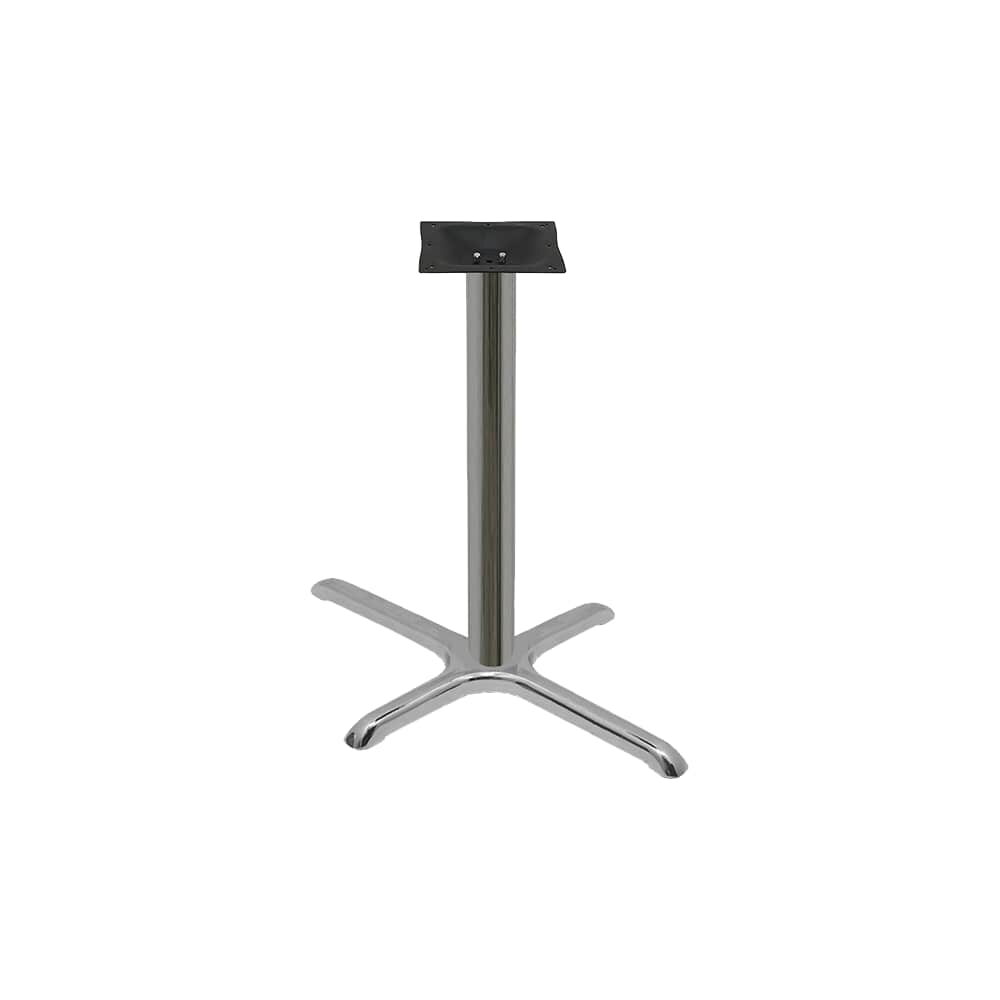
Under a two-top, a standard-height X-prong chrome table base stands 28 inches tall and you choose its spread: 30 by 30 for a big square, 22 by 30 for a rectangle, or the 22 by 22. A 24 by 30 two-top sits well on the 22 by 30, matching the top's shape. More bases with prongs are under X-prong table bases.
Choose light chairs for the same reason. At the last sweep somebody lifts every chair, and the bistro chairs guide goes through frames, weights and stacking. The wider range sits under chairs, and the whole cafe set, tables and seating together, is in our cafe collection.
When the pallet arrives at baking time
Plan the delivery around the ovens. Our freight comes by LTL carrier on pallets, to the dock or the tailgate as standard, and moving it inside is your job unless you booked inside delivery when you sent the order. The carrier expects the pallets off the truck inside half an hour or so, so roster a pair of hands for that window, and count the cartons against the bill of lading before you sign. The delivery page lists the extra services, including liftgate, that are charged on top.
Before then, lay it out. Put the case, the queue aisle and each table into a shop plan, note the base for each top, and download the project sheet so whoever opens up on delivery day knows which table goes where. If you have a deli counter as well, the guide to deli tables handles the tray and the lunch line.