Shop notes
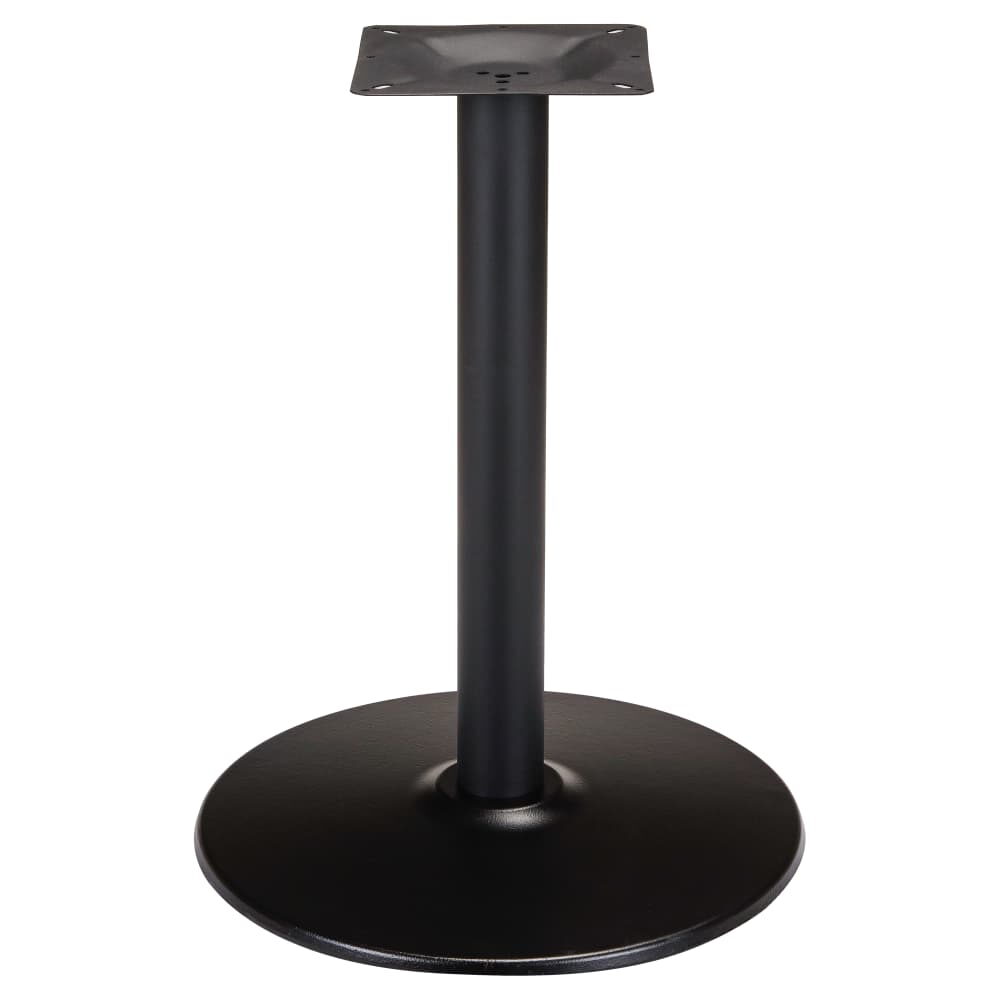
Cast iron bistro table base: weight low, foot wide, glides level
Watch a light two-top through one lunch shift. A customer stands, catches the edge with a hip, and the table shuffles an inch toward the aisle. The next one drags a chair in and nudges it back. By close it has walked a foot from where you set it that morning.
A cast iron base stops most of that. The weight sits at the floor, low and wide, so a bump moves the cups and not the table. That is the whole case for cast iron under a bistro top, and it is why we would put a plain, heavy base ahead of a pretty, light one every time.

Open diagram at full size (new tab) ↗
Read the diagram in text
A hub diagram: a table that stays put at the top, with three cards below for weight at the floor, a foot two thirds of the top, and level glides.
- CAST BASE NOTES
- A two-top that stays put: Cast iron puts the weight at the floor, under the bump.
- Weight down low: Lower balance, firmer grip.
- Foot sized to top: Two thirds of the top, or more.
- Even glides: Self-leveling for uneven tile.
- Cast iron bases are listed for indoor use: wipe with a damp cloth and mild soap, then dry.
- Mass at the floor, a foot sized to the top and glides that touch evenly keep a two-top in its spot.
Why weight at the floor matters
A table tips or slides when the push at the top beats the grip at the bottom. Put more mass down low and two things happen. The foot presses harder on the floor, so it resists sliding, and the balance point drops, so a lean on the edge has more to lift before anything moves.
Aluminum has its place, mostly outside. Our standard-height aluminum X-prong base weighs 20 pounds by its listing and can go out on the patio. By contrast, the cast iron table bases are all listed for indoor use, and their listings give a weight for each foot size: the standard-height round base runs from 21 pounds on its 17-inch foot to 65 on the 30-inch one. Lift one when the pallet comes in. The heft in your hands is the reason you bought it.
Size the foot before the style
Weight does nothing if the foot is too small. Our working rule is that a round foot should reach across at least two thirds of the top. For a 24-inch round that means 16 inches; for a 30-inch round, 20; for a 36, 24.
The standard-height round cast iron base is the plain workhorse here. It stands 28 inches, comes in 17, 22 and 30-inch rounds, and lets you pick adjustable or self-leveling glides. Under a 24-inch top the 17 is right. Under a 30, the 22.
The Victorian-style cast iron round base is the one owners fall for, with its stepped, scrolled foot. It comes in 20, 24 and 30-inch rounds at 28 inches tall. Here is where the rule earns its keep: the 20 is exactly two thirds of a 30-inch top, so it passes, but only just. If your 30-inch rounds will see a lot of leaning, take the 24.
There are plainer shapes in between. A ridged round cast foot comes in 17, 22 and 28-inch spreads and a three-step round in 17, 22 and 30, both at standard or bar height. Pick by the size first and the profile second, and keep one profile through the room. When a chair goes, you replace a chair; when a base looks different from its neighbors, every regular notices.
Twelve two-tops on cast iron
Say your shop runs twelve 24-inch round two-tops, laminate on cast iron, with the laminate table tops at 1 1/8 inches thick. Our guide to cafe tabletops explains why laminate suits a shop that wipes every table after every customer.
Each top needs 16 inches of foot, so twelve 17-inch round bases, 252 pounds of iron at 21 pounds apiece. The 28-inch column plus a 1 1/8-inch top gives 29 1/8 inches, right where a dining table belongs. With seats at 17 to 19 inches, your customers get 10 to 12 inches of room above the knee.
Now say four of those tables go in the front window at bar height instead. The bar-height round cast iron base stands 41 inches in the same 17, 22 and 30-inch rounds and can be ordered with a footrest. Four 17-inch bar bases and eight standard ones: two lines on the order, because a line is one configuration, and twelve bases in total.
Long tops and double bases
A rectangle wants a different foot. The cast iron double base with two prongs is listed with a 2-prong double base option that measures 32 inches long by 21 deep, at 28 inches tall, alongside a 4-prong 23 by 23 and a 3-prong 23 inches long. Run the rule on a 30 by 48 top: two thirds of 48 is 32 and two thirds of 30 is 20, so the 32 by 21 double base clears both, and its length runs where four people and their plates actually lean.
Round tops stay on the round table bases. Squares are better served by a four-point foot, because the corners are where people put their elbows.
The mistake that makes a table walk anyway
Owners blame the base when the trouble is the glide. A cast iron foot with one glide set short will rock on any floor, and a rocking table walks faster than a light one. Check all four contact points before the top goes on.
On the round cast bases, choose self-leveling glides if your floor has grout lines, a slope toward a drain, or a patched seam. Adjustable glides are the standard choice and work well on a flat floor, but someone has to set them and reset them when the tables are moved. And never slide a cast base across tile to rearrange the room; lift it, or the glides take the wear.
Caring for black cast iron
Every cast iron base we carry is finished in black, or in the case of a few X-prong models a wood-grain look, and every one is listed for indoor use. Keep them inside. Indoor furniture set out on the sidewalk is outside the warranty, and so is damage from the wrong cleaning agent, so wipe the column and foot with a damp cloth and mild soap during the last sweep and dry it.
A base that arrives with a defect in the casting or the finish is covered for one year. Tell us within three days of delivery, with photos of the whole base and a close-up of the fault, and the warranty page sets out the rest.
Before the bases go down
Mark each table in a shop plan with its top size and base together, so the spread check is done on paper and not at the counter after delivery. Our guide to bistro table bases goes further into round against four-prong, and the notes on bistro tables cover how many seats each top size holds.
When the pallets arrive, stand every base on the floor where it will live and press down on each side of the foot with your palm. Any base that moves goes back to its glides before a top touches it.