Shop notes
Bistro table bases that keep a two-top from rocking
Nobody comes into a shop to admire a table base. They see the top, the cup on it and the plate of scones. Yet when a two-top rocks every time someone reaches for the sugar, it is the base they end up cursing, and you end up folding cardboard under a foot at seven in the morning.
So we start where the trouble starts, at the floor. This is about bases for small cafe tops, the 24 to 36 inch rounds and squares that make up most of a shop floor. Three choices matter under them: how wide the foot reaches, what shape it takes, and how tall the column stands.

Open diagram at full size (new tab) ↗
Read the diagram in text
Three numbered cards: size the spread at two thirds of the top, pick a round foot or four prongs, and choose a 28 or 41-inch column.
- BASE NOTES
- 1
- Size the spread: Two thirds of the top's width, at least. 24-inch round: 16 inches of foot.
- 2
- Pick the foot: Round foot for round tops. Four prongs reach the corners of a square.
- 3
- Set the column: 28 inches for dining height. 41 inches to suit a 30-inch stool.
- Size the foot within a few inches of the top: an oversized foot sticks out where shoes and mops catch it.
- Work out the spread, choose the foot shape for the top, then set the column height to the seats.
Two thirds is the smallest foot you buy
Take the width of the top, double it, divide by three. That number is the narrowest base spread you should accept for a round top, and it is the one figure we would tape above the order desk.
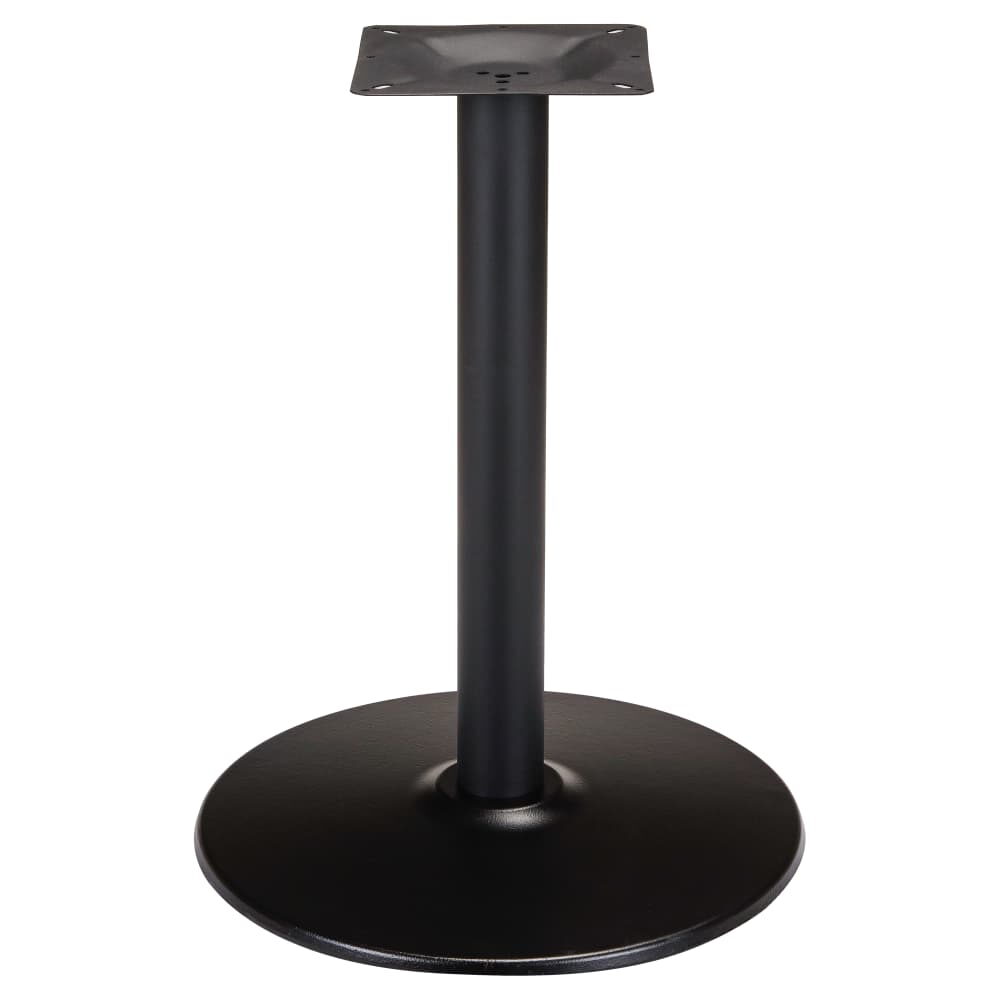
A 24-inch round needs 16 inches of foot. A 30-inch round needs 20. A 36-inch round needs 24. Our standard-height round cast iron base is sold in 17, 22 and 30-inch spreads, which lines up neatly: the 17 goes under the 24, the 22 under the 30, and the 30 under the 36.
Bigger is not always better, though. A 30-inch foot under a 24-inch top sticks out 3 inches past the edge on every side, right where a customer's shoe or the mop bucket will find it. Size the foot to the top, within a few inches, and stop there.
Round foot or four prongs
A round foot is a disc of cast iron sitting flat on the floor. It keeps a tidy circle under the table, chair legs slide in close around it, and the mop goes round it in one pass. For round tops it is the natural pick, and the round table bases page lists them by spread.
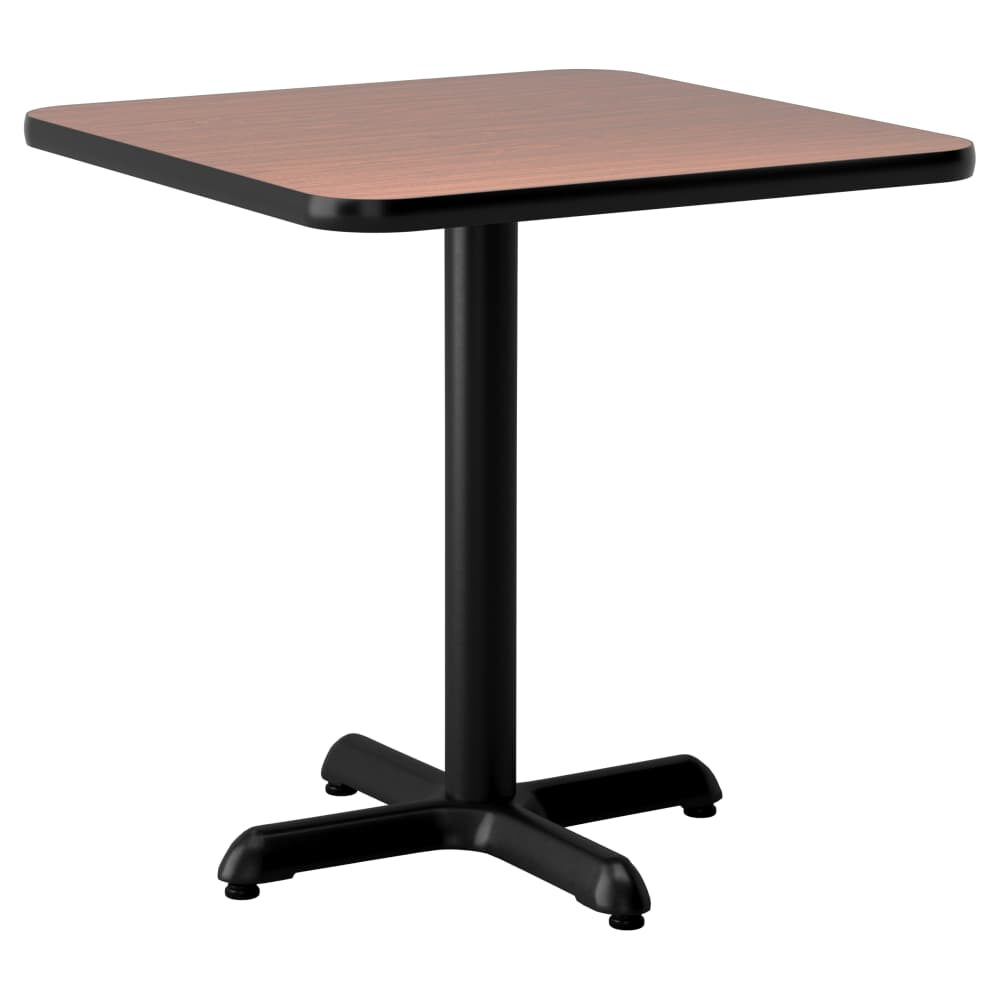
Square and rectangular tops ask for something else. Corners are where people lean, and a four-prong base puts a foot out toward each corner. The X-prong table bases come in 22 by 22 for squares up to about 30 inches and 22 by 30 for a 24 by 30 rectangle. Run the rule on that rectangle: two thirds of 24 is 16 and two thirds of 30 is 20, and the 22 by 30 prong clears both.
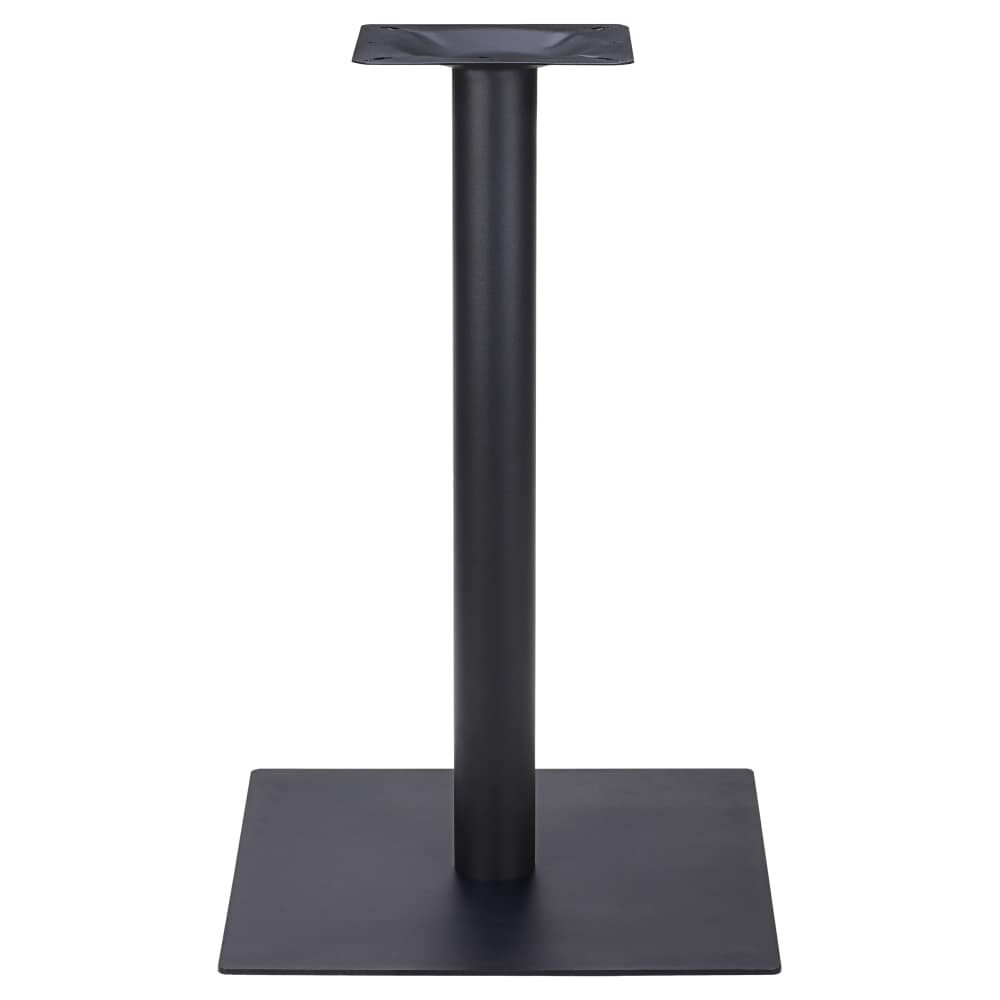
There is a third shape worth knowing for the window. The cast iron square base stands 28 inches and comes in 20 by 20, 24 by 24 and an 18 by 36 slab for a longer, narrower top. A flat square foot sits well against a wall or a window ledge where a prong would poke into the walkway.
On a long rectangle, one base in the middle leaves both ends to fend for themselves. Look at how the reversible laminate table lists its options: a 30 by 60 top can be paired with two 22 by 22 bases, one toward each end. Each base then carries a 30 by 30 share of the top, and two thirds of 30 is 20, so each 22-inch foot passes on its own. A group table for the Saturday crowd goes together this way, and pulling one apart for cleaning is a job for two people.
Standard height against bar height
Most cast bases come in two heights. The standard column is 28 inches; with a top of about an inch on it, the table lands where a dining table should, around 29 to 30 inches. The bar column is 41 inches, which with the same top puts you at about 42, the height that matches stools of 29 to 31 inches.
Pick the height before the shape. A bar-height two-top in the front window and standard tables in the back is a sensible split in a small shop, and each needs its own base order. Every tall column we carry sits on the bar-height table bases page. The bar-height X-prong base can be ordered with a footrest, and at 41 inches up it is worth having on any table people linger at.
A floor of ten bases, worked through
Say your shop takes ten tables. Six are 24-inch rounds along the banquette wall, and four are 30 by 30 squares in the middle of the room.
- The six rounds need 16 inches of spread each, so six 17-inch round bases.
- The four squares need 20 inches, so four 22 by 22 X-prong bases.
- All ten at standard height: 28-inch columns, finishing near 29 to 30 inches with the tops on.
That is two lines on the order, not ten, because a line is one configuration. Choose self-leveling glides for the three rounds by the door and adjustable glides for the other three, and the rounds split into two lines, because each changed option is its own line. Keep the choices few and the reorder stays simple.
Where buyers go wrong
The usual mistake is measuring the column instead of the foot. A base listing gives you the spread across the bottom, and that is the number to hold against the top. The column width tells you nothing about whether the table tips.
The second is ignoring the floor. Old tile, a sloped sidewalk, a seam between the timber and the concrete: any of them will rock a perfect base. The round cast bases take either adjustable glides or self-leveling glides. On a floor you already know is uneven, choose the self-leveling kind and save yourself the folded napkin.
Lay it out before you order
A table base is covered for one year if it arrives with a fault in the iron or the work, and the warranty page has the terms, including the three days you have after delivery to tell us about a problem. Unpack the bases on the day they arrive and stand each one on the floor before the tops go on.
Then plan the floor around the feet. Put each table in a shop plan with its top and base as one item, and check the gaps between bases as well as between tops. If you are still choosing the tops, our guide to cafe tabletops covers the materials, the notes on bistro tables cover sizes per seat, and anyone thinking about stone should read the granite bistro table piece before ordering a base at all. The full range of table bases is there when you know your numbers.