Shop notes
Cafe benches along the wall: where they seat more and where they trap people
A long wall in a cafe is either dead space or the best seat in the house. Put a row of chairs against it and every guest on that side needs room behind them to push back. Put a bench there and the wall does that work for you, so the tables can sit closer and the aisle stays open when the lunch line runs out the door.
That is the whole case for cafe benches, and it has limits. A bench suits a straight wall, loose tables and guests who do not mind sitting shoulder to shoulder at noon. It suits a bakery with a pickup point where people wait five minutes for a box of rolls. It does not suit every corner, and it is not a booth: we sell freestanding benches and waiting benches, and you pair them with the tables and chairs you already know.

Open diagram at full size (new tab) ↗
Read the diagram in text
Three numbered cards: measure the wall and count 24 inches a guest, keep the tables loose so the inside guest can get out, and hold the seat against a dining-height top. A note bar says the metal-legged bench comes four, five or six feet long.
- BENCH NOTES
- 1
- Measure the wall: Count 24 inches a guest. A 72-inch bench seats three.
- 2
- Keep tables loose: The inside guest slides out only if the table moves.
- 3
- Check seat height: Dining tables run 29 to 30 inches. One lists 18 inches; ask for the rest.
- Four, five or six feet long: the metal-legged bench, seated in wood or in padded vinyl.
- Count 24 inches a guest, keep the tables loose, and match the seat to a dining-height top.
What a bench saves along the wall
Start with the chair you would have used. A guest at a cafe table needs about 18 to 24 inches clear behind the chair to stand up and sit down. On the wall side of a row of two-tops, that strip runs the full length of the room, and nobody walks in it. It is floor you heat, light and mop for no return.
A bench sits flat to the wall. The guest slides along the seat instead of pushing back, so the strip disappears and the tables can move toward the wall by roughly that much. In a narrow shop that can be the difference between a 36-inch service aisle and a squeeze where the person carrying a tray turns sideways.
Here is a plain example. Your side wall is 12 feet, or 144 inches. Three 30-inch two-tops with 18 inches between them take 3 x 30 + 2 x 18 = 126 inches, which fits with room to spare at the ends. With chairs, that wall seats three people and the aisle loses up to two feet. With two 72-inch benches end to end, the same 144 inches seats the same three, keeps the aisle, and at the rush lets you push two tables together and sit four or five along the bench.
Counting seats on a bench
Count a bench the way you count the edge of a table. Give each guest about 24 inches, and treat 18 inches as the floor you only reach when the room is full and friendly.
So a 72-inch bench seats three people comfortably and four at a pinch. A 48-inch bench seats two, and you will see a third squeeze on with a coffee. Carry that rule to the drawing: plan the room at 24 inches a person, and count the extra seats as a bonus, never as the number you staff for.
Lengths matter here. The metal-legged cafe bench is offered at 48, 60 and 72 inches, seated in wood or in padded vinyl, and a run of wood finishes from natural to black. Three lengths give you a way to fill most walls without a gap at one end. Measure the wall, take off a few inches at each end for the door frame or the radiator, and pick the combination that lands closest.
Seat height against your tables
Most benches we list give their seat height only as standard, which points to a dining-height seat for a table whose top stands 29 or 30 inches off the floor. The button-tufted half-circle waiting bench gives a figure, an 18-inch seat. The usual target at that table is a seat of 17 to 19 inches, leaving 10 to 12 inches for knees and plates.
For the others, ask us for the seat height in inches on the bench you have picked before you settle the order, then hold it against your own tables. Check the cushion too. A padded seat sits a little differently from a wood one once someone is on it, and the person at the bench should meet the tabletop at the same height as the person in the chair across from them.
Benches go with dining-height tables only. If your wall has a bar-height ledge or a counter-height shelf, that is a job for stools, and a bench will leave your regulars looking up at their plates.
The mistake with fixed tables
The slip we see most is a bench paired with tables that cannot move. A guest on the inside of a bench gets in by sliding along it. If the table is fixed or the base is heavy and the gaps are tight, the person at the far end is trapped until the whole row stands up.
Keep the tables on a bench wall light and loose. A single two-top on a round base slides out a few inches with one hand, which is all the guest needs. Leave the 18 inches between tables as a gate, not a decoration, and you will not have anyone climbing over a neighbor with a hot cup. Our cafe tables are the place to match a bench wall, and the wider tables range covers the tops and bases if you want to build your own.
The opposite side of each table takes loose chairs. A light metal chair is easy to pull out at speed, and the guide to metal bistro chairs goes through frames, weight and glides. If your room leans warmer, wooden bistro chairs sit well opposite a bench with a wood seat. The full chair story is in our bistro chairs guide.
A bench for the people waiting
Not every bench sits at a table. In a bakery or a deli with a pickup counter, the line for a call-ahead order wants somewhere to perch for a few minutes, out of the way of the people still choosing.
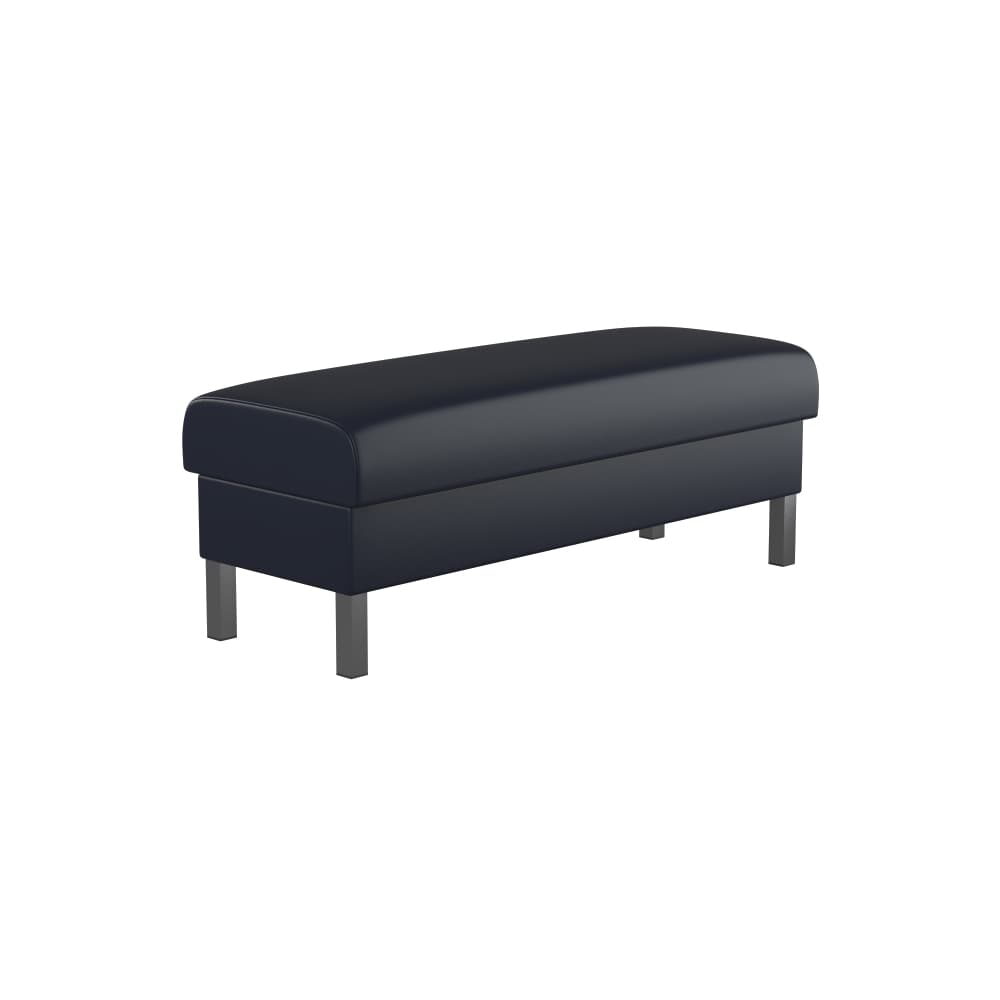
A backless bench along the wall by the counter does that job. The plain waiting bench with metal legs has a padded vinyl seat and silver finish legs, and the listing offers a long list of vinyl colors, so you can match the seat to your counter or your chairs. The standard waiting bench is backless too, with a padded base and a padded vinyl seat, and it weighs 40 pounds, light enough to drag aside at the last sweep. Vinyl takes a damp cloth between customers, which is the point for a seat that sees coats, bags and a few dropped crumbs.
Place the waiting bench so the line does not cross it. People waiting face the counter, so put the bench side on to the till, not in the path between the door and the case.
Before you send the bench order
Lay the wall out first. In shop plans you can put the benches, the tables and the chairs opposite on one plan, note the wall length and the seat height you asked about, and copy the plan when you fit out the second shop. The rest of our benches sit under benches and lounge, and the backless ones are in waiting benches.
Then choose the seat. Vinyl colors and wood finishes change over time, so ask for a free swatch from samples and lay it on the bench spot for a day of trade. A heavy bench stays put once it lands: the all-wood bench, seat and back alike, is listed at 98 pounds, so decide where it lives before the freight arrives, and have two people ready to set it against the wall.