Shop notes
Wooden bistro chairs and the seat that wears first
Wood all through, or a wood seat on a steel frame? That is the real choice behind wooden bistro chairs, and it decides more than the look. It decides the weight your closing shift lifts, the warranty you carry, and how the chair ages under a busy week of customers.
Either way, it is the seat that goes first. Frames get knocked, but the seat gets sat on, slid across, wiped and scraped from the first batch of the morning to the last sweep. So we start there, then go through the frames we list, the warranty periods that go with them, and how to fit arm chairs to a table without a fight.

Open diagram at full size (new tab) ↗
Read the diagram in text
Three stacked cards compare a wood frame chair, a steel frame with a wood seat, and a wood chair with arms, with a side panel listing the warranty periods for wood and metal chairs.
- WOOD CHAIR NOTES
- Wood all through: Ladder back: 22 pounds, 17 inches wide.
- 3 or 1 years
- Wood seat on steel: Metal ladder back: 18 pounds, 500 listed.
- 7 years
- Wood with arms: 22 1/2 inches wide: use at table ends.
- 1 year
- Warranty by frame
- Metal, non-swivel: 7 years
- Selected wood side: 3 years
- Wood with arms: 1 year
- See each chair.
- Same warm seat, two frames: the warranty and the weight in the hand are what change.
Pick the seat you can live with
A wood seat wears in plain sight. Where people sit, the finish softens and takes on a polish; where bags and coats land, it scuffs. On a dark finish such as walnut or dark mahogany the wear reads as age. On a pale natural finish it reads sooner, as lighter patches where the color has gone.
That is not a reason to avoid natural. It is a reason to choose with your eyes open. Picture the chair nearest the door three years from now, after a few thousand guests, and pick the finish you will still be happy to look at then.
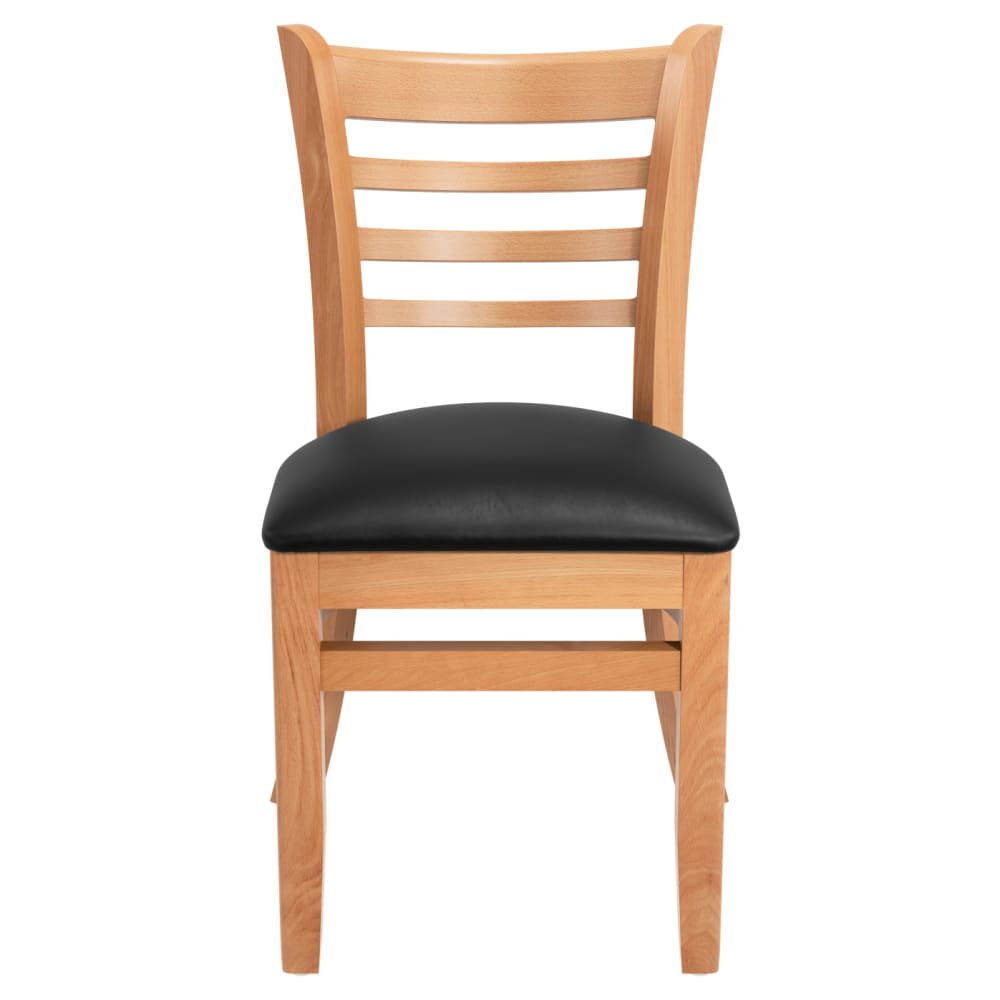
Padded seats change the job. Vinyl over padding wipes clean between customers and suits a counter-side table where drips are routine. Fabric is kinder to sit on and holds a stain, so keep it for tables where people stay to read. Several of our wood chairs offer all three, and the ladder-back wood chair adds pullover padded vinyl and pullover padded fabric seats, with wood finishes from walnut and cherry to distressed walnut and black.
Cleaning is where wood chairs are won or lost. A damp cloth and a dry one, used the same way at the end of every shift, keep a finished wood seat in good order. Harsh sprays and soaking wet mops are the enemy: water left standing at the foot of a leg works into the end grain, and the warranty does not cover damage from the wrong cleaning agents. Give whoever closes one bottle of mild cleaner for the chairs and keep the floor chemicals well away from them.
Wood frames we list
The ladder-back chair above is a fair benchmark: 17 inches wide, 20 deep and 33 high, 22 pounds, rated to hold 500. Its listing also shows BIFMA certification, for that chair.
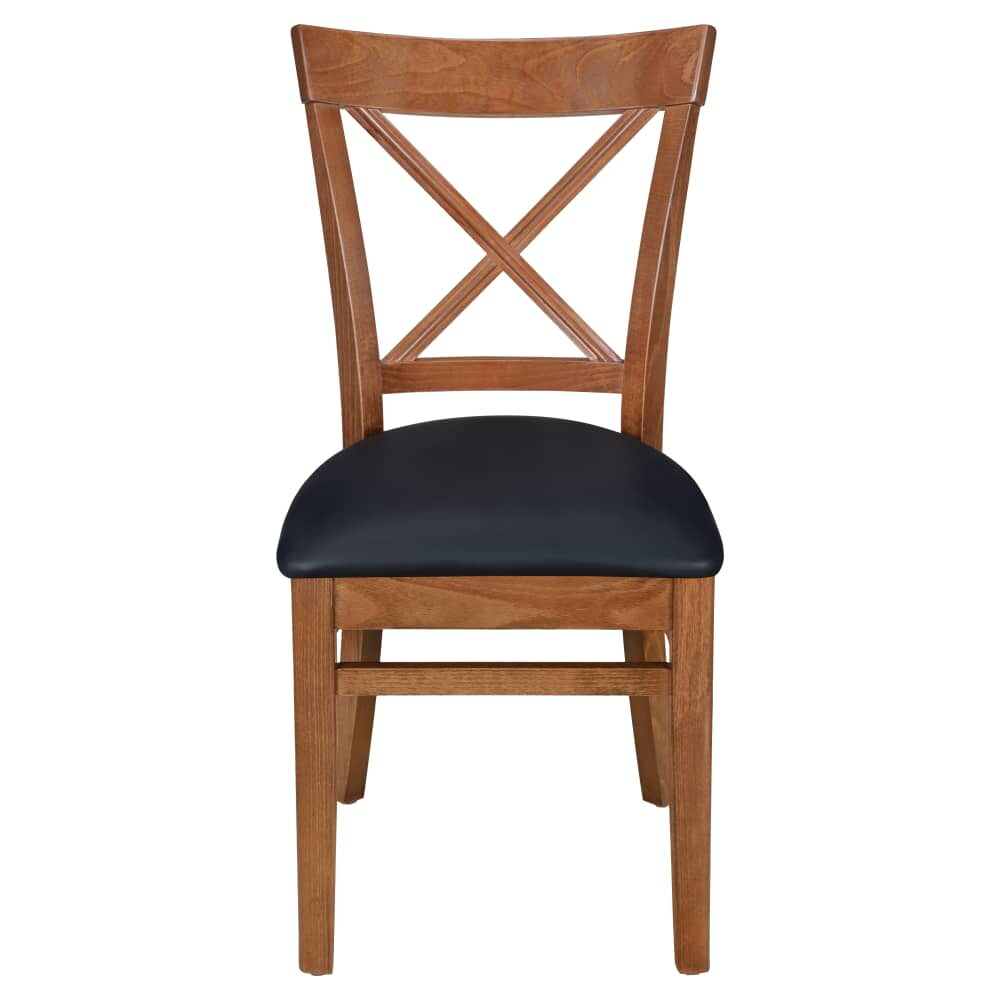
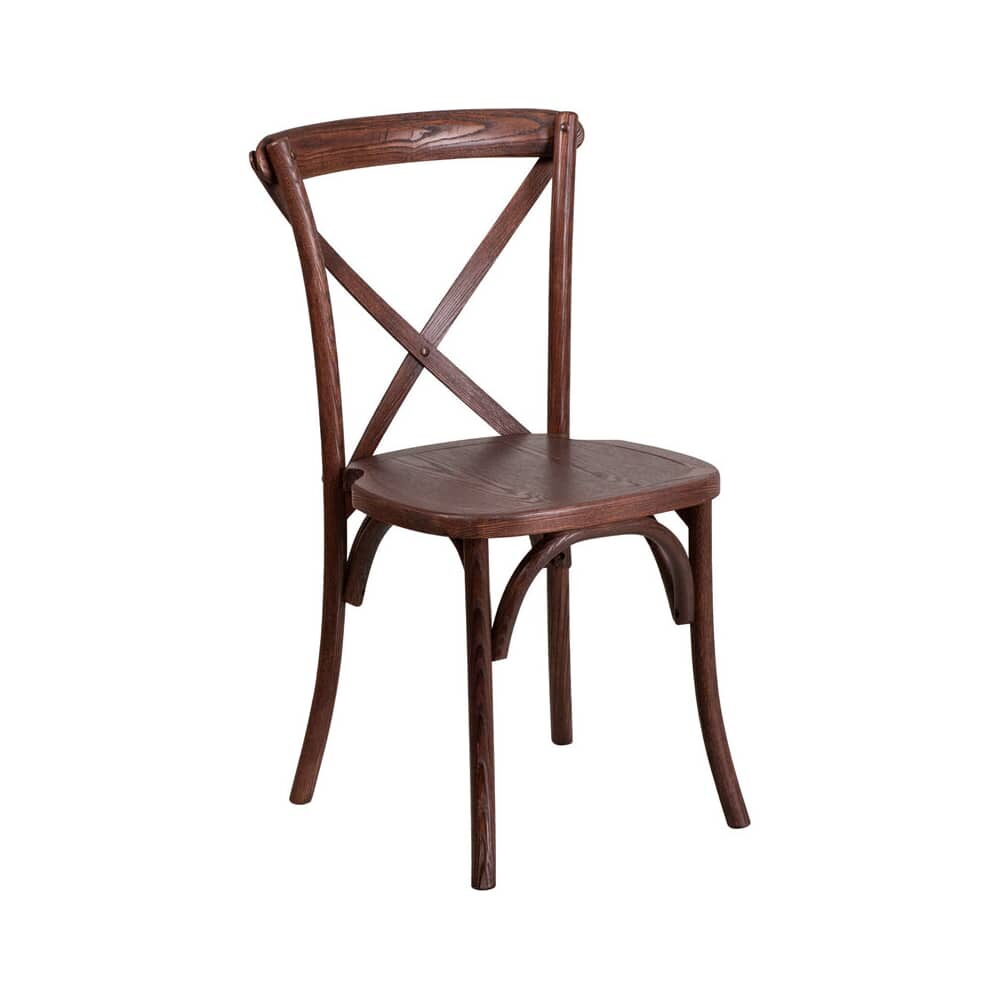
The cross-back wood dining chair brings the X-shaped back. It measures 18 1/4 inches wide, 21 deep and 34 1/2 high, weighs 17 pounds, lists 500 pounds of capacity and BIFMA certification as well, and offers a solid wood seat or padded vinyl or fabric. For a wood chair that stacks, the stackable cross-back wood chair has a wood seat and frame in dark mahogany, natural or walnut, weighs 12 pounds and lists a capacity of 400 pounds.
Browse the rest under wood chairs, the narrower edit in wood chair selection, and the X-backed models together on cross-back chairs. The ladder-back chairs page shows the horizontal rails in both wood and metal.
The steel frame with a wood seat
If you want the warmth of wood where people touch it and a frame that shrugs off prams, look at a metal frame with a wood seat. The metal ladder-back chair can be ordered with a wood seat in mahogany, dark mahogany, cherry, walnut, natural or distressed walnut, sits on a black, brown or silver frame, and lists 500 pounds at 18 pounds of chair.
The warranty is where the two routes split. A steel chair on fixed legs is covered for 7 years if a fault in its making shows up. Wood gets less: 3 years on selected side chairs, and 1 year on wood chairs with arms and on the other wood chairs. Where a product page can state the period for that chair, it does. If your shop is a hard one on chairs, the steel frame with a wood seat gives you the look with the longer cover. Our guide to metal bistro chairs goes further into frames, stacking and glides.
Arms at a table for four
Arms make a wood chair easier to sit down in and get out of, which regulars notice. They also add width, and width is what a cafe table runs short of.
Work it through on a 30 by 48 inch rectangle, a standard table for four. Each long side is 48 inches and seats two. Two ladder-back side chairs at 17 inches each take 34 inches, leaving 14 inches of play between and around them. Its armed version measures 22 1/2 inches across, so two of them take 45 inches and leave 3. That is chair touching chair, and arms that knock every time someone sits.
Here is the slip. An owner orders arm chairs for every seat because they feel better in the showroom photo, then finds the room seats fewer people or the arms will not tuck under the top. The rule we would carry away: arm chairs at the head and foot of a long table, or at a two-top with room to spare; side chairs everywhere the elbows meet.
Before you order the wood chairs
Wood finish is the hardest thing to judge on a screen. Ask for a free stain sample through samples, hold it next to your counter and your floor in daylight, and live with it for a few days. Finish and stain lists change over time, so write down the exact finish, the seat type and the seat color the day you order, and keep them with your order reference.
Then put the chairs on the drawing. In shop plans you can place wood chairs at the quiet tables and metal ones by the door, note which tables take arm chairs, and download the sheet. If the classic curved wood shape appeals, read our piece on bentwood cafe chairs before you settle, and see the wider view of frames and seats in bistro chairs. When one chair finally wears through, you will reorder from the sheet, ask for a fresh swatch, and match it to the chair beside it.