Shop notes
Metal bistro chairs that take the knocks: weight, warranty and the foot glide
Pick one up. That is the first test we would give any metal bistro chair, before the color, before the price. A chair that a person on the closing shift can lift with one hand, stack and carry gets put away properly every night. A chair that cannot gets dragged, and a dragged chair marks the floor and loosens its own feet.
Metal is the working frame of the cafe trade. It takes the knocks from prams, mop buckets and the regular who tips back on two legs. This guide looks at what our listings say about metal bistro chairs: the frame, the weight in the hand, the listed capacity, stacking, the warranty, and the small part at the bottom of each leg that decides how the chair treats your floor.

Open diagram at full size (new tab) ↗
Read the diagram in text
Three numbered cards: lift the chair and read its weight, read the usage line before taking it outside, and check the glide at the foot of each leg. A dark bar notes the 7 year warranty on metal chairs that do not swivel.
- METAL CHAIR NOTES
- 1
- Lift it: 24 chairs at 10 pounds: 240 lifted at the last sweep.
- 2
- Read the usage line: Only chairs listed for patio use go out front.
- 3
- Check the glide: Nylon, adjustable plastic or adjustable metal on some frames.
- Metal chairs that do not swivel: 7 years against defects. Patio chairs: 6 months.
- Lift it, read the usage line, then look at the glides: a light stacking frame gets put away every night.
What the frame tells you
A metal chair's product page gives you the frame material, the dimensions, the weight and a listed weight capacity. Read all four together.
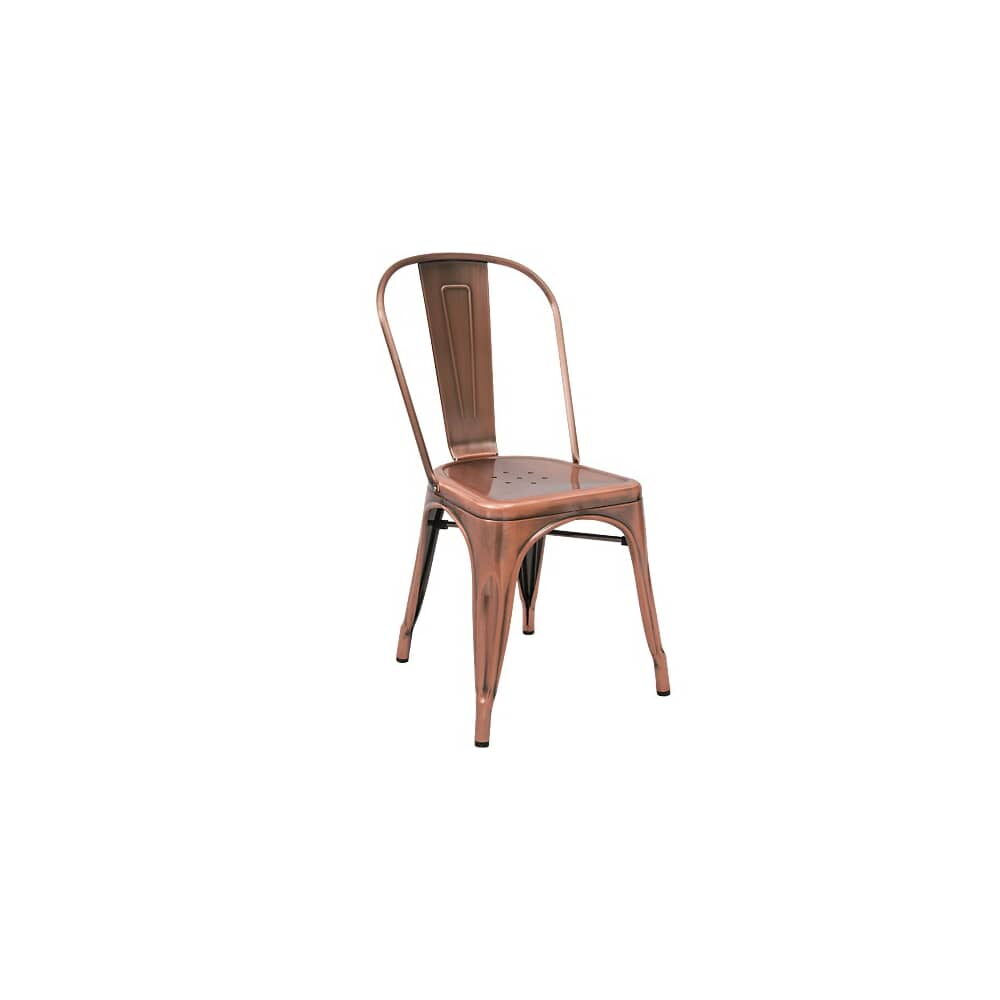
Take the bistro-style metal chair in copper. It is all metal, 14 inches wide, 14 deep and 34 high, weighs 10 pounds, and lists a capacity of 500 pounds. It stacks, and it is sold for indoor and patio use alike. That is about as plain as a cafe chair gets: no seat to wear through, no upholstery to stain, just a stamped steel shape.
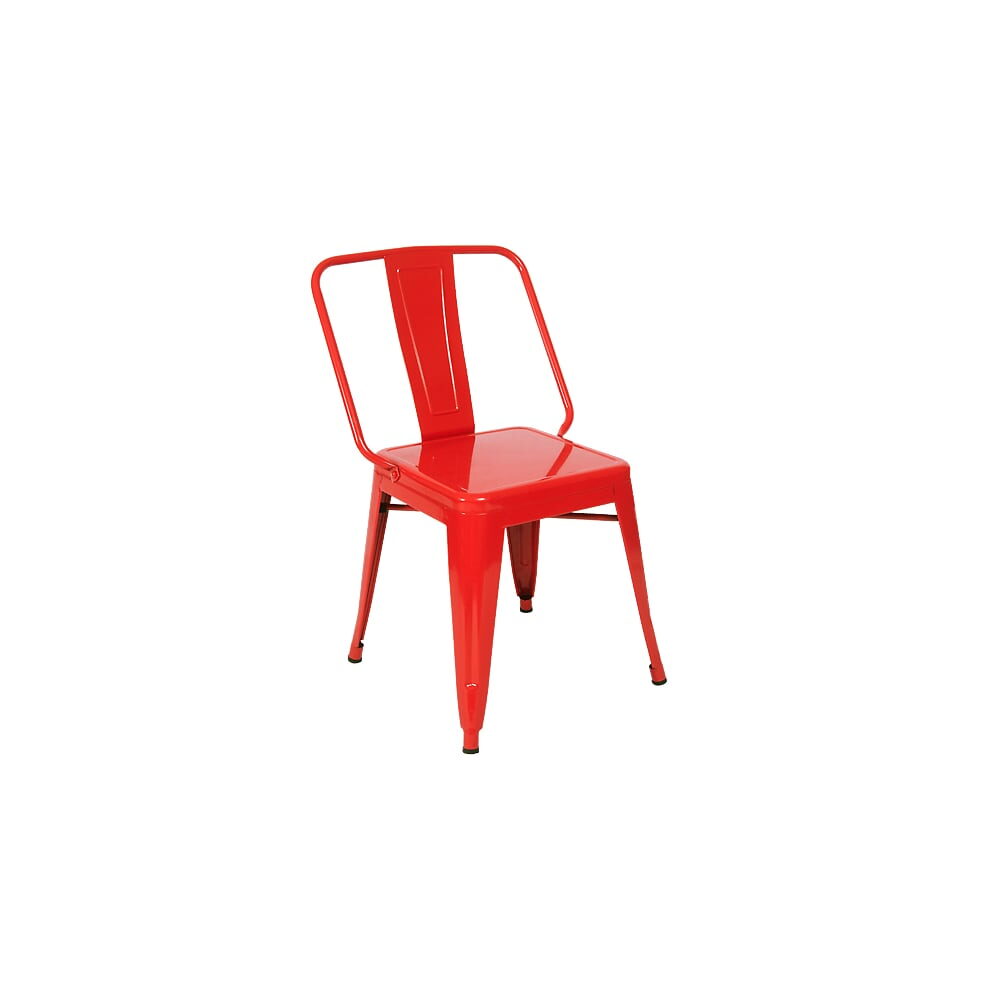
If you want a touch more seat, the extra wide bistro-style metal chair in red gives you 15 inches by 15, at 32 1/2 inches high and 12 pounds, with the same 500-pound listing and the same stacking. One inch sounds like little. On a busy Saturday it is the difference between a seat a broad-shouldered regular sits on and one he perches on.
The full family of stamped metal chairs is under Tolix-style chairs, and the wider metal chairs department holds ladder backs, curved backs and frames with wood or padded seats.
The warranty, plainly
Metal chairs that do not swivel carry our longest warranty: 7 years against defects in materials and workmanship, for the original buyer in normal commercial use. That is seven times the 1 year on wood chairs with arms, and it is the strongest reason a busy shop leans toward a metal frame.
Two limits are worth knowing before you plan around it. Patio chairs carry 6 months, so when a chair's listing names patio and indoor use both, look at its product page for the period that applies, or ask us. And the warranty covers defects present at delivery, not wear, misuse or a chair left out in the rain all winter. The full terms sit on our warranty page.
Weight in the hand at close
Every chair in a cafe gets lifted at least once a day, either onto a table or into a stack, so the mop can reach the floor. Weight adds up quickly across a room.
Here is a room of 24 chairs. At 10 pounds each, the bistro-style metal chair, the person closing lifts 240 pounds over the course of the last sweep. Swap to a padded aluminum ladder-back at 15 pounds and the total climbs to 360. Swap again to a heavier frame of 18 pounds and it reaches 432. None of those is wrong. But a shop with one person closing alone should know the number before choosing the chair. A chair light enough to carry gets carried, not shoved.
Stacking saves more than the back. A stack of chairs in the corner clears the floor for a full mop instead of a dodge around the legs. The chairs that stack are gathered under stacking chairs.
The foot glide and your floor
The glide is the small cap or button at the bottom of each leg, and it does more work than any other part of the chair. It takes every drag across the floor, and when it wears through, the bare tube or the screw head meets your tile or your boards.
Some of our metal and aluminum chairs let you choose the glide. The ladder-back aluminum dining chair lists black nylon glides, plastic adjustable glides, metal adjustable glides or front casters, with an 18 1/2 inch seat height, 15 pounds and a 500-pound capacity. Adjustable glides are worth having on an old floor that is not quite level, because you can stop the rock at one leg instead of folding a napkin under it. Nylon is gentler on a finished floor than bare metal.
Check the glides when the chairs are new, and again a few months in. A glide is a small thing to replace. A scored floor in front of the counter is not.
The sidewalk mistake
Here is the slip we would most like to save you from. An owner assumes that because a chair is metal, it can live on the sidewalk. Not every metal chair is meant for outdoor use. Leave the street to chairs sold for patio use. An indoor chair with a painted steel frame or a padded seat will rust, fade or swell in the weather, and that damage falls outside the warranty.
So read the usage line first. The copper bistro-style chair lists indoor and patio use, which means it can go out front with the two-tops in summer. Even then, it wants the odd rinse, somewhere for rain to drain, and a cover or a spot inside when the season ends. For more on stamped steel frames and the look of a working shop, the industrial chairs page is the next stop.
Metal next to wood in one room
You do not have to choose one material for every seat. One sound way to run a room: metal chairs on the floor near the door, where the knocks and the weather are, and warmer wood chairs further back where people stay longer.
If that is your plan, read our guide to wooden bistro chairs for the wood frames and their warranty periods, and the piece on bentwood cafe chairs for the classic curved shape. The broader view of frames, seats and arms is in bistro chairs.
Then put both on one drawing. In shop plans you can mark which tables get metal and which get wood, keep the finishes with the plan, and download the project sheet for whoever handles the order. When you reorder in three years, the sheet tells you exactly which copper, which red and which glide you chose.