Shop notes
Vintage bistro chairs with the old cafe look and none of the wobble
Every owner who wants the old cafe look has sat on the real thing somewhere: a bentwood chair in a back street, its joints loose, its seat polished by sixty years of coats. Lovely to look at. Less lovely when it creaks under a regular at nine in the morning and you are the one who has to glue it.
You can have the look without the wobble. Every chair in this piece is new, sold for commercial use and covered by our warranty. The old feel comes from three things you can choose on the product page: the shape of the frame, the material, and the finish. Get those right and the room reads as an old shop the moment someone opens the door.

Open diagram at full size (new tab) ↗
Read the diagram in text
A top card for the old cafe look and three cards below it for bentwood, cane and distressed metal chairs, each with its material and where it belongs. A note gives the warranty periods for wood, metal and patio chairs.
- OLD CAFE NOTES
- Shape, material, finish: Three choices on the page give the old look.
- Bentwood: Wood frame, 10 pounds. Inside only.
- Cane: Black wood frame, wood seat. Inside.
- Distressed metal: Stacks, 10 pounds. Indoor and patio.
- Wood chairs: 1 to 3 years. Metal chairs that do not swivel: 7 years. Patio chairs: 6 months.
- Bentwood and cane stay inside; the distressed metal frames and the woven aluminum chairs may go out front.
Bentwood, the shape everyone pictures
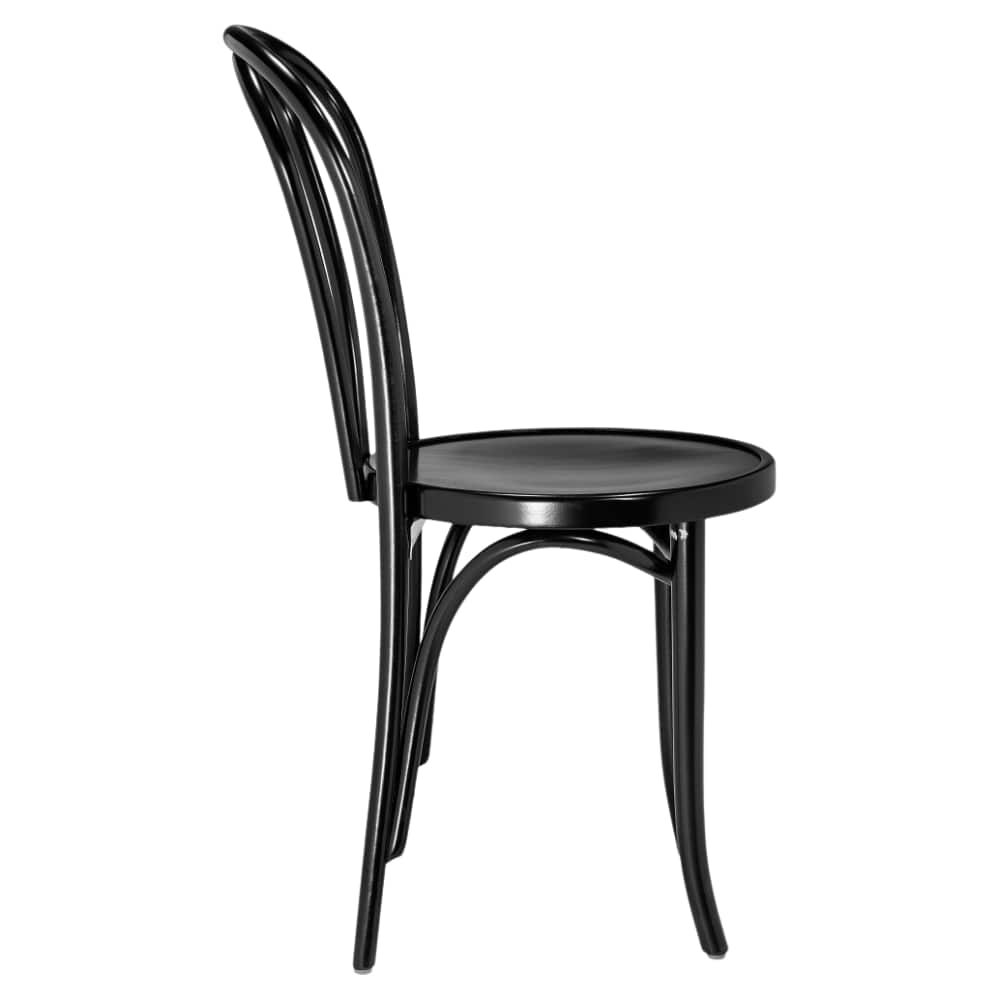
Steam-bent wood with a round seat and a looped back is what most people mean by a bistro chair, and it is still the quickest way to make a counter look like it has been there for decades.
The Freya bentwood bistro chair is a good place to start. It is 16 inches wide, 21 1/2 deep and 34 3/4 tall, weighs 10 pounds, and lists a capacity of 400 pounds. The frame comes in mahogany, walnut, natural, black or white, the seat in wood or padded vinyl, and the price starts at $173. A walnut frame with a wood seat is the classic old-shop pairing. White is brighter and more French; black is the most city. Choose padded vinyl and the seat list runs to 40 colors, so a wine or buckskin seat on walnut is there if a plain wood seat feels too hard for a long sit with the paper.
The rest of the family sits under bentwood chairs. One of them, the Florence, adds an option you rarely see listed: nail trim, in finishes such as hammered brass or pewter. On a padded vinyl seat it gives the chair that upholstered look you remember from older dining rooms.
Wood frames carry a shorter warranty than metal ones, between 1 and 3 years depending on the chair, and the product page names the period where it is clear. Read the warranty page before you choose, because that number is part of the price.
Cane and the softer old look
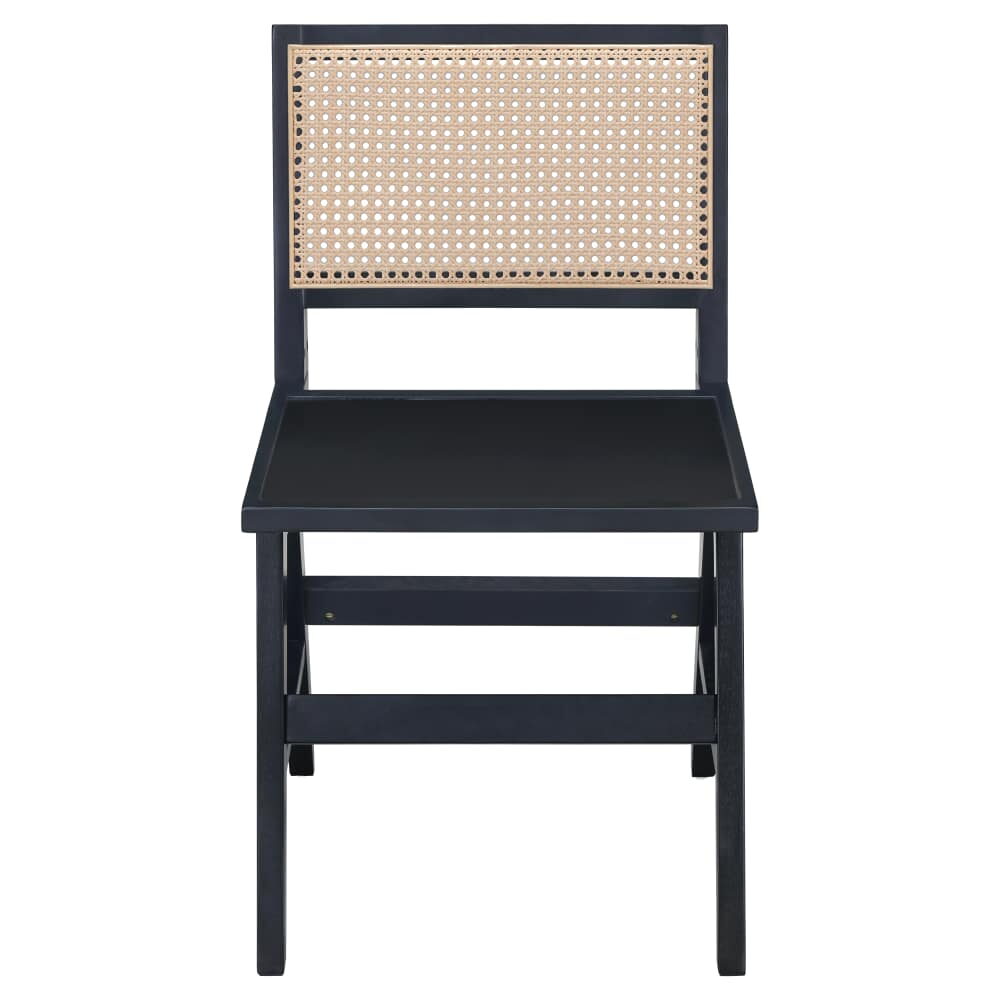
Cane says old cafe too, only quieter. The Gaia cane chair is a cane-style chair on a black wood frame, 31 inches tall with a 17 3/4-inch seat height, at $172. It suits a bakery with a long pastry case, where you want something lighter on the eye than a solid back. For the two ends of a long table, the Gaia armchair is 20 3/8 inches wide with an 18-inch seat, at $197, and the pair sit together without looking like two different shops.
Before the cane wins you over, look at what the Gaia's listing gives as its seat: wood. That matters at the last sweep, because a wood seat takes a scrape and a wipe, and that is the end of it. More shapes are gathered under cane chairs.
Metal with the wear already on it
Not every old cafe chair is wood. The other shape people picture is the all-metal Tolix-style chair, and we carry it in finishes that look as if it has already done a few hard years.
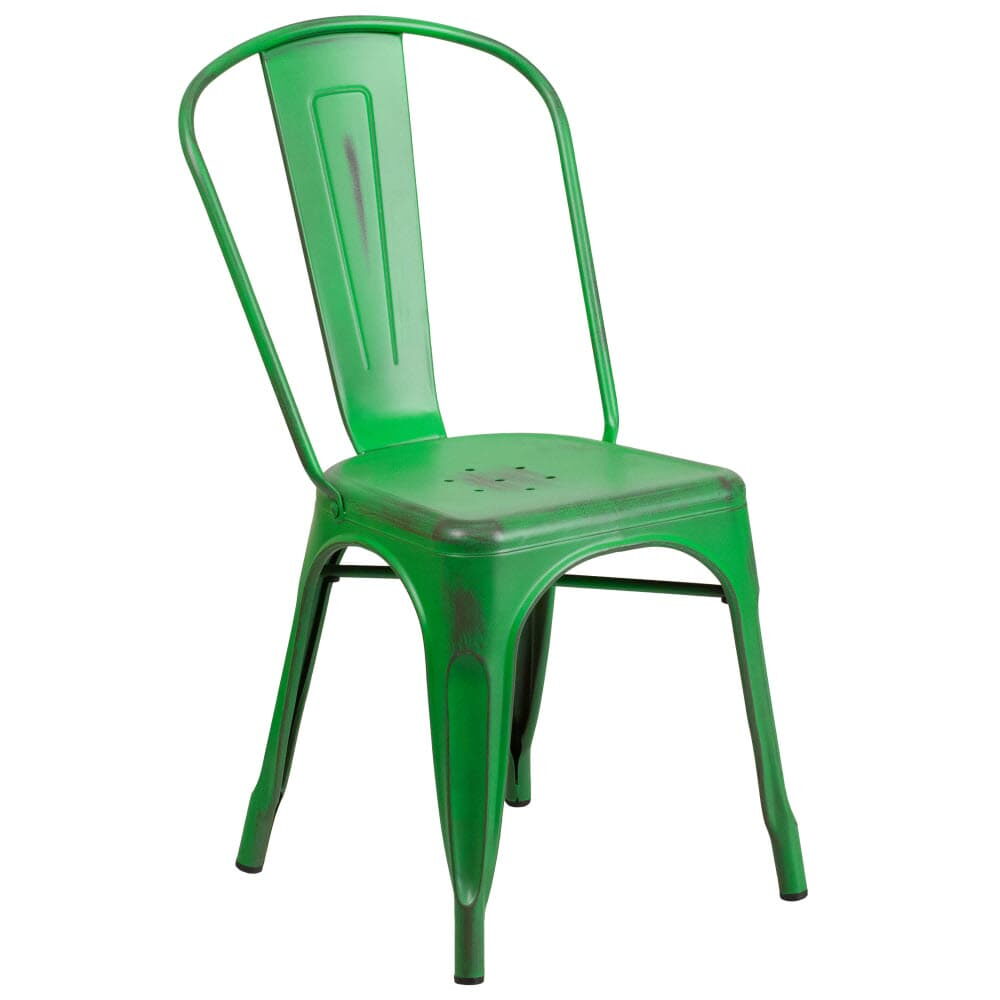
The distressed green bistro chair is the one to see first. It weighs 10 pounds, stacks, has a metal seat, and its listing allows indoor or patio use. Price: $109. The same frame comes in distressed red, white, yellow and black, and in distressed blue and bronze. A plain black version is in our notes on black bistro chairs, and the full range of this metal shape sits in the vintage bistro furniture collection.
Metal chairs that do not swivel carry 7 years against defects. The distressed look is part of the finish, so a fresh knock blends in rather than stands out. If plain metal appeals more than the patina, read the guide to industrial cafe chairs, which takes the same frames in a harder direction.
The mistake: an old look on the sidewalk
The slip we see most often is the bentwood chair carried out to the pavement on the first warm morning. It looks right out there. It is also wood. Sun and rain fade it and swell it, and our warranty stops at the door for any indoor chair used outside.
Keep bentwood and cane inside. For the tables in front of the shop, choose a chair listed for patio use. The metal chairs above qualify, and so does an aluminum bamboo patio chair with a brown and white woven seat: 8 pounds, stackable, listed for indoor and patio, at $119. It gives the woven Paris pavement look in aluminum and faux rattan. Patio chairs carry 6 months. Hose them off now and then, stand them where water runs away, and when the season ends, cover them or stack them indoors. The rest of that look is under French bistro chairs.
A 20-seat front room, priced from the start
Say your shop has six two-tops at the window and the counter, and you want room to put two more pairs outside. That is 12 bentwood chairs inside and 8 metal chairs that can go out.
Twelve Freya chairs at the $173 starting price begin at $2,076. Eight distressed green metal chairs at $109 each are $872. Together, $2,948 before seat options and freight, for 20 chairs, which clears our 8-piece minimum on its own. Two chair models are two lines, and if you split the bentwood into walnut and black, that becomes three. Freight gets priced after one of us has gone through your order line by line, and sending it costs you nothing.
There is a weight argument in this mix too. Both chairs come in at 10 pounds, so the person lifting them onto the tables at close is not fighting one heavy family and one light one.
Sit in two before you fill the room
Old looks are personal, and a photo will not tell you whether walnut or black suits your counter. Order a wood finish sample and a metal finish swatch from samples, lay them on the counter beside your bakery case, and leave them there for a few days of normal trade.
When you have chosen, buy one more chair than the floor needs and keep it in the back. The finish lists move over time, and that spare is the one you match to when a regular tips a chair once too often. For frames and seats in more detail, the guide to bistro chairs is the next read.