Shop notes
Industrial cafe chairs, chosen by frame, seat and width
Industrial is the one cafe style that starts with the material and lets the look take care of itself. Bare-looking metal, a plain wood seat, a frame you can see straight through. Nothing on it is there for decoration, which is why it sits so easily in a shop where the espresso machine, the bread racks and the deli case are all working kit too.
That also makes it easy to get wrong. A chair can look industrial in a photo and still be the wrong width for your tables, the wrong seat for your hours, or a wood tone that fights with the top it sits at. So we go through it the way you would at the counter: frame, seat, width, then the table it has to live with.

Open diagram at full size (new tab) ↗
Read the diagram in text
Three stacked cards compare a 72-inch table edge with four 14-inch chairs, four 21-inch chairs and three 21-inch chairs. A side panel lists the edge allowances of 24 inches per guest and 18 at the tightest.
- WIDTH NOTES
- Four at 14 inches: 56 of 72 inches used. 16 inches to share.
- Four at 21 inches: 84 inches needed. 12 more than the table.
- Three at 21 inches: 63 of 72 inches used. Three seats, not four.
- Edge per guest
- About 24 inches
- 18 inches at the tightest
- Width times guests first
- Read the chair width on the product page before you count seats.
- On a 72-inch table edge, four 14-inch chairs fit with room to spare; four 21-inch chairs do not.
Two frame finishes do most of the work
Two frame finishes turn up most often in our industrial range, black and clear coat, and the choice changes the room more than the shape does.
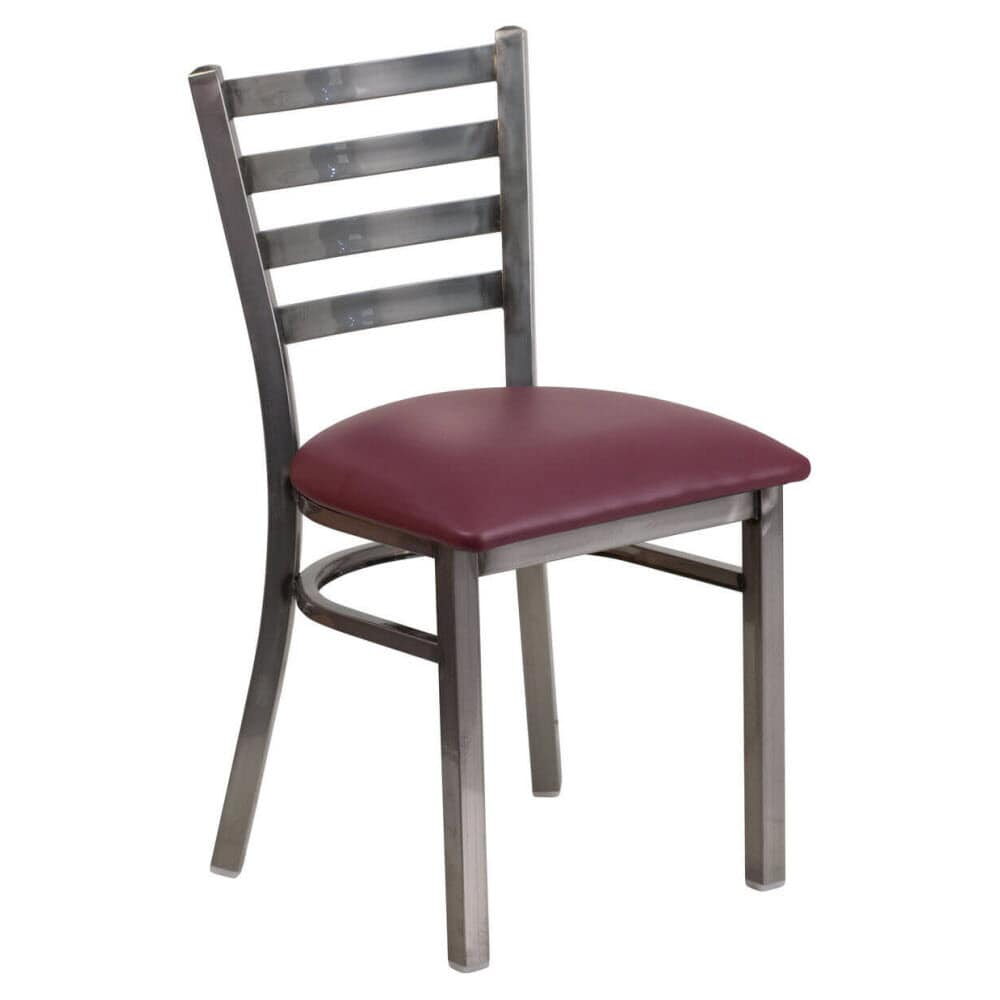
Clear coat leaves the metal looking like metal. The clear coat ladder-back chair is the plain example: 15 pounds, 17 by 20 inches and 32 1/2 inches high, with a wood, vinyl or fabric seat, from $80. Put a row of them along a white tiled wall and the shop looks like a workshop that started selling coffee.
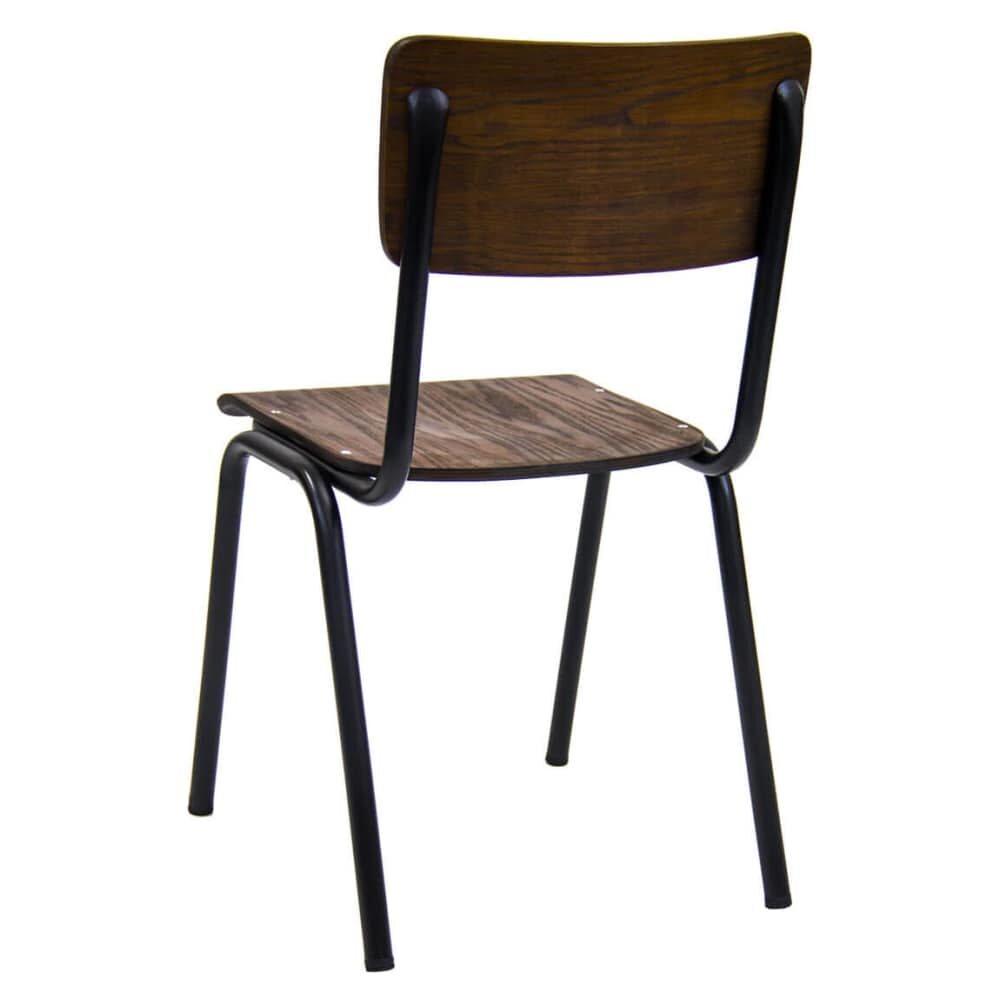
Black is quieter and hides more of a hard day. The Basel metal chair sets a black frame under a wood back and seat, 21 inches wide and 33 tall, 16 pounds, from $137. Its wood comes in seven finishes, from natural and walnut to distressed walnut and black. We cover how black wears over a few busy years in the guide to black bistro chairs.
Whichever you pick, these are fixed-seat metal chairs, and our warranty gives that kind 7 years against defects in materials and workmanship. Browse the full run under industrial chairs and the wider industrial seating collection.
Wood seat or metal seat
A wood seat on a metal frame is the industrial chair most owners picture, and it is the friendliest for a long sit. The French industrial metal chair is a good one to compare against: black frame, a dark walnut wood seat, 10 pounds, $107. The light weight earns its keep at close, when every chair goes up on a table so the mop can get under.
The all-metal seat is the other road. Our Tolix-style chairs have a metal seat on a metal frame, stack, and many carry an indoor and patio listing. There is also a version that splits the difference, a black Tolix-style frame with a walnut wood seat, which keeps the stacking and loses the cold seat in January. That one is listed for indoor use only.
Wipe a wood seat with a damp cloth and dry it. Wipe a metal one and you are done.
Width is where industrial chairs differ most
Here is the mistake we see. The chairs look slim in the pictures, so the owner orders for the look and finds out on delivery day that they do not fit the long table.
Among the industrial side chairs we list, widths run from 14 inches to 21, and the armchairs go wider still. The Mantis metal chair is at the narrow end, 14 inches wide and 17 5/8 deep, with a black frame and a wood seat, from $114. The Basel is at the wide end, 21 inches.
Take a 72-inch communal table edge. Give each guest roughly 24 inches of edge and that side holds three. Squeeze to the tight figure of 18 inches a guest and you can get four. Four Mantis chairs take 56 inches of the 72, leaving 16 inches of air to share. Four Basel chairs need 84 inches, which is 12 more than the table has. Three Basels take 63 and fit, so that edge seats three, not four. Same table, same style, one seat lost to width.
Before you order, read the width on the product page and multiply it by the guests you want on each side. If the answer is wider than the table, choose a narrower chair or plan for fewer seats. Long tables for this kind of row are under communal tables.
Matching the seat to butcher block and laminate
Industrial chairs and butcher block tops are a natural pair, and a shop that chooses one usually wants the other. Our butcher block tops come 1 1/2 inches thick in solid wood, in finishes that include walnut, dark walnut, natural, black, mahogany and cherry. Those are almost the same names as the Basel's wood finishes.
Almost the same names. A walnut seat and a walnut top are stained on two different pieces, and they will not always look identical under your lights. Ask for wood finish samples of both from our samples page and lay them side by side on the counter before you settle. If they disagree, pick one wood to lead and let the other go a shade darker, which reads as a choice rather than a near miss.
Solid wood moves with the seasons, and a solid wood top is warranted for 6 months. Choose laminate for the indoor table and the term goes up to 1 year. If you want the wood look and the longer term, a laminate top in a wood grain such as Antique Barrel or Remade Oak Planked is the swap. For a harder edge, the laminate solid colors run to Cement and Slate Grey, which sit well with a clear coat frame.
Twelve pieces for a small deli, worked through
Say you are fitting a deli with four two-tops by the window and the case. Two people and their plates sit easily at a 30-inch square, so four butcher block tables with cast iron bases and eight French industrial chairs make the room. That is 12 pieces, past our 8-piece minimum.
The tables start at $189 each, so four begin at $756. Eight chairs at $107 are $856. Together, $1,612 before size and finish choices and freight. Lifting all eight chairs at close comes to 80 pounds in all, which one person on the late shift can manage.
Stand one in the shop before the rest
Order one chair of the model you favor alongside your wood samples, then set it at the table where your regulars actually sit. Pull it out the way a customer does, with a coffee in one hand. Lift it onto the tabletop the way you will at the last sweep. If it passes both, order the rest.
If it does not, the next step is the guide to bistro chairs for frame and seat choices in general, or vintage bistro chairs if the shop wants the same metal with more age on it.